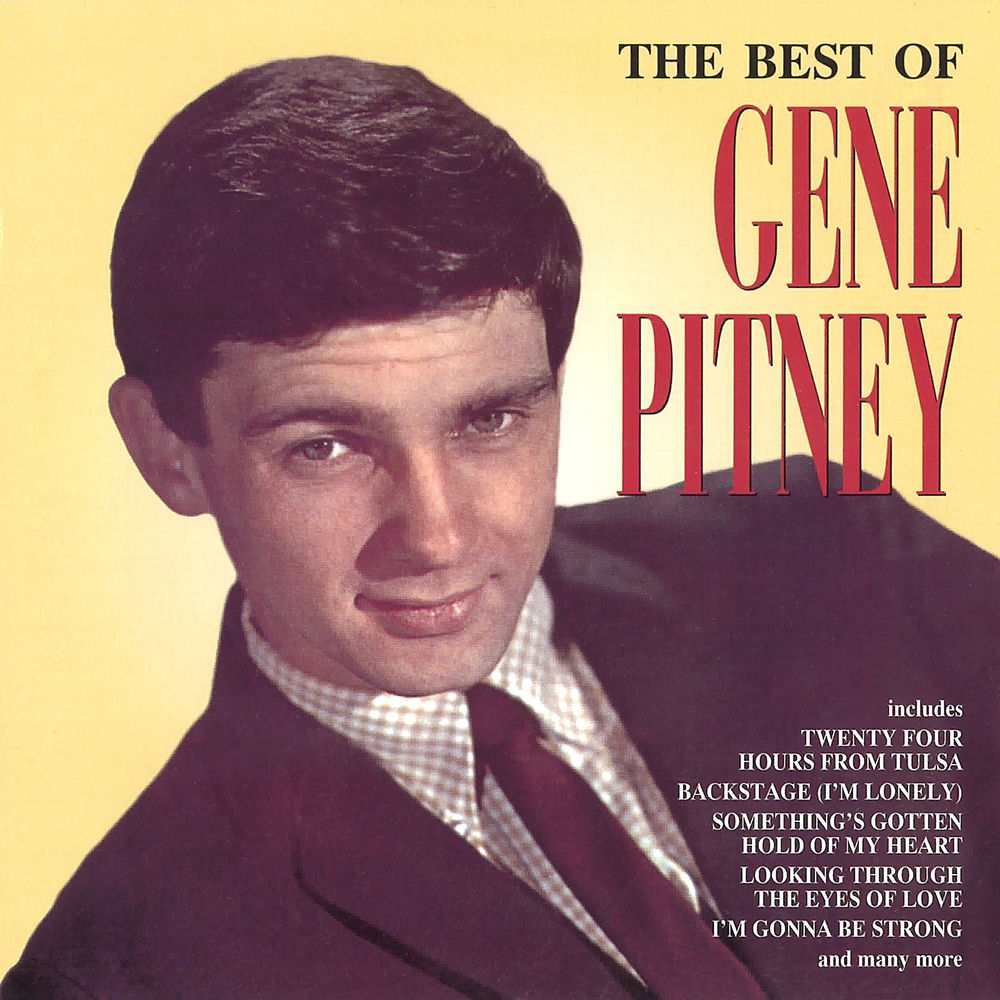
23 tracks from it charted as singles. Press a flag to play it in the chart where it peaked.
Tracks
| 1 | 1:54 | ||
| 2 | Take Me Tonight | 2:36 | |
| 3 | 2:54 | ||
| 4 | (The Man Who Shot) Liberty Valance No. 4 · 1962 | 2:56 | |
| 5 | If I Didn't Have A Dime (To Play The Jukebox) No. 58 · 1962 | 2:29 | |
| 6 | Half Heaven Half Heartache No. 12 · 1963 | 2:44 | |
| 7 | 2:59 | ||
| 8 | 2:50 | ||
| 9 | 2:34 | ||
| 10 | 2:13 | ||
| 11 | 2:28 | ||
| 12 | Last Chance To Turn Around No. 13 · 1965 | 2:55 | |
| 13 | 3:17 | ||
| 14 | 2:35 | ||
| 15 | 2:36 | ||
| 16 | Nobody Needs Your Love No. 2 · 1966 | 2:22 | |
| 17 | 2:44 | ||
| 18 | (In The) Cold Light Of Day No. 38 · 1967 | 2:40 | |
| 19 | Something's Gotten Hold Of My Heart No. 5 · 1967 | 3:35 | |
| 20 | Somewhere In The Country No. 19 · 1968 | 3:09 | |
| 21 | Yours Until Tomorrow No. 34 · 1968 | 3:20 | |
| 22 | Maria Elena No. 25 · 1969 | 2:39 | |
| 23 | A Street Called Hope No. 37 · 1970 | 2:48 | |
| 24 | 24 Sycamore No. 34 · 1973 | 3:21 | |
| 25 | Hello Mary Lou | 2:14 |
About the album
The Rolling Stones is the debut studio album by the English rock band the Rolling Stones, released by Decca Records in the UK on 17 April 1964. The American edition of the LP, with a slightly different track list, came out on London Records on 29 May 1964, subtitled England's Newest Hit Makers.
Recording
Recorded at Regent Sound Studios in London over the course of five days in January and February 1964, The Rolling Stones was produced by then-managers Andrew Loog Oldham and Eric Easton. The album was originally released by Decca Records in the UK, while the US version appeared on the London Records label.
The majority of the tracks reflect the band's love for R&B. Mick Jagger and Keith Richards (whose professional name until 1978 omitted the "s" in his surname) were fledgling songwriters during early 1964, contributing only one original composition to the album: "Tell Me (You're Coming Back)". Two songs are credited to "Nanker Phelge" – a pseudonym the band used for group compositions from 1963 to 1965. Phil Spector and Gene Pitney both contributed to the recording sessions, and are referred to as "Uncle Phil and Uncle Gene" in the subtitle of the Phelge instrumental "Now I've Got a Witness".
Release
First pressings of the album, with matrix numbers ending in 1A, 2A, 1B, and 2B, have a 2:52 version of "Tell Me (You're Coming Back)", which was pressed from the wrong master tape. Subsequent pressings include the 4:06 version. Early labels and covers also have misprints with the fourth track on side 1 listed as "Mona", which was later changed to "I Need You Baby", the subtitle of "Now I've Got a Witness" written "Like Uncle Gene and Uncle Phil", the word 'If' omitted from "You Can Make It If You Try", and 'Dozier' spelt 'Bozier'. "Route 66" is listed as "(Get Your Kicks On) Route 66" on some versions of the album, and some later versions of the album have "I Need You Baby" listed as "Mona (I Need You Baby)" and the subtitles of "Now I've Got a Witness" and "Tell Me (You're Coming Back)" removed entirely.
The album cover photo was taken by Nicholas Wright.
Critical reception
The album was included in Robert Dimery's 1001 Albums You Must Hear Before You Die (2010). Sean Egan of BBC Music wrote of the record in 2012: "It's a testament to the group's brilliance that the result was still the best album to emerge from the early 1960s British blues boom … the ensemble lovingly deliver some of their favourite shots of rhythm 'n' blues." And Paul Cashmere described the album as "mainly Blues, Rock and Roll and Rhythm & Blues covers with the Stones displaying their influences from American music of the 50s and early 60s." It was voted number 418 in Colin Larkin's All Time Top 1000 Albums.
Legacy
For his 1972 single "The Jean Genie", David Bowie aimed to replicate the sound of The Rolling Stones. He said: "I didn't get that near to it, but it had a feel that I wanted – that '60s thing."