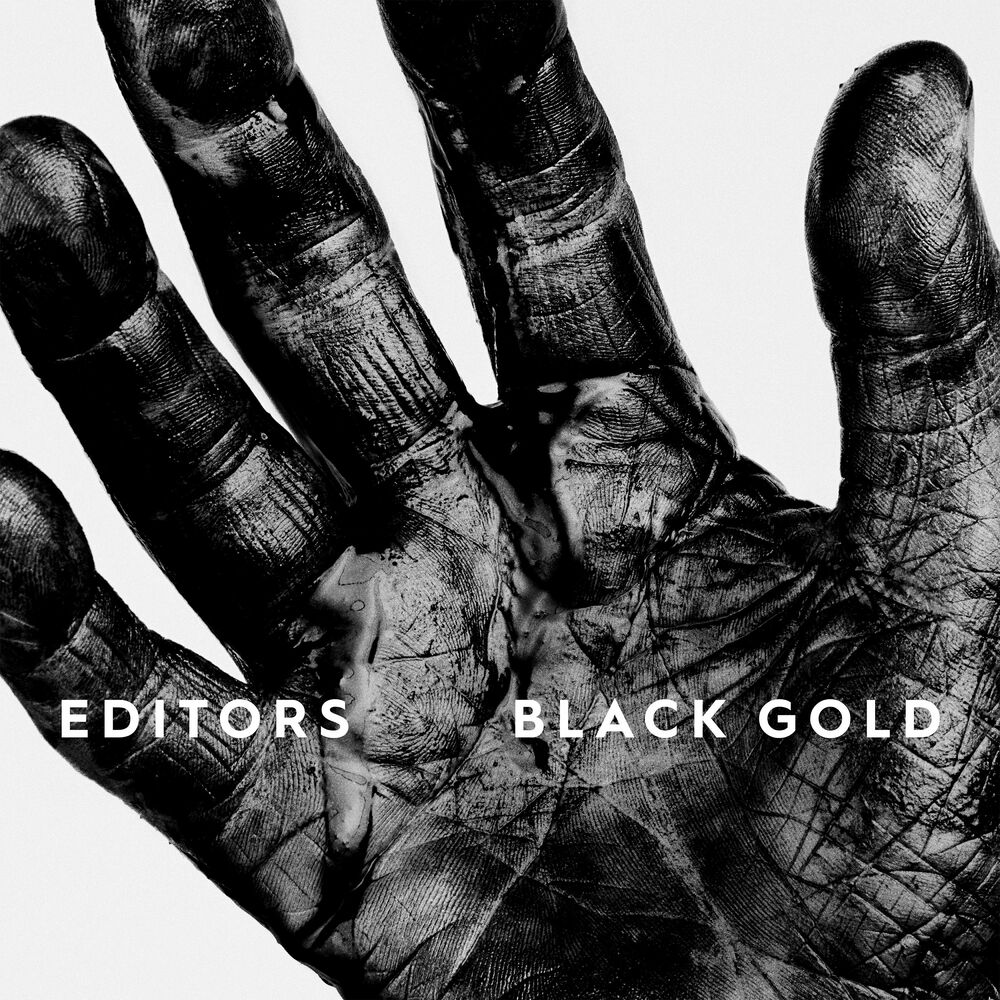
Black Gold
- Released5 September 2019
- UK peak No. 28
- Weeks on UK chart 1
- Entered UK chart 3 November 2019
- LabelPlay It Again Sam
- Tracks3 · 13 min
Tracks
| 1 | Black Gold (Edit) | 3:41 | |
| 2 | Frankenstein | 4:29 | |
| 3 | Black Gold | 5:06 |
About the album
Black Sabbath is the debut studio album by the English heavy metal band Black Sabbath, released on 13 February 1970 by Vertigo Records in the United Kingdom and on 1 June 1970 by Warner Bros. Records in the United States. After recording the single "Evil Woman" and its B-side "Wicked World" on 10 November 1969 at Trident Studios, the remainder of the album was recorded in a single 12-hour session on 17 November at Regent Sounds Studios, using songs from their live set to construct the album. The album's sound was largely informed by Iommi's playing style in the wake of a sheet metal accident that cut off two of his fingertips years prior.
Upon release, Black Sabbath received generally negative reviews from critics but reached number eight on the UK Albums Charts and number 23 on the US Billboard 200. Retrospectively, it has garnered reappraisal as the first true heavy metal album, one of the most influential works in the genre, and one of the greatest overall albums of all time. Additionally, its title track has been referred to as the first doom metal song, and was named the greatest heavy metal song of all time by Rolling Stone in 2023.
Background and recording
Black Sabbath formed from the ashes of Mythology, which featured guitarist Tony Iommi and drummer Bill Ward. The two would recruit bassist Geezer Butler and vocalist Ozzy Osbourne as part of their new band, initially named Earth and later renamed to Black Sabbath, after the 1963 Italian horror film. After their live debut in Workington, England, the band would sign with Philips Records, and would receive distribution from the label's newly formed subsidiary, Vertigo Records.
The band recorded the song "Evil Woman" and its B-side '"Wicked World" on 10 November 1969 at Trident Studios on St. Anne's Court, London, and recorded the remainder of the album at Regent Sounds Studio on Denmark Street, in a 12-hour session on 17 November. Iommi said: "We just went in the studio and did it in a day, we played our live set and that was it.
Music and lyrics
On release, a writer for The Boston Globe described the music of Black Sabbath as "hard blues-rock". In retrospect, AllMusic's Steve Huey feels that Black Sabbath marks "the birth of heavy metal as we now know it". In his opinion, the album "transcends its clear roots in blues-rock and psychedelia to become something more". He ascribes its "sonic ugliness" as a reflection of "the bleak industrial nightmare" of the group's hometown, Birmingham, England. Huey notes the first side's allusions to themes characteristic of heavy metal, including evil, paganism, and the occult, "as filtered through horror films and the writings of J. R. R. Tolkien, H. P. Lovecraft, and Dennis Wheatley." He characterises side two as "given over to loose blues-rock jamming learned through" the English rock band Cream.
In the opinion of the author and former Metal Maniacs magazine editor Jeff Wagner, Black Sabbath is the "generally accepted starting point" when heavy metal "became distinct from rock and roll".
Artwork
The cover photograph was shot at Mapledurham Watermill, situated on the River Thames in Oxfordshire, England, by photographer Keith McMillan (credited as Keef), who was in charge of the overall design. Standing in front of the watermill is a figure dressed in a black cloak, portrayed by model Louisa Livingstone, whose identity was not widely known until 2020. "I'm sure (McMillan) said it was for Black Sabbath, but I don't know if that meant anything much to me at the time," Livingstone recalled, adding that it had been "freezing cold" during the shoot. "I had to get up at about 4 o'clock in the morning. Keith was rushing around with dry ice, throwing it into the water. It didn't seem to be working very well, so he ended up using a smoke machine," she said.
According to McMillan, Livingstone was wearing nothing underneath the black cloak, and some experimentation was done involving some "slightly more risqué" photographs taken at the session. "We decided none of that worked," McMillan said. "Any kind of sexuality took away from the more foreboding mood. But she was a terrific model.
Release and reception
Black Sabbath was recorded for Fontana Records, but the record company elected to switch the band to another of their labels, Vertigo Records, which housed the company's more progressive acts. "I got a call from a guy, Olav Wyper, at a newly set-up label, Vertigo," recalled Sabbath manager Jim Simpson. "Olav had been at CBS when I took the album there, and said he'd now like to do a deal. This was only because, for Vertigo's second tranche of new releases, someone had failed to deliver masters for [the release with catalogue number] V06. So they signed Black Sabbath as a makeweight, because we had finished masters, which could be delivered in a hurry."
Released on Friday the 13th February 1970, Black Sabbath reached number eight on the UK Albums Charts. Following its United States release in June 1970 by Warner Bros. Records, the album reached number 23 on the Billboard Top LPs chart, where it remained for more than a year and sold one million copies. It received generally negative reviews from contemporary critics.
Legacy
Retrospective reviews of Black Sabbath have been positive. AllMusic reviewer Steve Huey said it was a highly innovative debut album with several classic metal songs, including the title track, which he felt had the "most definitive heavy metal riffs of all time". Huey was also impressed by how the band's "slowed-down, murky guitar rock bludgeons the listener in an almost hallucinatory fashion, reveling in its own dazed, druggy state of consciousness". In The Rolling Stone Album Guide (2004), journalist Scott Seward highlighted Bain's grandiose production on "an album that eats hippies for breakfast." In the opinion of Mike Stagno of Sputnikmusic, "both fans of blues influenced hard rock and heavy metal of all sorts should find something they like on the album." BBC Music's Pete Marsh referred to Black Sabbath as an "album that changed the face of rock music." Canadian journalist Martin Popoff called the album "a landmark debut" and the only one in the discography to suffer "the transitional step towards the concept of full metal".