Presence (Remaster)
- Released31 March 1976
- UK peak No. 1
- Weeks on UK chart 16
- Entered UK chart 18 April 1976
- LabelAtlantic Records
- Tracks7 · 45 min
Tracks
| 1 | Achilles Last Stand (Remaster) | 10:31 | |
| 2 | For Your Life (Remaster) | 6:25 | |
| 3 | Royal Orleans (Remaster) | 2:59 | |
| 4 | Nobody's Fault but Mine (Remaster) | 6:28 | |
| 5 | Candy Store Rock (Remaster) | 4:11 | |
| 6 | Hots on for Nowhere (Remaster) | 4:44 | |
| 7 | Tea for One (Remaster) | 9:28 |
About the album
Presence is the seventh studio album by the English rock band Led Zeppelin. It was released by the band's own label Swan Song Records on 31 March 1976 in the United States and on 2 April 1976 in the United Kingdom. While the record was commercially successful, reaching the top of both the British and American album charts, and achieving a triple-platinum certification in the United States by the RIAA, it received mixed reviews from critics and is the lowest-selling album by the band. Presence has received more positive reviews in the years since its release.
The album was written and recorded in the last months of 1975, during a difficult time in the band's history. Singer Robert Plant was recovering from serious injuries he had sustained earlier that year in a car accident; this led to tours being cancelled and the band booking studio time to record Presence instead. The entire album was completed in a few weeks, with guitarist Jimmy Page putting in several long shifts to complete recording and mixing. The title came from the strong presence the group felt as they worked together.
Background
After touring in support of their previous album, Physical Graffiti, released in early 1975, Led Zeppelin took a brief break from touring that summer, intending to start a major US tour on 23 August. Critics had said they were at the height of their popularity at this time. However, singer Robert Plant sustained serious injuries from a car accident on the Greek island of Rhodes on 4 August, which forced the band to cancel the tour and reschedule their activities.
Because of their status as tax exiles, Plant was forced to recuperate abroad, initially in Jersey in the Channel Islands, then in Malibu, California. He wrote several sets of lyrics that reflected on his personal situation and wondering about the future. Guitarist Jimmy Page joined him in Malibu in September and the pair began to think about plans to make an album instead. The two prepared enough material to be able to present to the rest of the band. The other two members, drummer John Bonham and bassist John Paul Jones, joined them at Hollywood's SIR Studio where they rehearsed the material throughout October 1975.
Recording
Once they had worked out arrangements, the group were eager to record. Page favoured going to Musicland Studios in Munich, Germany, which he felt had state-of-the-art recording facilities. Plant was still recovering from the accident during recording and sang his vocals in a wheelchair, which led to Page assuming most of the responsibilities at the sessions. The album was recorded and mixed with longtime group associate and engineer Keith Harwood. It was completed in 18 days, with the final mixes finished on 27 November. This was the fastest recording turnaround time achieved by the band since their debut album.
The rushed recording sessions were in part a result of Led Zeppelin having booked the studio immediately prior to the Rolling Stones, who were shortly to record songs for their album Black and Blue (released, like Presence, in the spring of 1976). Page negotiated with the Stones to borrow two days from their recording session time, during which he completed all the guitar overdubs in one lengthy session.
Packaging and artwork
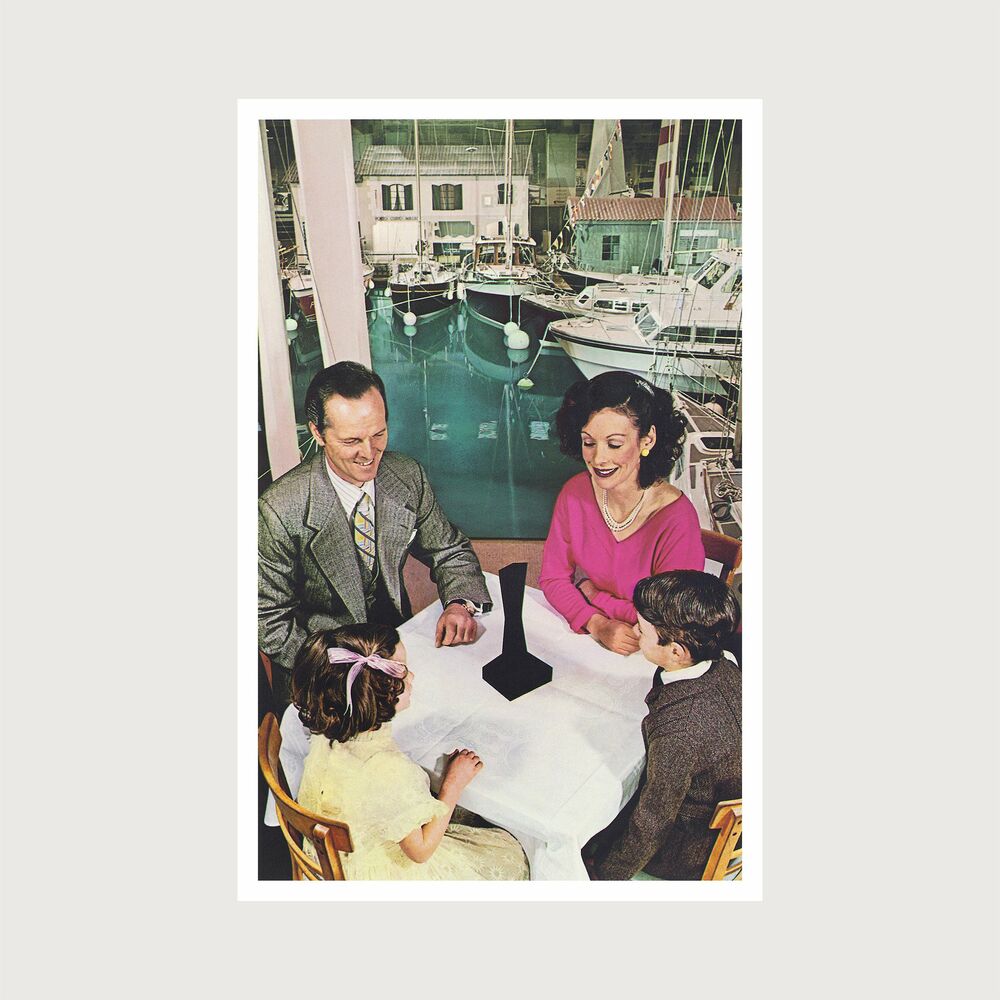
The cover and inside sleeve, created by Hipgnosis with George Hardie, features images of people interacting with a black obelisk-shaped object. Inside the sleeve, the item is referred to simply as "The Object". It was intended to represent Zeppelin's "force and presence". Hipgnosis co-founder Storm Thorgerson wrote that the obelisk represented the power of Led Zeppelin, saying they were "so powerful, they didn't need to be there". Both Page and Plant have said that the presence of the object in the photographs made people stop and think about what is real, which reflected the music.
The background in the cover photograph is an artificial marina, installed in London's Earl's Court arena for the annual Boat Show, in the winter of 1974–75. The band played a series of concerts at this venue in May 1975, a few months after the boat show. The inner sleeve photographs came from various archive stock pictures, and was designed to resemble a feature in National Geographic.
Release and reception
The album was released on 31 March 1976, having been delayed by the completion of the album sleeve. In Britain it attained one of the highest ever advance orders, shipping gold on the day of release. It entered at No. 2 and peaked the following week at No. 1 on the US Billboard Pop Albums chart. However, the album was the lowest selling of their career as it was overshadowed by the release of the band's movie and soundtrack The Song Remains the Same. "Candy Store Rock" was released as a single in the US, but it failed to chart.
In a contemporary review for Rolling Stone, Stephen Davis said Presence "established Led Zeppelin as the premier heavy metal act" and "featured some exceptional rock music", highlighting the "clean and purifying" guitar riffs. In spite of "a few dull blues rock songs", Davis found the album was "another monster in what by now is a continuing tradition of battles won by this band of survivors".