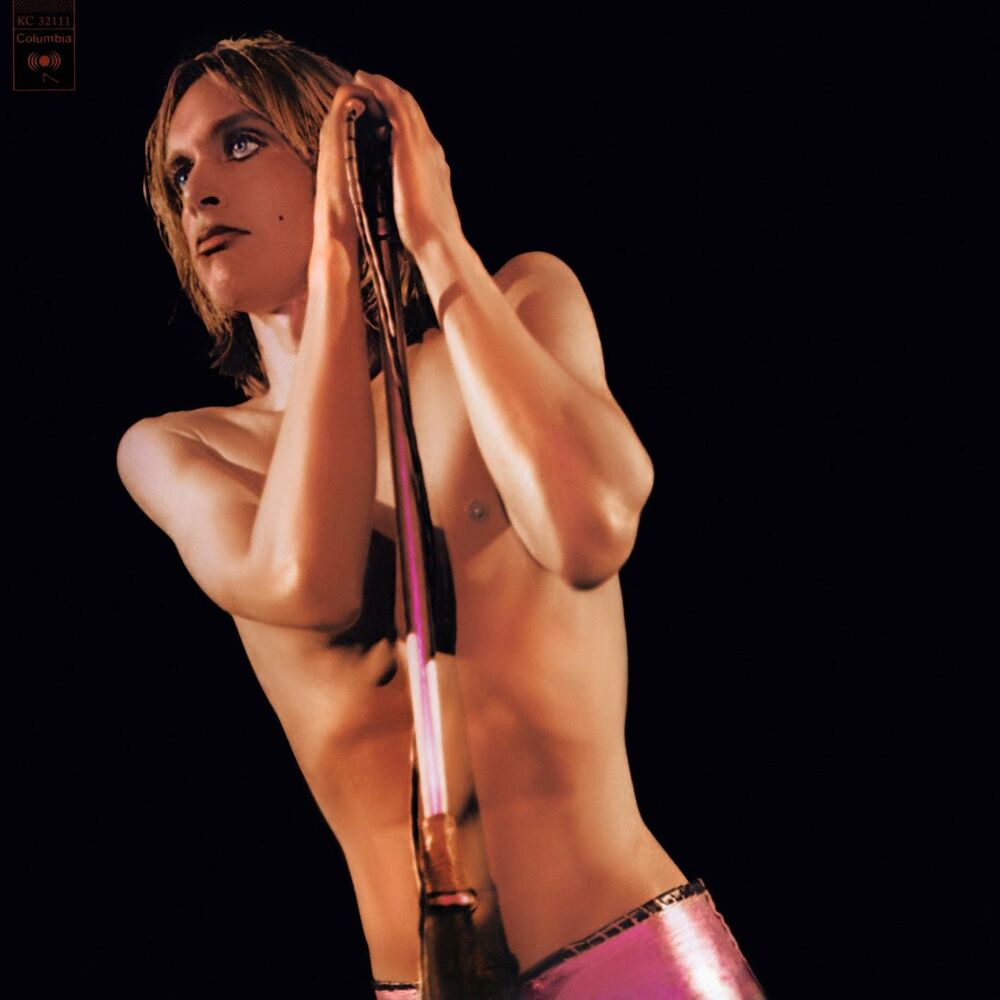
Raw Power (Iggy Mix - 2023 Remaster)
- Released6 February 1973
- LabelColumbia/Legacy
- Tracks8 · 34 min
Tracks
| 1 | Search and Destroy [2023 Remaster] (Iggy Mix) | 3:28 | |
| 2 | Gimme Danger [2023 Remaster] (Iggy Mix) | 3:33 | |
| 3 | Your Pretty Face Is Going to Hell [2023 Remaster] (Iggy Mix) | 4:54 | |
| 4 | Penetration [2023 Remaster] (Iggy Mix) | 3:41 | |
| 5 | Raw Power [2023 Remaster] (Iggy Mix) | 4:16 | |
| 6 | I Need Somebody [2023 Remaster] (Iggy Mix) | 4:52 | |
| 7 | Shake Appeal [2023 Remaster] (Iggy Mix) | 3:04 | |
| 8 | Death Trip [2023 Remaster] (Iggy Mix) | 5:53 |
About the album
Raw Power is the third studio album by American rock band the Stooges (credited as Iggy and the Stooges), released on February 7, 1973, by Columbia Records. The album departed from the "groove-ridden, feel-based songs" of the band's first two records in favor of a more anthemic hard rock approach inspired by new guitarist James Williamson, who co-wrote the album's eight songs with singer Iggy Pop.
Pop produced the recording sessions himself with David Bowie assisting in post-production work, though the team were allotted only one day to mix the album and the resulting fidelity was poor. Later reissues have attempted to either correct or enhance the original mix, most notably Pop's 1997 remix, which became notorious for its extreme volume and compression.
Though not initially commercially successful, Raw Power gained a cult following in the years following its release and is considered a forerunner of punk rock alongside its predecessors, The Stooges (1969) and Fun House (1970). The Guardian wrote that "it has since been acknowledged as one of the most influential records in rock history". Williamson's raw guitar sound deeply influenced acts of different music genres such as the Sex Pistols, Johnny Marr of the Smiths, and Kurt Cobain of Nirvana.
Background
After their first two albums The Stooges (1969) and Fun House (1970) were released to little commercial success, the Stooges were in disarray: the band had officially broken up, bassist Dave Alexander was fighting alcoholism, and singer Iggy Pop's heroin addiction was escalating prior to the intervention of David Bowie. Pop later recalled, "Very few people recognized the quality of the Stooges' songwriting, it was really meticulous. And to his credit, the only person I'd ever known of in print to notice it, among my peers of professional musicians, was Bowie. He noticed it right off." Having signed on as a solo artist to Columbia Records, Pop relocated to London, where he was to write and record an album with James Williamson, who served as the Stooges' second guitarist from November 1970 until the band's initial dissolution in July 1971.
Recording
Initial demo sessions were held at RG Jones Recording Studios in Wimbledon with sound engineer Gerry Kitchingham and at Olympic Studios in Barnes with sound engineer Keith Harwood, with most of the songs rejected by the band's management. Pop said that Columbia executives insisted on two ballads, one for each side of the album: "Gimme Danger" and "I Need Somebody". The album itself was recorded at CBS Studios in London with staff engineer Mike Ross-Trevor from September 10 to October 6, 1972. Pop produced and mixed the album by himself; unfortunately, his botched first attempt mixed most of the instruments into one stereo channel and the vocals into the other, with little regard for balance or tone quality. Tony Defries, the head of Bowie's management company MainMan, informed Pop that the album would be remixed by Bowie. Pop agreed to this, saying that "the other choice was I wasn't going to get my album out. I think Defries told me that CBS refused to release it like that, I don't know", but insisted that his own mix for "Search and Destroy" be retained.
Marketing and sales
Raw Power was released on February 7, 1973 under the moniker of "Iggy and the Stooges", in contrast to the band's first two albums, which were credited to "the Stooges". The cover is a photograph of Pop taken by rock music photographer Mick Rock. The songs "Search and Destroy" and "Shake Appeal" were both released as singles (the title track was released as a single in Japan only). According to Robert Hilburn, the album was "far too radical for the corporate-rock sensibilities of radio" in 1973, and as a result it only charted for three weeks on the Top 200, peaking at number 183. The group continued touring for about a year, but Columbia dropped their contract. The Stooges were also dumped by MainMan – Tony Defries lost patience with the band after the large sum of money he advanced to them was spent on drugs. The Stooges broke up in February 1974. After spending time in a drug-fueled stupor in L.A.
Critical reception
Raw Power received much praise from contemporary critics. Dave Marsh proclaimed that it was already "the best album of the '70s", as Pop had "summed everything up and it took him only nine songs to do it." Ben Edmunds from Phonograph Record called it "an experience so overpowering that it forces new definitions for even the most familiar things", arguing in March that it will undoubtedly be the album of the year. According to Lester Bangs, the "by-now banal words 'heavy metal' were invested for this group", while "the ferocious assertiveness of the lyrics is at once slightly absurd and indicative of a confused, violently defensive stance that's been a rock tradition from the beginning".
Legacy and influence
Raw Power has been credited by many sources for pioneering punk rock, although Paste magazine's Lizzie Manno adds that it has "also been cited as a major influence on heavy metal and hard rock". According to Ted Maider of Consequence of Sound, Raw Power is "by far the most important punk record ever", while Diffuser.fm writer James Stafford said, "One can make a reasonable argument for whether Raw Power or its predecessor, Fun House, lays claim to 'first punk record' status." DIY's Jonathan Hatchman wrote, "Above all, the reason that Raw Power should be regarded as, at least, one of the greatest punk albums of all time, is the influence it has provided. Without it, punk may have never even happened."
Steve Jones from the Sex Pistols once said that he learned to play guitar by taking speed and playing along to Raw Power. Johnny Marr of the Smiths cited it as his all-time favorite record: "It gave me a path to follow as a guitar player. It was an opening into a world of rock & roll, sleaze, sexuality, drugs, violence and danger. That's a hard combination to beat".