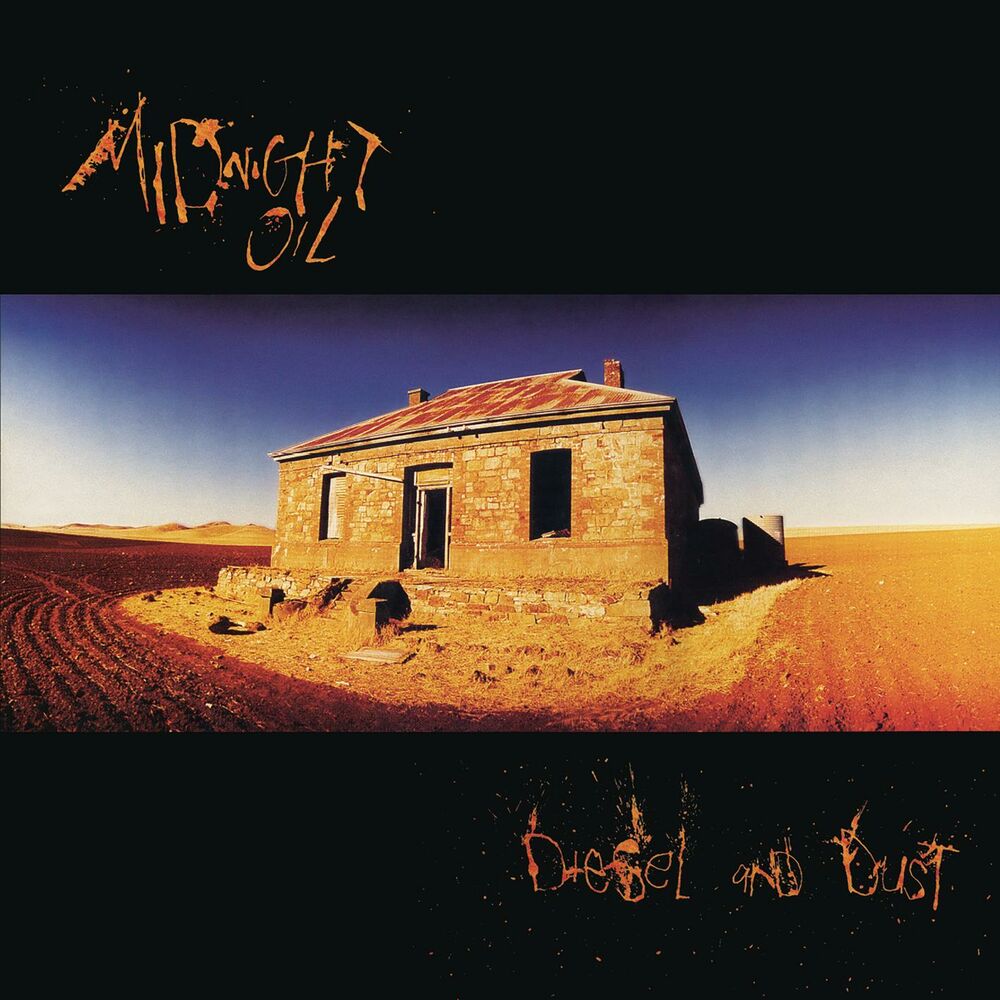
Diesel And Dust
- Released2 October 1987
- UK peak No. 19
- Weeks on UK chart 16
- Entered UK chart 19 June 1988
- LabelColumbia
- Tracks11 · 47 min
2 tracks from it charted as singles. Press a flag to play it in the chart where it peaked.
Tracks
| 1 | 4:15 | ||
| 2 | Put Down That Weapon (2007 Remastered) | 4:38 | |
| 3 | Dreamworld (2007 Remastered) | 3:36 | |
| 4 | Arctic World (2007 Remastered) | 4:22 | |
| 5 | Warakurna (2007 Remastered) | 4:38 | |
| 6 | 5:11 | ||
| 7 | Whoah (2007 Remastered) | 3:51 | |
| 8 | Bullroarer (2007 Remastered) | 4:59 | |
| 9 | Sell My Soul (2007 Remastered) | 3:37 | |
| 10 | Sometimes (2007 Remastered) | 3:51 | |
| 11 | Gunbarrel Highway (2007 Remastered) | 3:40 |
About the album
Diesel and Dust is the sixth studio album by Australian rock band Midnight Oil, released in August 1987 by SPRINT Music label under Columbia Records. Diesel and Dust was produced by Warne Livesey and the band. It is a concept album about the struggles of Indigenous Australians and environmental causes, issues important to the band. It drew inspiration from the Blackfella/Whitefella Tour of remote Indigenous communities with the Warumpi Band and Gondwanaland in 1986. The album peaked at No. 1 on the Australian Kent Music Report Albums Chart for six weeks.
Diesel and Dust has been critically lauded since its release. Rolling Stone editors named it the best album of 1988 (the year of its United States release), and later ranked it the 13th greatest record of the 1980s. In October 2010, Diesel and Dust was listed at number 1 in the book, 100 Best Australian Albums. In December 2021, the album was listed at no. 5 in Rolling Stone Australia's "200 Greatest Albums of All Time" countdown.
Background
Midnight Oil spent several months in mid-1986 on the Blackfella/Whitefella Tour of outback Australia with indigenous music groups Warumpi Band and Gondwanaland, playing to remote Aboriginal communities and seeing first hand the seriousness of the issues in health and living standards. The tour was criticised by some journalists for being a one-off event instead of a long-term attempt to build bridges between communities. The band was galvanised by the experiences and made them the basis of their next album, Diesel and Dust, which was released in August 1987 and produced by Warne Livesey and the band. The album focused on the need for recognition by white Australia of past injustices involving the Aboriginal nation and the need for reconciliation. Peter Gifford left the band before the album's release due to extensive touring schedules, and was replaced on bass guitar by Bones Hillman, formerly of The Swingers.
Reception
According to Australian rock music historian Ian McFarlane, Midnight Oil "reached the peak of its powers with the release of the groundbreaking Diesel and Dust... [it] is arguably one of the greatest Australian albums of all time. Powerful, dynamic and passionate songs like 'Beds are Burning', 'Put Down that Weapon', 'Dreamworld', 'The Dead Heart' and 'Sell My Soul' were statements of intent and a call to action backed by the strength of their convictions". Mark Deming of AllMusic called the record "an artistic success and a triumph for leftist politics" which "makes clear that the bandmembers could apply their intelligence and passion to less aggressive material and still come up with forceful, compelling music".