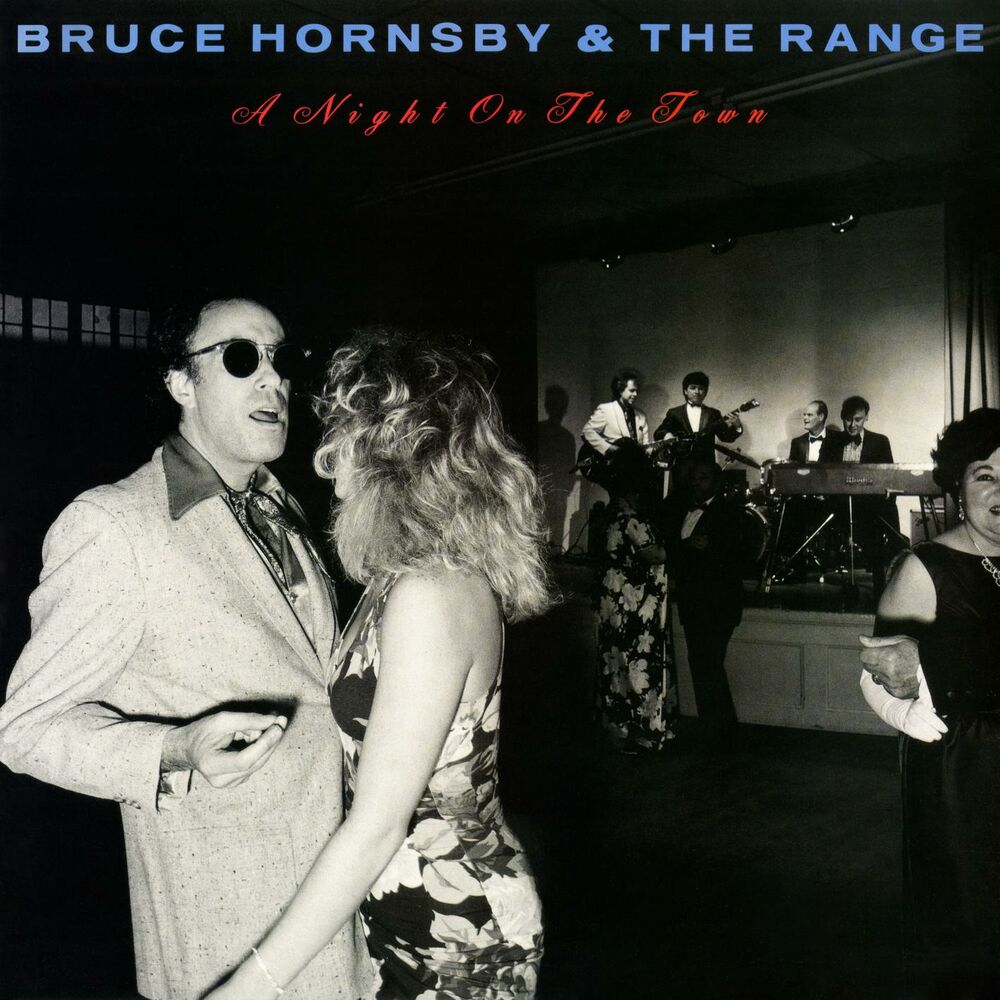
2 tracks from it charted as singles. Press a flag to play it in the chart where it peaked.
Tracks
| 1 | A Night On the Town | 4:27 | |
| 2 | Carry the Water | 5:08 | |
| 3 | Fire On the Cross | 4:38 | |
| 4 | Barren Ground | 5:29 | |
| 5 | 5:10 | ||
| 6 | Stranded On Easy Street | 3:54 | |
| 7 | Stander On the Mountain | 6:09 | |
| 8 | Lost Soul No. 84 · 1990 | 5:45 | |
| 9 | Another Day | 4:23 | |
| 10 | Special Night | 4:10 | |
| 11 | These Arms of Mine | 5:54 |
About the album
A Night on the Town is the third and final studio album by Bruce Hornsby and the Range. Following albums would be credited to Hornsby alone. A Night on the Town features Hornsby's last significant hit single, "Across the River", which spent one week at the top of the Billboard Album Rock Tracks chart and peaked at number 18 on the Billboard Hot 100. Bruce Hornsby chose Laurelle Brooks as the female lead in the music video for "Across the River".
Background
Following the conclusion of his tour promoting Scenes from the Southside, which spanned 123 shows over ten months, Hornsby returned to Williamsburg, Virginia, where he spent ten days in his attic attempting to write material for his third solo album. Hornsby was dissatisfied with the results, so he took a break by driving down U.S. Route 58 down to Cumberland Gap with the intention of clearing his head. From April-August 1989, Hornsby wrote 14 songs, including "Set Me in Motion", which according to Hornsby, was "about people who can't dance – like me." "Set Me in Motion" was ultimately included on the 1991
Backdraft soundtrack. In November 1989, the working title for Hornsby's album was Here Come the Noisemakers.
Hornsby, who described his first two studio releases as "solo records with sprinklings of the band here in there", wanted his third album to feature his band, The Range, to a greater extent.
Critical reception
Billboard believed that A Night on the Town was "much more focused and tighter than 1988's Scenes from the Southside", Hornsby's previous studio album. They found that the album continued in the tradition of Bruce Hornsby and the Range's previous albums with "thoughtful lyrics around gentle and skillful melodies", albeit with "a harder edge".
Writing for Entertainment Weekly, Greg Sandow thought that the album carried a grittier and more rock oriented sound, saying that "Hornsby has been known to play more assertive rock in his concerts, and now he brings the rougher sound of those stage performances to the recording studio." He opined that Hornsby's vocal delivery was too similar throughout the album and felt that the album was embellished by the presence of multiple guest performers, particularly highlighting Wayne Shorter's saxophone playing during "Fire on the Cross".
Writing for Musician magazine, Jon Young wrote that the album "boasts truly inspired moments", specifically citing the album's "dramatic arrangements and beefy choruses" on certain songs such as the title track and