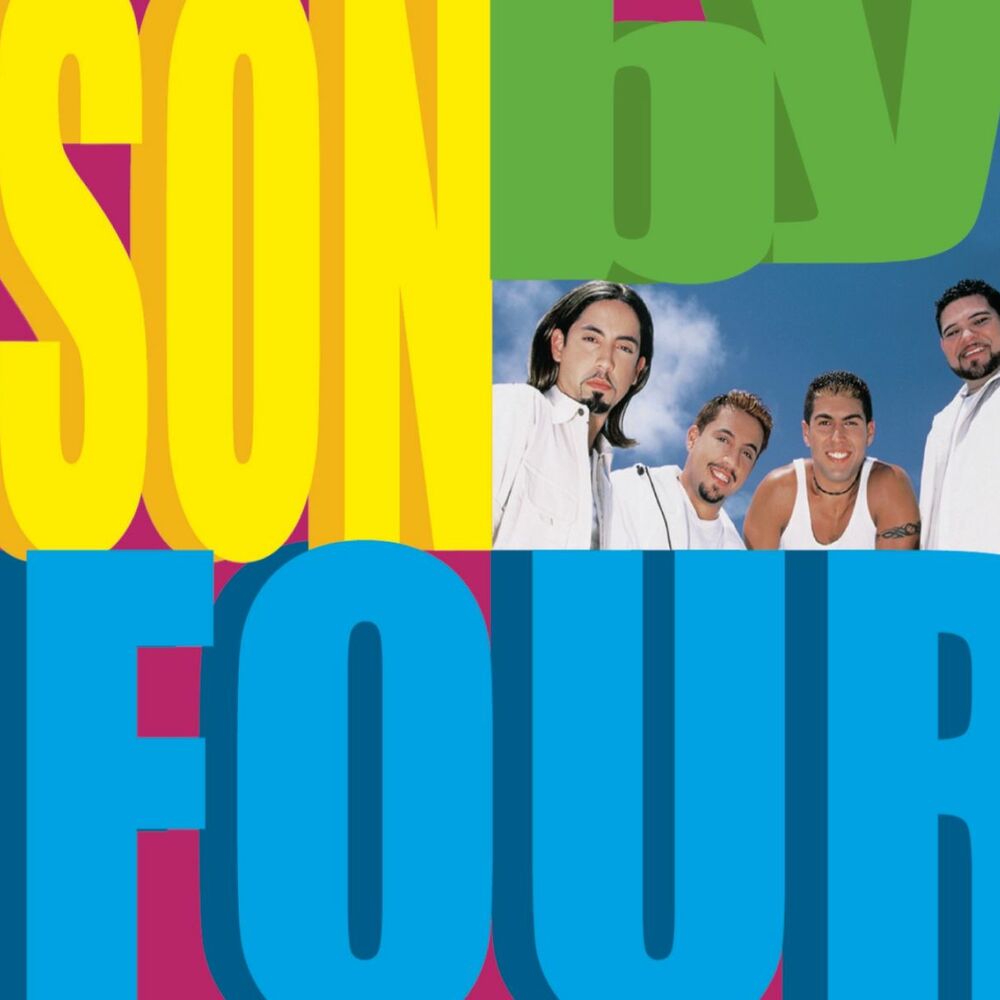
Tracks
| 1 | A Puro Dolor (Son By Four) | 4:24 | |
| 2 | Pero Eres Tú (Son By Four) | 4:11 | |
| 3 | Sofía (Son By Four) | 4:18 | |
| 4 | Poca Mujer (Son By Four) | 4:26 | |
| 5 | Qué Está Pasando (Son By Four) | 4:07 | |
| 6 | Mi Corazón Te Recuerda (Son By Four) | 4:59 | |
| 7 | Donde Esta Tu Amor | 4:30 | |
| 8 | Lo Que Yo Más Quiero (Son By Four) | 4:49 | |
| 9 | Cómo Decírselo (Son By Four) | 4:05 | |
| 10 | Lo Que Yo No Tengo | 4:56 | |
| 11 | Muévelo | 3:29 | |
| 12 | Lunática (Son By Four) | 5:00 | |
| 13 | A Puro Dolor (Son By Four) | 3:30 | |
| 14 | Sofía (Son By Four) | 4:33 | |
| 15 | Purest of Pain (English Version) (Son By Four) | 3:30 |
About the album
Seventh Son of a Seventh Son is the seventh studio album by English heavy metal band Iron Maiden. It was released on 11 April 1988 in the United Kingdom by EMI Records and in the United States by Capitol Records. Like The Number of the Beast (1982) and later Fear of the Dark (1992), The Final Frontier (2010), and The Book of Souls (2015), the album debuted at number one on the UK Albums Chart. The lead single "Can I Play with Madness" was also a commercial success, peaking at No. 3 in the UK Singles Chart.
A concept album inspired by the novel Seventh Son by Orson Scott Card, the record incorporates elements of progressive rock, seen in the length and complex structure of the title track. It was also the first Iron Maiden album to feature keyboards, after the band had introduced non-keyboard synth effects on their previous LP, Somewhere in Time (1986).
After his contributions were rejected for Somewhere in Time, Seventh Son of a Seventh Son features several songs co-written by lead vocalist Bruce Dickinson, who states that his enthusiasm for the band was renewed during the album's production stages.
Background, writing and concept
The idea to base the album around the folklore concept of the seventh son of a seventh son came to bassist Steve Harris after he read Orson Scott Card's Seventh Son. Harris stated, "It was our seventh studio album and I didn't have a title for it or any ideas at all. Then I read the story of the seventh son, this mystical figure that was supposed to have all these paranormal gifts, like second sight and what have you, and it was more, at first, that it was just a good title for the seventh album, you know? But then I rang Bruce Dickinson and started talking about it and the idea just grew."
After his songwriting contributions were rejected from the band's previous album, 1986's Somewhere in Time, Dickinson felt that his role within the band had diminished, as he "just became the singer", but felt renewed enthusiasm when Harris explained the concept to him; "I thought, 'What a great idea! Brilliant!' And of course I was really chuffed, too, because he'd actually rung me to talk about it and ask me if I had any songs that might fit that sort of theme.
Promotion
To promote the album, the band hosted an evening of television, radio and press interviews at Castle Schnellenberg in Attendorn, Germany prior to the record's release, before holding a small number of "secret" club shows, under the name "Charlotte and the Harlots", at Empire, Cologne and L'Amour, New York. In May, the group set out on a supporting tour which saw them perform to more than two million people worldwide over seven months. In August, the band headlined the Monsters of Rock festival at Donington Park for the first time before a crowd of 107,000, the largest in Donington's history, and recorded a concert video, entitled Maiden England at the NEC, Birmingham in November. To recreate the album's keyboards onstage, the group recruited Michael Kenney, Steve Harris' bass technician, to play the keys throughout the tour, during which he would perform the song "Seventh Son of a Seventh Son" on a forklift truck under the alias of "The Count" (for which he would wear a black cape and mask).
Critical reception
The album has received consistent critical praise since its release, with AllMusic rating it 4.5 out of 5, saying that the addition of keyboards "restores the crunch that was sometimes lacking in the shinier production of the previous album" and that it "ranks among their best work". Sputnikmusic scored the album 4 out of 5, and, while they state that "the band has better releases, such as Powerslave and Somewhere in Time", they argue that it is "lyrically ... one of Maiden's finest efforts". In 2005, the album was ranked No. 305 in Rock Hard magazine's book of The 500 Greatest Rock & Metal Albums of All Time. In his biography of the band, Paul Stenning stated, "this line-up of the group hit its peak in 1988". It also ranked No. 11 in Loudwire's list of the "Top 25 Progressive Metal Albums of All Time".
Although Geoff Barton states that contemporary reviews contained "a definite reaction against Maiden emphasising their prog-rock pretensions", and that "one critic ... slammed Maiden for Seventh Son...
Commercial performance
The album debuted at No. 1 in the UK Albums Chart (their first since The Number of the Beast) as well as No. 12 in the US, while the singles "Can I Play with Madness", "The Evil That Men Do" and "The Clairvoyant (live)" reached No. 3, No. 5 and No. 6 positions respectively in the UK Singles Chart. Smith highlights "Can I Play with Madness" as "our first proper hit single." The album quickly sold 100,000 copies in the UK being certified gold just two days after its release on April 13, 1988. It also reached gold certification in the US two months after release on June 6, as well as Germany and Switzerland and platinum certification in both Canada and Italy.
Production
Martin "Disappearing Armchair" Birch – producer, engineer, mixing, tape operator
Stephane Wissner – engineer, assistant engineer
Bernd Maier – engineer, assistant engineer
George Marino – mastering engineer
Derek Riggs – sleeve illustrations
Ross Halfin – photography
Rod Smallwood – sleeve concept
Hugh Gilmour – reissue design (1998 edition)