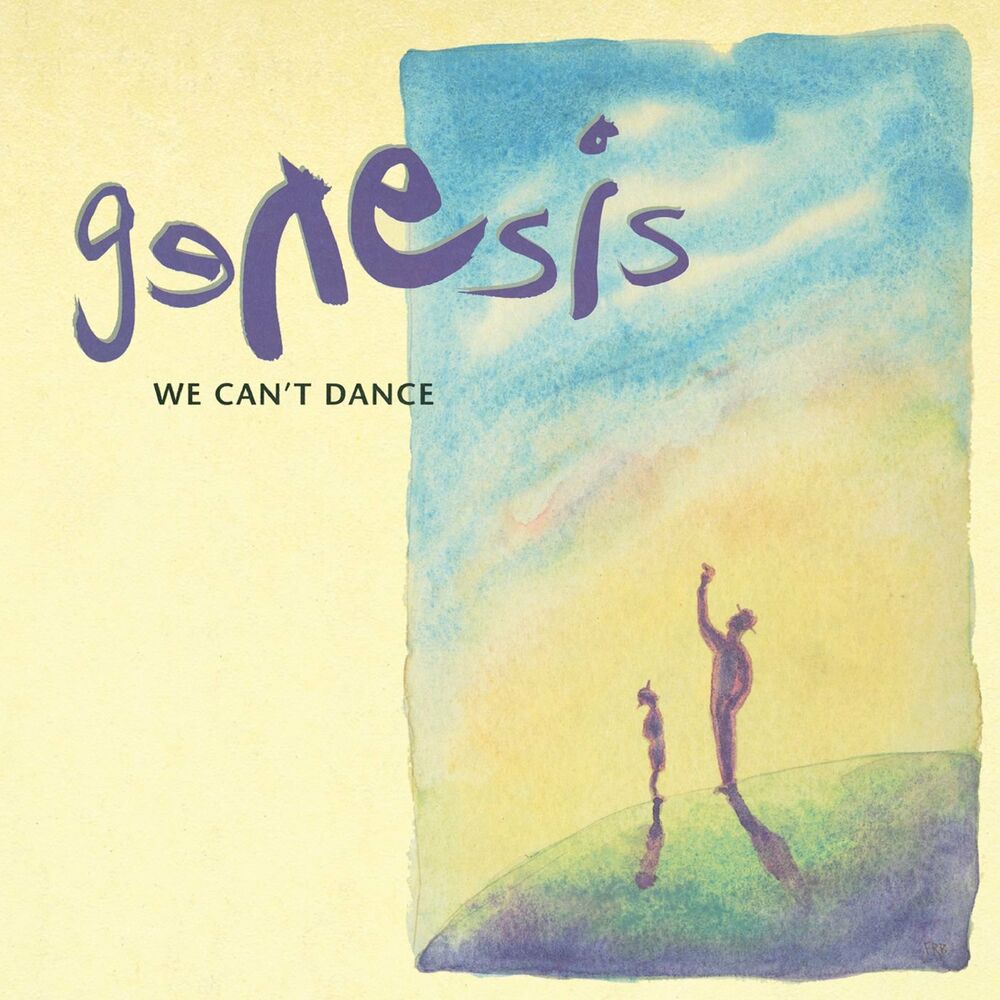
We Can't Dance (2007 Remaster)
- Released11 November 1991
- UK peak No. 1
- Weeks on UK chart 61
- Entered UK chart 17 November 1991
- LabelRhino Atlantic
- Tracks12 · 72 min
6 tracks from it charted as singles. Press a flag to play it in the chart where it peaked.
Tracks
| 1 | 6:39 | ||
| 2 | 4:16 | ||
| 3 | Driving the Last Spike (2007 Remaster) | 10:08 | |
| 4 | 3:59 | ||
| 5 | Never a Time (2007 Remaster) No. 21 · 1993 | 3:50 | |
| 6 | Dreaming While You Sleep (2007 Remaster) | 7:16 | |
| 7 | Tell Me Why (2007 Remaster) No. 40 · 1993 | 4:59 | |
| 8 | Living Forever (2007 Remaster) | 5:41 | |
| 9 | 4:37 | ||
| 10 | Way of the World (2007 Remaster) | 5:39 | |
| 11 | Since I Lost You (2007 Remaster) | 4:09 | |
| 12 | Fading Lights (2007 Remaster) | 10:27 |
About the album
We Can't Dance is the fourteenth studio album by the English rock band Genesis, released on 11 November 1991 by Virgin Records in the UK and a day later by Atlantic Records in the US. It was the last Genesis album recorded with the drummer and singer Phil Collins before his departure in 1996 to pursue solo projects full time. It was Genesis's first album after touring their previous album, Invisible Touch (1986).
We Can't Dance was Genesis's fifth consecutive No. 1 album in the UK. It reached No. 4 in the US, where it sold over four million copies. Between 1991 and 1993, six tracks were released as singles, including "I Can't Dance", which was nominated for the Grammy Award for Best Pop Performance by a Duo or Group With Vocals in 1993. Genesis toured in support of We Can't Dance from May to November 1992, playing large stadiums and arenas across North America and Europe.
Background
In July 1987, the Genesis line-up of drummer and singer Phil Collins, keyboardist Tony Banks, and bassist and guitarist Mike Rutherford wrapped their 1986–1987 world tour in support of their thirteenth studio album, Invisible Touch (1986). The 112-date tour, attended by an estimated 3.5 million people, was taxing, particularly for Rutherford following his father's death and almost losing his son Harry due to a difficult birth. The band entered a three-and-a-half-year period of inactivity, during which each member continued with solo projects. Collins achieved further worldwide success following the release of his solo album ...But Seriously (1989), while Rutherford's band, Mike and the Mechanics, also had hits. Banks and Rutherford expected Collins to leave the band, but he stayed on to record another Genesis studio album with them. The band had initially agreed to enter production in 1990, but it was pushed to 1991 because of Collins' lengthy solo tour. The album's title derived mostly from the popularity of dance music and its presence in the charts at the time.
Recording
Genesis recorded We Can't Dance from March to September 1991 at their private recording studio named the Farm in Chiddingfold, Surrey. The trio were keen to work together after such an extensive break, and after two-and-a-half months of what Collins described as "chopping away, fine-tuning, and honing down all these ideas", they had completed some fifteen tracks. They originally considered releasing a double album, but realised most people would be listening to their work on CD which gave them the additional time they wanted to present more of their musical ideas. As with Genesis (1983) and Invisible Touch, none of the material on We Can't Dance was conceived beforehand, and the band instead developed songs through lengthy improvisational jams in the studio. This was a deciding factor for Collins to remain in the band despite his solo success as he enjoyed writing songs with his Genesis bandmates. A typical session would involve Banks and Rutherford playing chords, with Collins devising a drum pattern with a drum machine, which allowed him to sing notes and placeholder lyrics.
Release
We Can't Dance was released worldwide on 11 November 1991 on Virgin Records and on 12 November 1991 by Atlantic Records in the United States. The album was a success in the charts, going to number one on the UK Albums Chart for two non-consecutive weeks beginning 23 November 1991 and 22 August 1992. In the United States, it debuted the Billboard 200 chart at number four, the week of 30 November 1991. It stayed at its peak for one week during its 72-week stay on the chart. The album also spawned several hit singles, including "No Son of Mine", "Hold on My Heart", "I Can't Dance" and "Jesus He Knows Me", the latter two supported by humorous videos.
On 1 December 1991, the album was certified double Platinum by the British Phonographic Industry (BPI) for shipment of 600,000 copies. A year later, sales grew to reach quadruple platinum, signifying 1.2 million copies sold. The album reached quintuple platinum status in March 1997, for 1.5 million copies sold. In the United States, We Can't Dance shipped 1 million copies by 27 December 1991.
Critical reception
Rolling Stone chiefly commented on the album's lyrics. They criticised "Tell Me Why" and "Way of the World" for being soulless and impersonal social commentaries, but regarded most of the songs as outstanding, and summarised "Although We Can't Dance doesn't quite achieve the vulnerable grace of Duke or the exuberance of Abacab, Genesis has nevertheless delivered an elegantly spare – and even adventurous – album." David Browne of Entertainment Weekly wrote: "At a time when everything is uncertain ... you almost have to admire a record like We Can't Dance. ... You know there will be a couple of fleeting moments when the band breaks out of its torpor – for instance, on the very polite primal stomp of 'I Can't Dance' – and that such moments will just as quickly be subsumed by the rest of the musical quicksand."
In a retrospective assessment, AllMusic criticised the lyrics of "Tell Me Why" and "Way of the World", calling them "paeans for world understanding that sound miles away from any immediacy".