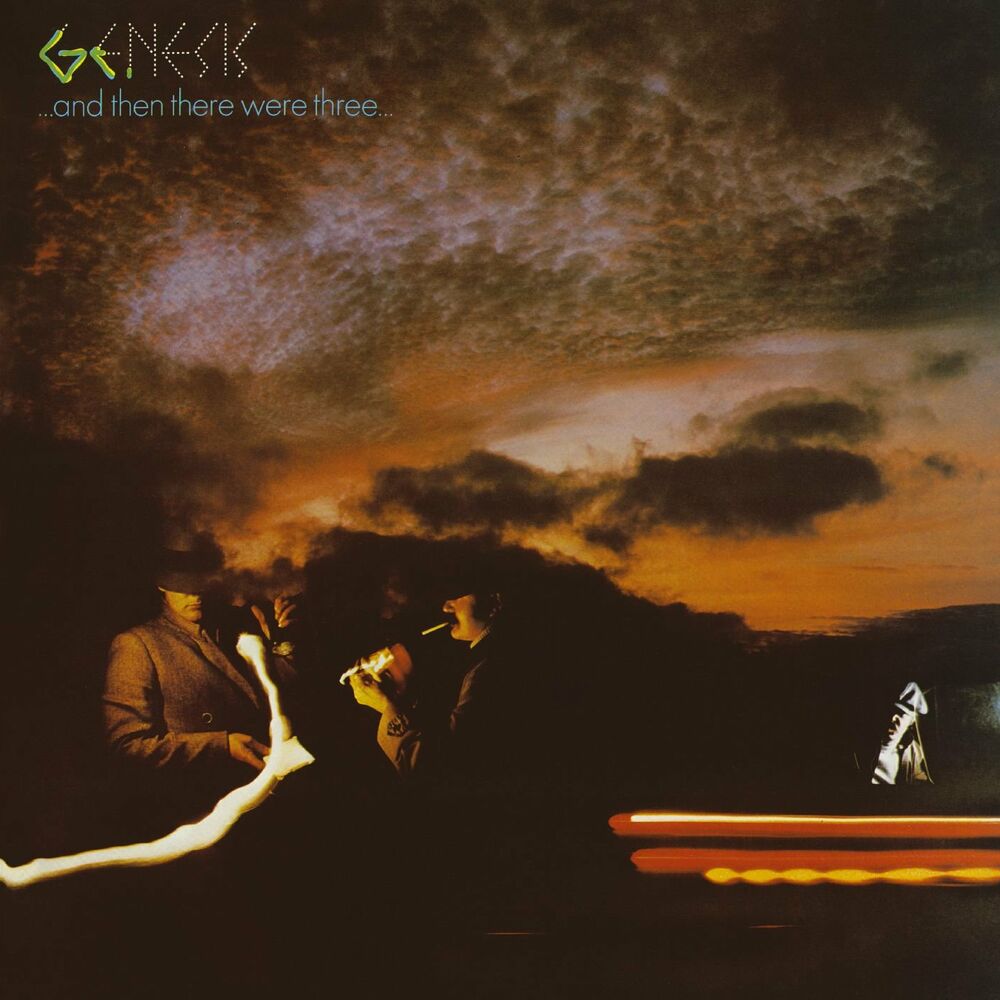
And Then There Were Three (2007 Remaster)
- Released7 April 1978
- UK peak No. 3
- Weeks on UK chart 32
- Entered UK chart 9 April 1978
- LabelRhino Atlantic
- Tracks11 · 53 min
2 tracks from it charted as singles. Press a flag to play it in the chart where it peaked.
Tracks
| 1 | Down and Out (2007 Remaster) | 5:28 | |
| 2 | Undertow (2007 Remaster) | 4:47 | |
| 3 | Ballad of Big (2007 Remaster) | 4:50 | |
| 4 | Snowbound (2007 Remaster) | 4:31 | |
| 5 | Burning Rope (2007 Remaster) | 7:10 | |
| 6 | Deep in the Motherlode (2007 Remaster) | 5:15 | |
| 7 | Many Too Many (2007 Remaster) No. 43 · 1978 | 3:31 | |
| 8 | Scenes from a Night's Dream (2007 Remaster) | 3:29 | |
| 9 | Say It's Alright Joe (2007 Remaster) | 4:21 | |
| 10 | The Lady Lies (2007 Remaster) | 6:08 | |
| 11 | 3:59 |
About the album
...And Then There Were Three... (stylised in all lowercase) is the ninth studio album by the English rock band Genesis. It was released on 31 March 1978 by Charisma Records in the UK and by Atlantic Records in the US. The album marks a major turning point in the band's history, following the departure of guitarist Steve Hackett. This reduced the line-up to a core trio of drummer and vocalist Phil Collins, keyboardist Tony Banks, and bassist/guitarist Mike Rutherford. Faced with the loss of a primary songwriter, the remaining members deliberately shifted away from the sprawling, epic progressive rock structures that defined their previous work, opting instead for shorter, tighter, and more direct song formats.
The album was recorded in the Netherlands and mixed at Trident Studios in London, under the direction of the band and producer David Hentschel. With Hackett gone, Rutherford took on all studio guitar duties, which significantly simplified the group's arrangements. The new songwriting approach yielded the band's first major global hit single, "Follow You Follow Me", which became their highest charting at that point, reaching No. 7 in the UK and No. 23 in the US. The single broadened their demographic appeal and helped bridge the gap between their traditional fan base and mainstream pop audiences.
Upon release, ...And Then There Were Three...
Background
In July 1977, the Genesis line-up of drummer and vocalist Phil Collins, keyboardist Tony Banks, bassist Mike Rutherford, guitarist Steve Hackett, and touring drummer Chester Thompson completed their tour in support of their eighth studio album, Wind & Wuthering. The band proceeded to edit and mix their second live album, Seconds Out, in August 1977, during which time Hackett left the band to pursue a solo career. Already having released one solo album in 1975, Voyage of the Acolyte, Hackett had become increasingly frustrated by the band's lack of interest in his ideas. Further, since Genesis had recently performed at Madison Square Garden, Hackett felt the group had reached its pinnacle and thus he had no reason to continue performing with them. His departure was not made public until 8 October, when Collins, Banks, and Rutherford were promoting Seconds Out.
Writing and recording
Rehearsals began at Shepperton Studios and lasted for around six weeks. In September 1977, the remaining three members returned to Relight Studios in Hilvarenbeek, Netherlands to write and record their new album, the same venue as used for the Wind & Wuthering album. The group wished to record in a new location, but they could not find a studio that fit their needs and did not wish to travel too far from England. Rutherford wished to remain in London, but noted recording abroad was their "one tax concession". Joining the group was audio engineer and co-producer David Hentschel who had worked on the band's past two albums. Genesis also shared production duties and are credited on the album's sleeve. According to Rutherford, the material was recorded in two weeks. The band considered auditioning for a new guitarist or utilising a studio guitarist for the album, but Rutherford felt confident enough in his skills to take on the lead guitar parts himself, feeling he would enjoy the challenge of doing so.
Writing
The album marked a change in the band's sound, moving from their progressive rock roots towards shorter, more concise songs. The motivation for this was to enable more musical ideas to be put on a single album, and to act as a response to the newly emerging punk rock and new wave scenes, where short and concise songs were standard. Collins recognised how this decision gave the impression that Genesis was aiming to become "a singles band" that prioritised commercial success over artistic credibility, but maintained that the new material remained "fundamentally the same". Rutherford in particular wanted to forge his own style and not copy Hackett's distinctive guitar tones, so the album was more dominated by Banks' keyboards, with sparser and simpler guitar parts.
Release
...And Then There Were Three... was released in the UK on 31 March 1978 and in the US on 28 March on Atlantic Records. It reached No. 3 on the UK Albums Chart during a 32-week stay on the chart and No. 14 on the US Billboard 200. The album continued to sell, and was certified gold by the Recording Industry Association of America on 31 May 1978 for 500,000 copies sold in the US. It reached platinum status on 11 February 1988 for selling one million copies. The album was considered a commercial breakthrough for Genesis, as it brought in sufficiently large audiences to be able to make a profit from touring, which before then had always run at a loss.
Genesis released two singles from ...And Then There Were Three.... The lead single, "Follow You Follow Me", became their most successful since their formation, peaking at No. 7 in the UK.
A digitally remastered version was released on CD in 1994 on Virgin in Europe and Atlantic in the US and Canada. A SACD / DVD double disc set (including new 5.1 and Stereo mixes) was released on 2 April 2007.
Critical reception
In an April 1978 review for Melody Maker, reporter Chris Welch praised the album as "strong, confident" that is "as good as any they have made in the band's post-Gabriel years". Welch noted the songs have "a sense of purpose" and come with "a remarkably powerful sound", and picked "Ballad Of Big" as his favourite track. A review in The Town Talk praised the group for filling the gap Hackett left "confidently" and picks "Down And Out" as claim of their survival. The rest of the album is "a tapestry of imaginary landscapes filled with the struggling mythic heroes that Genesis has learned to depict so well". Gary Mullinax for The Morning News thought the album sounded little different to Wind & Wuthering and noted the dominance of Banks's keyboards over Rutherford's guitars, with "the same dreamy wall-of-sound music with the same high-pitched vocals" from Collins. He concluded that Genesis succeed at points on the album but thought many songs on it fail to go anywhere, "blending into one another like some sort of hip musak".