One track from it charted as a single. Press a flag to play it in the chart where it peaked.
Tracks
| 1 | Can't Lose What You Never Had | 5:49 | |
| 2 | Just Another Love Song | 2:43 | |
| 3 | Nevertheless No. 67 · 1975 | 3:29 | |
| 4 | Win, Lose Or Draw | 4:44 | |
| 5 | Louisiana Lou And Three Card Monty John | 3:43 | |
| 6 | High Falls | 14:28 | |
| 7 | Sweet Mama | 3:32 |
About the album
Win, Lose or Draw is the fifth studio album and sixth overall by American rock group the Allman Brothers Band. Produced by Johnny Sandlin and the band themselves, it was released on August 22, 1975, in the United States by Capricorn Records. It was the last studio album to feature bassist Lamar Williams and pianist Chuck Leavell.
The band had previously released Brothers and Sisters in 1973 to critical and commercial success. The group toured the following year, attracting large crowds and earning substantial amounts of money, all while internal tension grew among the members. Vocalist and keyboardist Gregg Allman and vocalist and guitarist Dickey Betts released solo albums — The Gregg Allman Tour and Highway Call, both issued that fall — which prompted speculation on the band's unity.
When the band regrouped to work on Win, Lose or Draw, unresolved issues arose in rehearsals. The band was particularly critical of Allman's decision to move to Los Angeles, as well as his tabloid relationship with pop star Cher. With miscommunication and anger at an all-time high, the band pieced together the album over a period of several months, in stark contrast to their usual recording methods. Band members often could not be present in the studio at the same time.
Reviews of the album when it came out were mixed-to-positive, but retrospective reviews have generally been unfavorable.
Background
Brothers and Sisters, the Allman Brothers Band's fourth studio album, was released in August 1973 to substantial commercial success. The band began playing arenas and stadiums almost exclusively as their drug use escalated. By 1974, the band were regularly making $100,000 per show, and were renting the Starship, a customized Boeing 720B used by Led Zeppelin, Deep Purple and the Rolling Stones. The band toured from May to August 1974 for 25 shows, but took a break following its completion due to growing tensions. The band received nearly $150,000 for their spot at the Georgia Jam in June, playing alongside Lynyrd Skynyrd and the Marshall Tucker Band. The band also performed their first overseas concerts, in London and Amsterdam.
In August 1974, Betts released his first solo album, the country-flavored Highway Call. Having wanted to focus on his musical roots, he employed a Southern gospel group, the Rambos, on background vocals, as well as Vassar Clements on fiddle and John Hughey on steel guitar. The album eventually climbed to number 19 on Billboard's Top Pop Albums chart.
Recording and production
Win, Lose or Draw was recorded from February to July 1975, in sessions that were described as "noncohesive". Tensions had risen to all-time highs within the group. Allman arrived a day late to a rehearsal early on in the recording process, leading the other members to "pummel" him with inquiries about his future with the group and decision to move to Los Angeles, as well as his relationship with Cher. In truth, the tension stemmed not from his relationship or relocation to Los Angeles, but from his and Betts's respective solo albums. The tension was amplified by numerous drugs the band were constantly using. "In the end I probably did spend too much time out in California," Allman said. "But at that point it was easy to run; those sessions were the worst experience I ever had in a studio." Sandlin flew to Los Angeles to record Allman's vocals at the Record Plant. Cher did not appear on the album in any guest role, however.
Sessions typically began at 9pm, and oftentimes barely started because band members would not show up.
Artwork
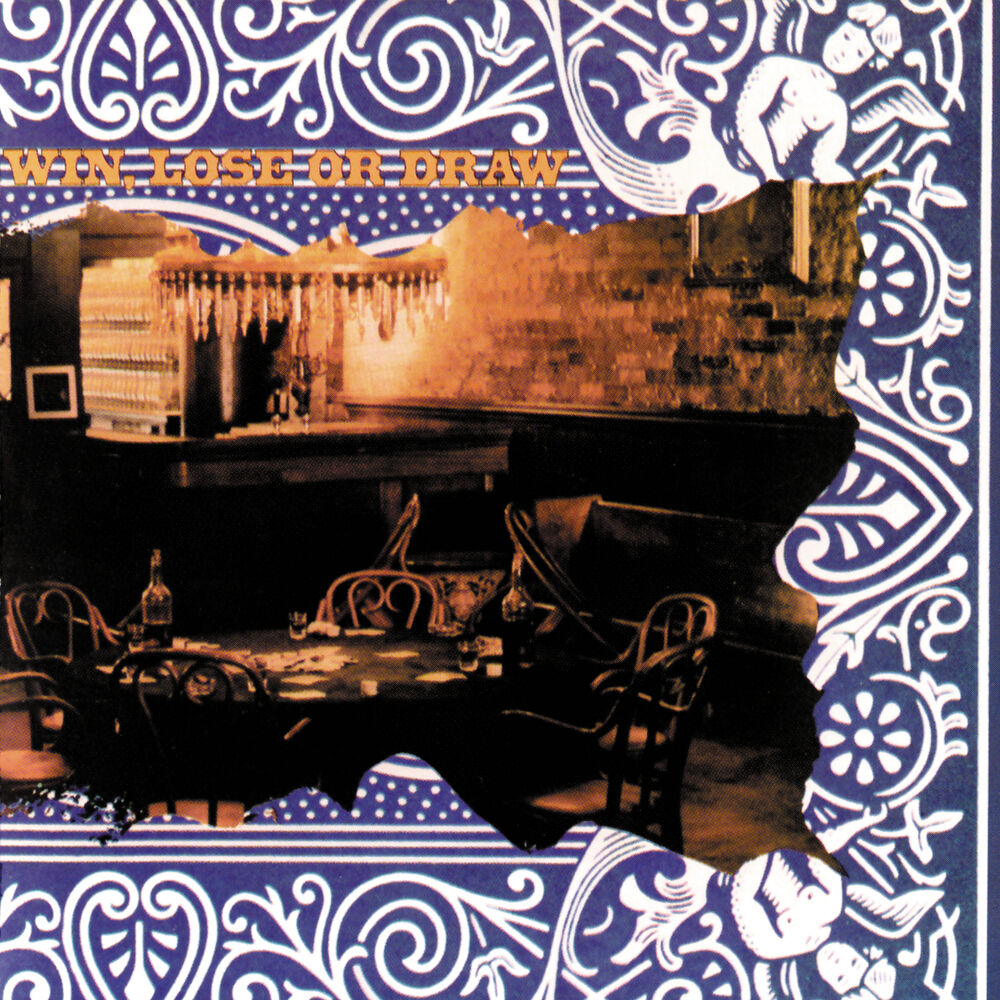
The cover, designed by Twiggs Lyndon, depicts an interior shot of a deserted Old West saloon. "A poker table topped with half-empty whiskey bottles, cards, and chips sits front and center, surrounded by six empty chairs representing the then-current members." Likewise, two empty chairs lean against a table in the background, representing past members Duane Allman and Berry Oakley. "I never exactly understood that cover. I've heard a lot of interpretations and each one went deeper and deeper. All I know for sure is it's kind of alarming," said Sandlin.
The photograph was actually taken in the former Muhlenbrinks Saloon, in The Underground, in Atlanta.
Reception
It is generally perceived that Win, Lose or Draw was received poorly by critics, or at best got a mixed reception. However reviews upon the release of the album were mixed-to-positive. Tony Glover of Rolling Stone gave it a very favorable review at the time. Robert Hilburn of the Los Angeles Times recommended it for students going back to college and said it would provide the same "many hours of pleasant listening" that Brothers and Sisters had. Hiburn also said that the album showed "how far above most rock bands—in both musical design and execution—the Georgia-based group still is." The Tucson Daily Citizen gave it a favorable review that praised the band's "total technical supremacy" and said that the lengthy "High Falls" was "good swinging-but-always-in-control stuff". The Bergen Record named it as one of the best albums of the year.
Among the less favorable reviews was that of Robert Christgau, who said the record sounded like it was made by a group that was breaking up.
Aftermath
The Allman Brothers would dissolve in acrimony the following year 1976 and, a late 1970s reunion attempt notwithstanding, would not reclaim their spot in the American musical pantheon until their successful 1989 reformation.
The band has since looked back at Win, Lose or Draw with mixed perception. "The main problem with Win, Lose or Draw is simply that none of us were really into the music," remarked Trucks. "Everyone was into getting fucked up and fucking. We were into being rock stars and the music became secondary. When we heard the finished music, we were all embarrassed." Allman agreed with this sentiment: "Win, Lose or Draw was a perfect reflection of our situation in 1975. It was basically all over with the Allman Brothers Band."