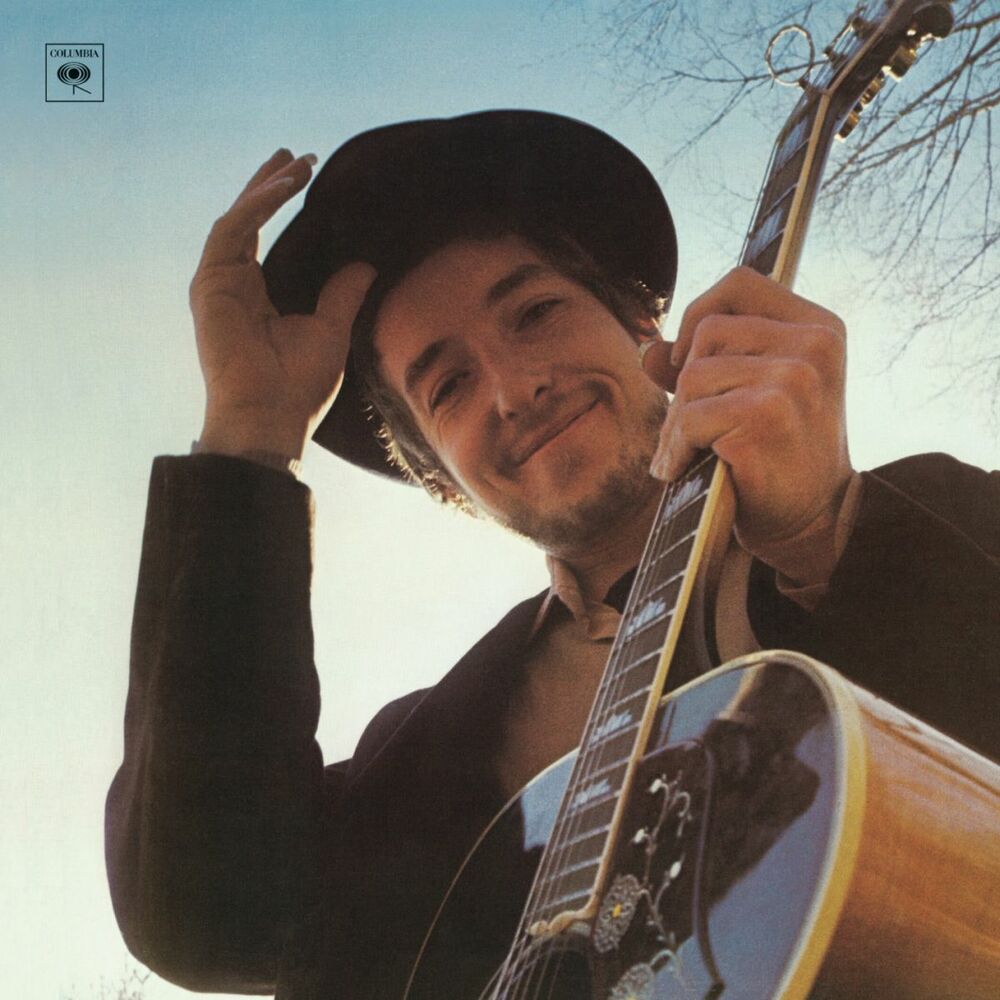
Nashville Skyline
- Released9 April 1969
- UK peak No. 1
- Weeks on UK chart 42
- Entered UK chart 11 May 1969
- LabelColumbia
- Tracks10 · 27 min
3 tracks from it charted as singles. Press a flag to play it in the chart where it peaked.
Tracks
| 1 | Girl from the North Country | 3:41 | |
| 2 | Nashville Skyline Rag | 3:11 | |
| 3 | To Be Alone with You | 2:08 | |
| 4 | 2:23 | ||
| 5 | Peggy Day | 2:00 | |
| 6 | 3:18 | ||
| 7 | One More Night | 2:22 | |
| 8 | Tell Me That It Isn't True | 2:40 | |
| 9 | Country Pie | 1:37 | |
| 10 | Tonight I'll Be Staying Here with You No. 50 · 1969 | 3:22 |
About the album
Nashville Skyline is the ninth studio album by the American singer-songwriter Bob Dylan, released on April 9, 1969, by Columbia Records as LP record, reel-to-reel tape, and audio cassette.
Building on the rustic style he experimented with on John Wesley Harding, Nashville Skyline displayed a complete immersion into country music. Along with the more basic lyrical themes, simple songwriting structures, and charming domestic feel, it introduced audiences to a radically new singing voice from Dylan, who had temporarily quit smoking—a soft, affected country croon.
The result received a generally positive reaction from critics, and was a commercial success. The album scored Dylan his fourth UK No. 1 album and reached No. 3 in the U.S.
Background
The concept of recording a country album in Nashville was first discussed with Dylan in 1965 by Johnny Cash, who expressed interest in producing such an album. "I've got my own ideas about that Nashville sound and I'd like to try it with Bob," Cash said in a March 1965 interview with Music Business magazine. Those sessions did not end up materializing until 1969 and by June of 1965, Dylan was going fully electric with the recording of Highway 61 Revisited. By the time Nashville Skyline was recorded, the political climate in the United States had grown more polarized. In 1968, civil rights leader Martin Luther King Jr. and Senator Robert F. Kennedy (a leading candidate for the presidency) were assassinated. Riots related to the Vietnam War and civil rights broke out in most large American cities. A major one surrounding the Democratic National Convention in Chicago and racially motivated conflagrations spurred by King's assassination marked this period. A new president, Richard Nixon, was sworn into office in January 1969, but the U.S.
Critical reception and legacy
Despite the dramatic commercial shift in direction, the press also gave Nashville Skyline a warm reception. A critic for Newsweek wrote of "the great charm... and the ways Dylan, both as composer and performer, has found to exploit subtle differences on a deliberately limited emotional and verbal scale." In Rolling Stone, Paul Nelson wrote, "Nashville Skyline achieves the artistically impossible: a deep, humane, and interesting statement about being happy. It could well be... his best album." However, Nelson would reconsider his opinion in a review for Bob Dylan's Greatest Hits Vol. II less than three years later, writing, "I was misinformed. That's why no one should pay any attention to critics, especially the artist." In The Village Voice, Robert Christgau argued that "the beauty of the album" was in the "totally undemanding" and "one-dimensional" quality of the songs, believing Dylan had toyed with the public's expectations again by embracing a country tenor voice and aesthetic.
Production
Bob Johnston – production
Charlie Bragg – engineering
Neil Wilburn – engineering
Elliot Landy – photographer front cover
Al Clayton – photographer back cover