Tracks
| 1 | Kitty (Stereo Version) | 2:19 | |
| 2 | I'm So Sleepy (Stereo Version) | 2:17 | |
| 3 | Northern Wind (Stereo Version) | 2:45 | |
| 4 | The Laughing Apple (Stereo Version) | 2:33 | |
| 5 | Smash Your Heart (Stereo Version) | 2:55 | |
| 6 | Moonstone (Stereo Version) | 2:11 | |
| 7 | The First Cut Is The Deepest (Stereo Version) | 2:59 | |
| 8 | I'm Gonna Be King (Stereo Version) | 2:24 | |
| 9 | Ceylon City (Stereo Version) | 2:23 | |
| 10 | Blackness Of The Night (Stereo Version) | 2:25 | |
| 11 | Come On Baby (Shift That Log) (Stereo Version) | 3:47 | |
| 12 | I Love Them All (Stereo Version) | 2:04 | |
| 13 | Here Comes My Wife (Mono Version) | 2:56 | |
| 14 | A Bad Night | 3:10 | |
| 15 | The Laughing Apple (Mono Version) | 2:33 | |
| 16 | Kitty (Mono Version) | 2:17 | |
| 17 | Blackness of the Night (Mono Version) | 2:25 | |
| 18 | Lovely City (When Do You Laugh?) | 2:38 | |
| 19 | Image Of Hell | 3:03 | |
| 20 | It's A Super (Dupa) Life | 2:50 | |
| 21 | Here Comes My Wife (Electronic Stereo Version) | 2:56 | |
| 22 | Where Are You (Mono Version) | 2:56 | |
| 23 | The View From The Top | 3:35 |
About the album
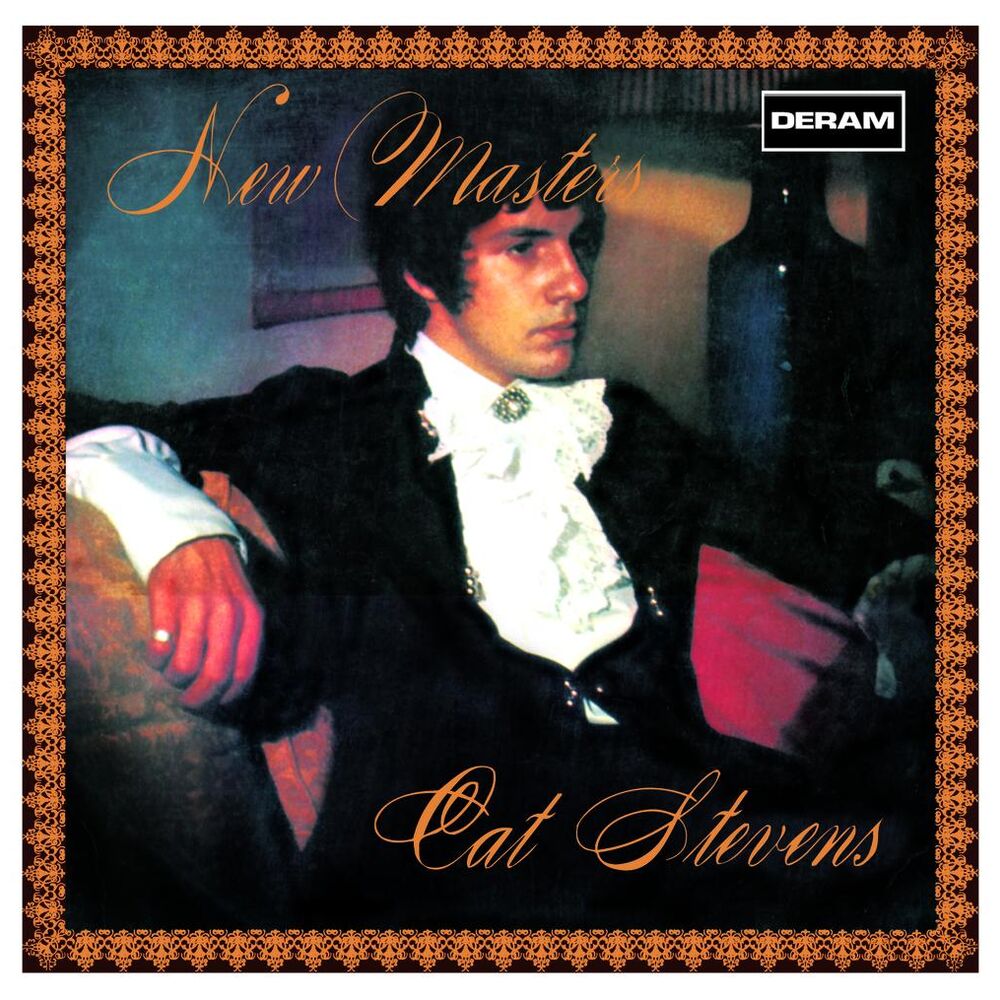
New Masters is the second studio album by British singer-songwriter Cat Stevens, released on 15 December 1967 by Deram Records. Stevens established himself as a successful pop star by the summer of 1967, with top-ten singles such as "Matthew and Son" (1966) and his debut album Matthew & Son (1967). Stevens wanted to branch out from the musical style that made him successful, disappointing Deram and producer Mike Hurst; Hurst got into a legal feud with Stevens. New Masters was recorded amidst legal trouble primarily between October and November 1967 with a session spanning back to July. Most of the album was recorded at Decca Studios, although several songs were recorded at Olympic Studios. The sessions also produced the non-album single "A Bad Night" (1967).
Conceived as a "darker" than its predecessor, New Masters was intended as more self-conscious and serious than Matthew & Son. It contains many different genres, primarily his previously established folk-pop and baroque pop style but also songs inspired by the Wild West, songs written with influences from the British Museum and re-writes of Stevens's previous hit singles and protest songs. All of the album's tracks were written by Stevens, including his rendition of "The First Cut Is the Deepest" (originally recorded by P. P.
Background
By the summer of 1967, Cat Stevens had achieved immense commercial success in the United Kingdom. His singles "Matthew and Son" (1966) and "I'm Gonna Get Me a Gun" (1967) had both reached the Record Retailer top-ten, as had his debut album Matthew & Son (1967). According to writer John Tracy, Stevens' had "arrived in triumphant style" by the span of less than 8 months. In addition to having become a teenage idol, he had also established himself as a respected songwriter when the Tremeloes rendition of "Here Comes My Baby" (1967) also became a worldwide hit, which additionally had made him wealthy in the form of royalties. Although he made upwards of £1,000 a week solely by performing, his career was "about to take a nosedive". Stevens' had started experiencing the downsides of stardom and began drinking and smoking heavily to cope with his loneliness; in a later interview, Stevens stated that he "needed at least a bottle of brandy or wine" to get him onto stage.
At the time, Stevens was signed to Deram Records and was produced by former Springfields-member Mike Hurst.
Recording
Cat Stevens and producer Mike Hurst finally convened together at Olympic Studios in Barnes, London on 3 July 1967 together with music director Arthur Greenslade. This was Stevens' first studio session in almost half a year, following his 1 February recording of "Here Comes My Baby", which had appeared on Matthew & Son. Stevens' recorded two songs that would appear on New Masters at Olympic; "Moonstone and "The Laughing Apple". A third song, "A Bad Night", was aimed as a single release. Following this, Stevens garnered a preference for Olympic Studios, compared to Decca Studios in West Hampstead where most of his other Deram output was recorded.
According to both Stevens and Hurst, the recording of New Master was "horrendous"; the latter admitted that lawyers were present in the studio during the recording sessions. Due to the contractual problems with Stevens, Decca believed the album might "have been their last shot with him", and thus forced him to record the rest of it at Decca Studios, despite his objections as he wanted "to use Olympic again".
Release and commercial performance
New Masters was initially slated for release in September 1967, but was delayed to allow for a revised track listing. On 1 December, Deram issued "Kitty", backed by "Blackness of the Night" as a single as a "taster of things to come". The single only showed a mild performance on the charts, reaching number 47 for a single week, prompting Deram to rush-release New Masters in the UK on 15 December 1967 in both mono and stereo formats. A release of New Masters followed in the United States during January 1968, where it was distributed through London Recordings. Although the album received promotion in major trade magazines including Billboard, Decca was generally unwilling to promote the album due to the "potentially litigious" legal problems between Stevens' and Hurts resulting in it failing to chart entirely in both the UK or the US upon initial release.