Dude Ranch
- Released29 November 2000
- UK peak No. 100
- Weeks on UK chart 1
- Entered UK chart 3 September 2000
- LabelCargo
- Tracks15 · 45 min
Tracks
| 1 | Pathetic | 2:28 | |
| 2 | Voyeur | 2:43 | |
| 3 | Dammit | 2:45 | |
| 4 | Boring | 1:41 | |
| 5 | Dick Lips | 2:57 | |
| 6 | Waggy | 3:16 | |
| 7 | Enthused | 2:48 | |
| 8 | Untitled | 2:46 | |
| 9 | Apple Shampoo | 2:52 | |
| 10 | Emo | 2:50 | |
| 11 | Josie | 3:19 | |
| 12 | A New Hope | 3:45 | |
| 13 | Degenerate | 2:28 | |
| 14 | Lemmings | 2:38 | |
| 15 | I'm Sorry | 5:37 |
About the album
Dude Ranch is the second studio album by the American rock band Blink-182, released on June 17, 1997. The trio formed in 1992 amid the San Diego skate-punk circuit, and built a growing grassroots following through heavy touring. The growing commercial appeal of punk rock brought the band to the attention of major labels, and the resulting arrangement saw Dude Ranch issued on indie Cargo Music with MCA Records handling distribution. It is the band's final album recorded with all three original members, as drummer Scott Raynor was dismissed from the band in 1998.
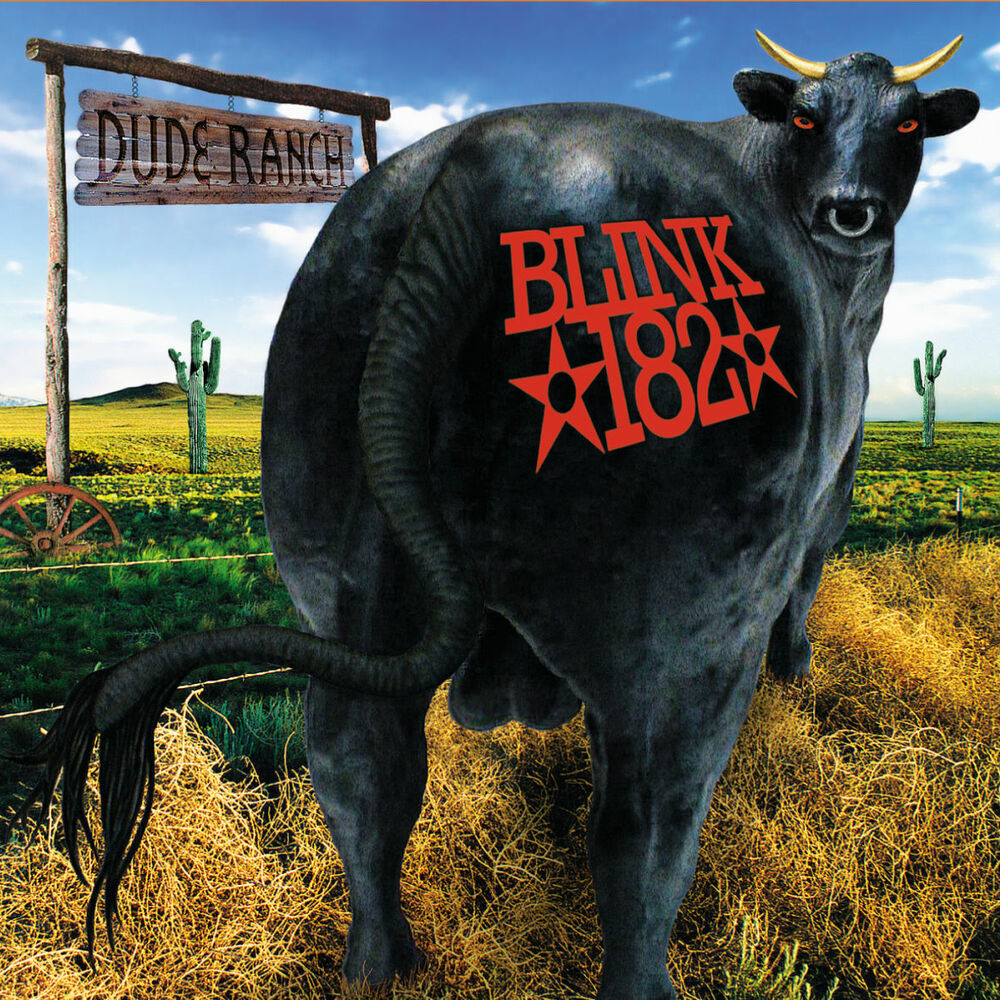
Dude Ranch expands the band's fast-paced punk framework with tighter arrangements and melodic harmonies. The band picked producer Mark Trombino based on his work in the emerging emo scene. Written largely on the road, the material mixes the group’s familiar oddball humor with themes related to maturity, relationships, and time. Trombino pushed the band toward tighter, more disciplined performances amid an otherwise playful atmosphere, even as all three members faced personal challenges. The album's visual identity leans into deliberately absurd cowboy imagery.
Upon release, Dude Ranch received generally positive reviews. It steadily expanded Blink-182's reach via touring and radio play, propelled in part by the modern rock breakthrough of "Dammit".
Background
Blink-182 emerged from the early 1990s San Diego skate-punk scene, formed when Mark Hoppus, Tom DeLonge, and Scott Raynor—musicians bonded by a shared love of fast West Coast punk and irreverent humor—began writing songs together in 1992. They first built a loyal local following through homemade demos and small venues like SOMA, releasing their 1995 debut Cheshire Cat on independent label Cargo Music. With a relentless focus on touring, including a breakout presence on the 1996 Vans Warped Tour, the trio connected with audiences far beyond Southern California, especially skateboard- and surf-culture teens. Cheshire Cat sold well for an indie release; it had moved over 70,000 units by late 1996. But the band grew dissatisfied when fans reported being unable to purchase the album at retailers, leading them to explore labels with stronger distribution networks.
Recording
Blink-182 entered the studio in December 1996 to record Dude Ranch, at Big Fish Studios in Rancho Santa Fe, California, a rural facility in San Diego's North County. The studio, a converted guesthouse on a large property, sat between horse farms and wooded areas. The community had been recently devastated by wildfires, which the band sometimes used as the backdrop for their impromptu videos and antics. The band were afforded more time to record than previous endeavors, and now had the time and resources to fully realize their vision. During breaks, the trio entertained themselves with computer mah-jongg, Crash Bandicoot, and "reading the articles from the shelves and shelves of Playboys that the studio had thoughtfully provided." The group ate lunch nearly each day at Sombrero, a local Mexican restaurant namedropped in "Josie", and Chinese for dinner from Encinitas' Pick Up Stix.
Mark Trombino oversaw the sessions, and also contributed piano and keyboards.
Music
Musically, Dude Ranch continues Blink-182's high-energy punk style, and subtly expands it with more complex vocal harmonies, and keyboard accompaniment, such as the Hammond organ. According to music critic Stephen Thomas Erlewine, Dude Ranch is an album of "juvenile, adrenaline-fueled punk-pop." Billboard magazine's Doug Reece described it as "a collection of machine-gun-quick, energetic punk songs—sometimes with a puerile slant—about such topics as girlfriends, broken hearts, and fights with one's parents." At Alternative Press, it was characterized as a "killer skate-punk record". Greg Simpsons at Punknews.org too labeled it skate punk, stating that the album "set [the] blueprint for their style of poppy, goofy skate punk that they would later bring to the masses." DeLonge considered the album a step up in terms of songwriting, with "Dammit" proving the breakthrough to him.
Artwork and packaging
The band titled the album Dude Ranch after the band's term for parties attended exclusively by men, joking that "there are no girls" at a "dude ranch." The band joked that the album was originally titled Attack of the Epileptic Proctologist. Some listeners, noting the record's raunchy humor and sexual themes, interpreted the title as a crude double entendre referring to semen—a reading Hoppus says was entirely accidental. "We never meant it that way," Hoppus later explained. "In the context of Blink-182 album titles, it makes sense as a pun, but that wasn’t the intention. I just liked the way the words sounded together."
The album cover depicts a bull on a farm branded with the logo for the band, with its prominent testicles swinging below. The accompanying packaging is themed around cowboy and Western ephemera. For the accompanying photography, the band staged a shoot on the Old Mexico backlot at Universal Studios Hollywood, shot by Steven Shea.
Release
Dude Ranch was released on June 17, 1997, jointly through Cargo Music and MCA Records. Dude Ranch was originally set as a joint release between Cargo Records, and MCA subsidiary Way Cool Music, a Sunset Beach-based label run by Mike Jacobs. A year after the album's release, MCA bought out the remaining two years of Way Cool's joint-venture agreement, dissolving the label. MCA gained the rights to the bands on the label, including Blink-182. In Australia, Dude Ranch was released jointly with Rapido, a ska/punk sub-label of what was then Festival Mushroom Records. The band had previously issued Oz-only singles ("Wasting Time") through the label, and arranged a stipulation in their contract with MCA that the label remain involved.
The record, at first, largely passed without notice from audiences outside their established fan base. The band sold copies of the album out of the trunk of their tour van. With fan support and the trio touring nonstop, the album's sales began to improve.