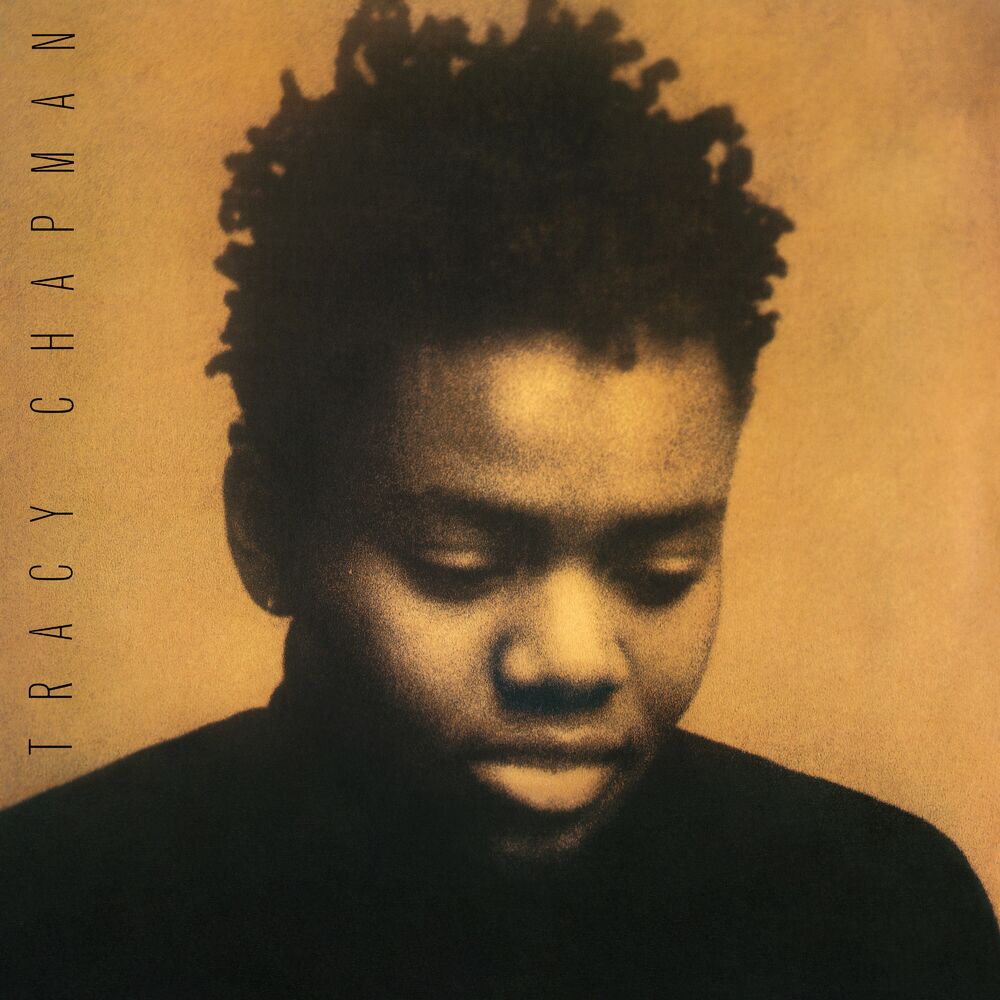
Tracy Chapman
- Released1 January 1988
- UK peak No. 1
- Weeks on UK chart 293
- Entered UK chart 15 May 1988
- LabelElektra Records
- Tracks11 · 36 min
3 tracks from it charted as singles. Press a flag to play it in the chart where it peaked.
Tracks
| 1 | 2:41 | ||
| 2 | 4:58 | ||
| 3 | Across the Lines | 3:24 | |
| 4 | Behind the Wall | 1:49 | |
| 5 | 3:14 | ||
| 6 | Mountains O' Things | 4:39 | |
| 7 | She's Got Her Ticket | 3:54 | |
| 8 | Why? | 2:06 | |
| 9 | For My Lover | 3:12 | |
| 10 | If Not Now... | 3:01 | |
| 11 | For You | 3:09 |
About the album
Tracy Chapman is the debut album by the American singer-songwriter Tracy Chapman, released on April 5, 1988, by Elektra Records. The album was recorded at the Powertrax studio in Hollywood, California. In 1987, Chapman was discovered by fellow Tufts University student Brian Koppelman. He offered to show her work to his father, who owned a successful publishing company; however, she did not consider the offer to be serious. After multiple performances, however, Koppelman found a demo tape of her singing "Talkin' 'bout a Revolution", which he promoted to radio stations, and she was eventually signed to Elektra.
In early attempts to produce the first album, many producers turned down Chapman as they did not favor her musical direction. David Kershenbaum, however, decided to produce it as he wanted to record an acoustic music album. It was recorded in Hollywood, California, in eight weeks. Most of the writing is based on political and social causes.
Tracy Chapman quickly gained critical acclaim from a wide majority of music critics, praising the album's simplicity, Chapman's vocal ability and her political and social lyrical content. The album achieved commercial success in most of the countries it was released, making it to the top of the charts in many countries, including Austria, Canada, New Zealand, Switzerland, Denmark and the United Kingdom. It peaked at No.
Background
In 1987, Chapman was discovered by fellow Tufts University student Brian Koppelman. In an interview, Koppelman said, "I was helping organize a boycott protest against apartheid at school, and [someone] told me there was this great protest singer I should get to play at the rally." He went to see Chapman perform at a coffeehouse called Cappuccino, adding, "Tracy walked onstage, and it was like an epiphany. Her presence, her voice, her songs, her sincerity—it all came across."
After this, Koppelman told Chapman that his father, Charles Koppelman, was at the time a co-owner of SBK Publishing and that he could help her make a record. She did not consider the offer seriously.
Koppelman was still very interested in Chapman, and he attended most of her shows. Chapman finally agreed to talk to him, but she did not record any demos for him. He later discovered that she had recorded demos at the Tufts' radio station WMFO for copyright purposes in exchange for the station's right to play her music.
Recording
Chapman immediately started writing songs when she was signed to Elektra. Koppelman started finding producers for the album with the demo tape of her single "Talkin' 'bout a Revolution". However, she was turned down, due to the popularity of dance-pop and synthpop at the time. In an interview with The Guardian in 2008, Chapman stated, "My first record was almost not my first record." After the originally chosen producer was killed in a car accident, Elektra initially selected a producer with less experience to replace him, and the recording sessions were, according to Chapman, "horrible" and "bombastic".
They then found Kershenbaum, who later recalled, "I'd been looking for something acoustic to do for some time," adding, "There was a sense in the industry of a slight boredom with everything out there and that people might be willing to listen again to lyrics and to someone who made statements." Chapman's greatest concern during her meetings with Kershenbaum was that the integrity of her songs remain intact, because she wanted to record "real simple".
Legacy
In 1989, the album was rated No. 10 on Rolling Stone magazine's list of the "100 Greatest Albums of the 80s". In 2003, the album was ranked No. 261 on Rolling Stone's list of "The 500 Greatest Albums of All Time", No. 263 in a 2012 revised list, and No. 256 in a 2020 revised list.
Slant Magazine listed the album at No. 49 on its list of "Best Albums of the 1980s".
The album was critically acclaimed and helped to revive the singer-songwriter tradition.
"Fast Car" was later recorded by country music singer Luke Combs for his 2023 album Gettin' Old, from which it was released as the second single. Combs' rendition of the song reached number one on the Billboard Country Airplay chart, making Chapman the first African-American woman to solely write a country number one. Additionally, it reached number two on the Billboard Hot 100, higher than Chapman's original version.