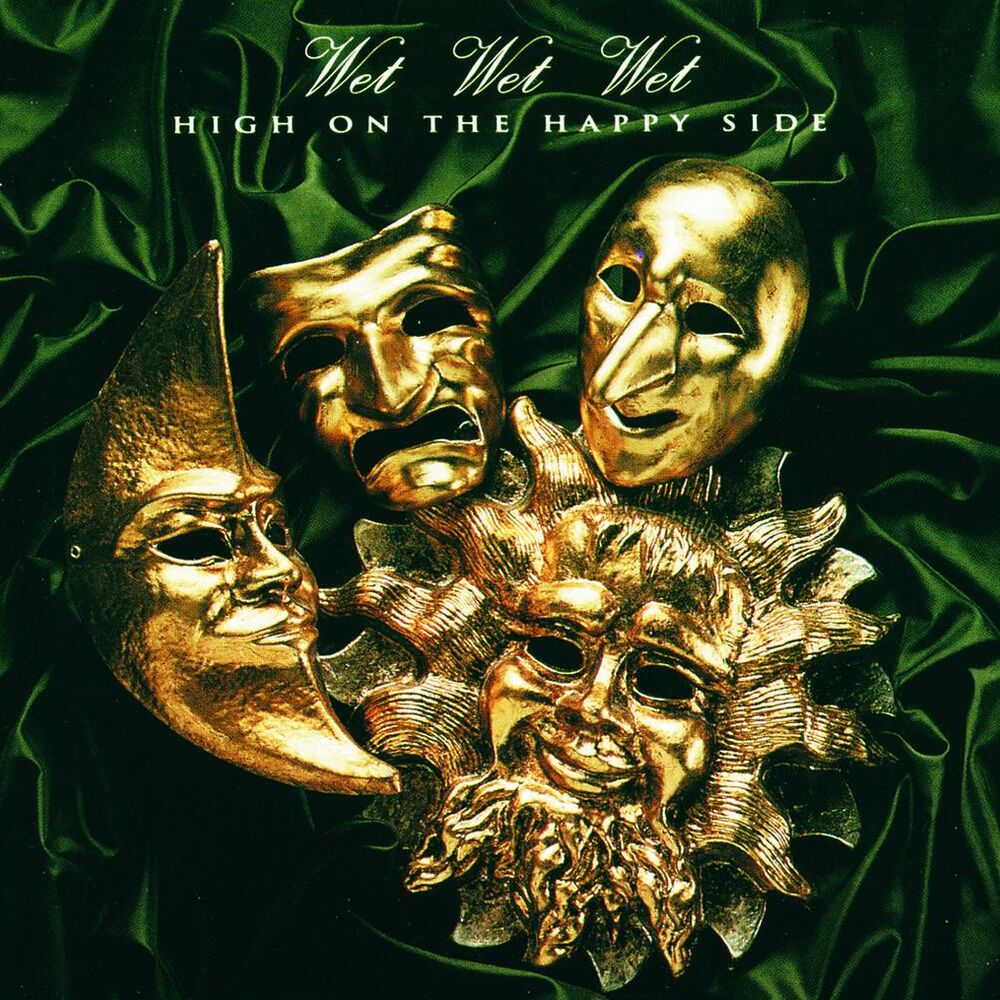
High On The Happy Side
- Released1 January 1991
- UK peak No. 1
- Weeks on UK chart 25
- Entered UK chart 2 February 1992
- LabelEMI
- Tracks11 · 45 min
5 tracks from it charted as singles. Press a flag to play it in the chart where it peaked.
Tracks
| 1 | More Than Love (Album Version) No. 19 · 1992 | 4:26 | |
| 2 | Lip Service (Album Version) No. 15 · 1992 | 4:59 | |
| 3 | Put The Light On (Album Version) No. 56 · 1991 | 3:59 | |
| 4 | High On The Happy Side | 4:39 | |
| 5 | Maybe Tomorrow | 4:20 | |
| 6 | Goodnight Girl No. 1 · 1992 | 3:41 | |
| 7 | Celebration | 2:51 | |
| 8 | Make It Tonight (Album Version) No. 37 · 1991 | 4:06 | |
| 9 | How Long | 4:16 | |
| 10 | Brand New Sunrise | 2:58 | |
| 11 | 2 Days After Midnite | 5:05 |
About the album
High on the Happy Side is the third studio album by Scottish pop quartet Wet Wet Wet, released on 27 January 1992 through Phonogram Inc. and Precious. Self-produced by the band in numerous worldwide studios, the album presents a mellower and more mature sound than earlier records, showcasing the band's soul sound alongside guitar-driven melodies and a variety of styles including pop, dance, reggae, balladry and acoustic music, with the group experimenting with new sounds and forgerounding vocal harmony. Its more basic, guitar-based genesis was in contrast to the dense sound of its predecessor, Holding Back the River (1989), which was disliked by the band. A limited edition of the album included a bonus disc, Cloak & Dagger, containing cover versions and credited under the pseudonym Maggie Pie & The Impostors.
Wet Wet Wet promoted High on the Happy Side with several acoustic shows and numerous appearances on music-oriented television shows. Although the first two singles from the album, "Make It Tonight" and "Put the Light On", were commercially unsuccessful on their release in late 1991, the release of the third single, the romantic ballad "Goodnight Girl", reversed the band's fortunes and spent four weeks at number one in Britain in early 1992. The success of the song helped the album debut at the top of the UK Albums Chart, where it stayed for two weeks.
Background
Wet Wet Wet's second studio album, Holding Back the River (1989), produced a hit single with "Sweet Surrender", but further singles were less successful. Moreover, the album failed to repeat the million-selling success of their debut, Popped In Souled Out (1987), and received poor reviews from music critics. Members of the band, such as singer Marti Pellow and keyboardist Neil Mitchell, regretted the decision to self-produce the album and to portray a more mature image, feeling these moves were premature, and it prompted "a serious rethink for the band", according to Bruce Dessau of Vox, who notes that the band largely disappeared from the public eye after a free show on Glasgow Green prior to the album's 1989 release.
Recording
Wet Wet Wet began work on the album in 1990 and initially planned to hire an outside producer. Dave Stewart was an early consideration, but the band discovered that he needed to be booked several years in advance and were unable to wait that long; however, they did book his recording studio. Another suggestion was Electric Light Orchestra (ELO) founder Jeff Lynne, who lived near Stewart; according to bassist Graeme Clark, Wet Wet Wet "learnt a lot" from the string arrangements from ELO's Greatest Hits (1979). Clark says that, after the band played Lynne demos of High on the Happy Side, Lynne told them they did not need a producer, thus restoring the band's confidence to produce the album themselves.
The self-produced album was recorded at numerous across the world, including two in Lincoln, England (one being The Chapel), one in Los Angeles (also 'The Chapel') and a studio in Switzerland. The recording began in Lincolnshire and ended in Los Angeles for post-production fixes, with the finishing touches of the album added at Dave Stewart's home garden studio in Encino.
Critical reception
Despite the band's change in sound, High on the Happy Side received critical acclaim. In his review for Select, Nick Duerden commented that High on the Happy Side "struts and stomps with a rediscovered buoyancy", believing the group's transition to adult territory has been "smoother than most" due to their musical skills, and adding that the album is a "fine indication of their growing potential" and a demonstration that "their nirvana is rooted somewhere between Memphis and Motown." Naming it "Best New Album" for Smash Hits, Nick Soutar called it "probably [Wet Wet Wet's] best; confidently breezing through a ton of musical styles – pop, ballad, soul and (kind of) dance", and felt that despite "Goodnight Girl" being the only likely hit, "How Long" is "a corker".
Legacy and aftermath
Craig Winn of M8 notes that, whereas Wet Wet Wet had been "written off" before High on the Happy Side due to their largely teenage appeal, the decision to record a "mature" album won them new fans and allowed them to become "flavour of the month" again. In his "Review of 1992", Jim Lawn of The Lennox Herald hailed the record as one of the key comebacks of the year, for producing a number one single and keeping the band "firmly in the public eye." Dessau said that, although the album could be viewed as an attempt by Wet Wet Wet to follow Sheena Easton, EMF and Jesus Jones in trying to break the American market, the group largely went without marketing or an audience there, despite "their sleek brand of radio-friendly George Michael-esque soul." Angela Lewis of the NME comments that the "straightforward, mature pop classicism" which shaped High on the Happy Side continued to be felt on the band's follow-up album, Picture This (1995).