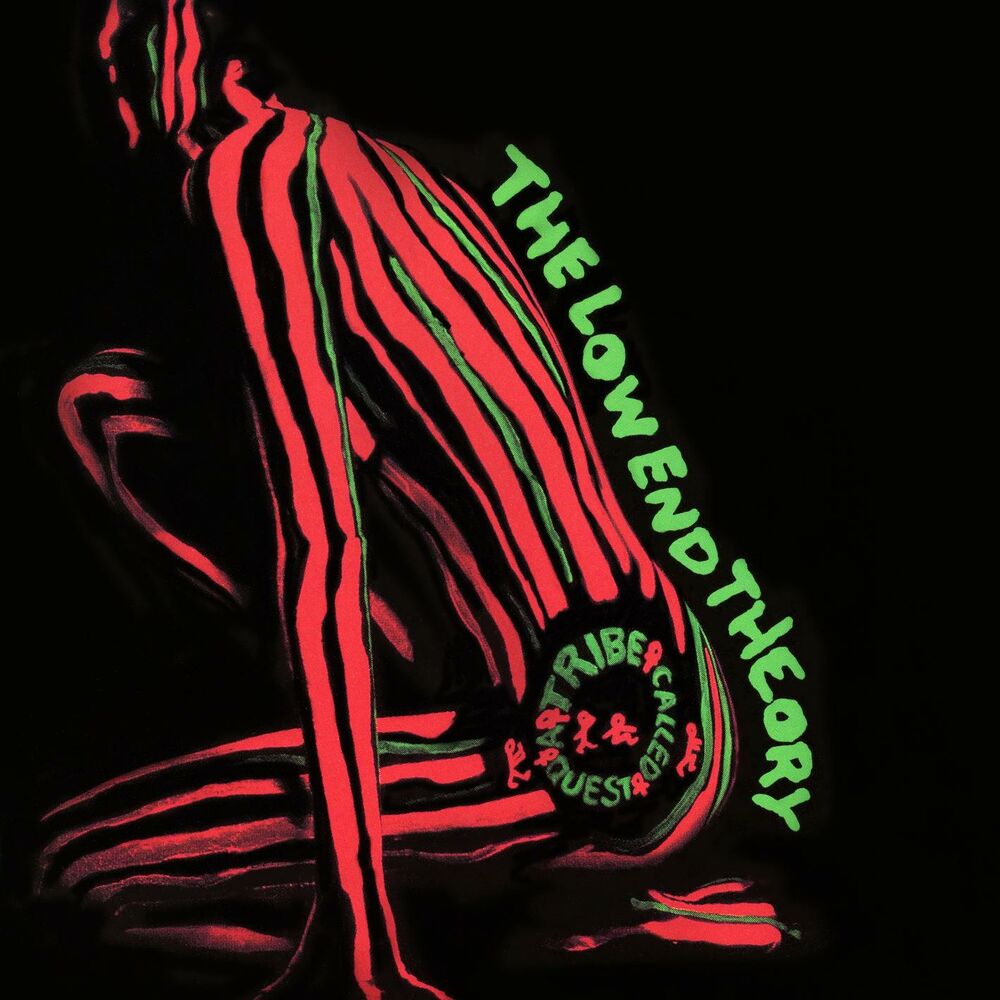
One track from it charted as a single. Press a flag to play it in the chart where it peaked.
Tracks
| 1 | Excursions | 3:53 | |
| 2 | Buggin' Out | 3:38 | |
| 3 | Rap Promoter | 2:13 | |
| 4 | Butter | 3:39 | |
| 5 | Verses from the Abstract (feat. Vinia Mojica & Ron Carter) | 3:59 | |
| 6 | Show Business (feat. Diamond D, Lord Jamar & Sadat X) | 3:53 | |
| 7 | Vibes and Stuff | 4:18 | |
| 8 | Infamous Date Rape | 2:54 | |
| 9 | Check the Rhime | 3:36 | |
| 10 | Everything Is Fair | 2:59 | |
| 11 | Jazz (We've Got) | 4:09 | |
| 12 | Skypager | 2:13 | |
| 13 | What? | 2:29 | |
| 14 | Scenario (feat. Busta Rhymes, Dinco D & Charlie Brown) (LP Mix) No. 57 · 1992 | 4:10 |
About the album
The Low End Theory is the second studio album by American hip-hop group A Tribe Called Quest, released on September 24, 1991, by Jive Records. Recording sessions for the album were held mostly at Battery Studios in New York City, from 1990 to 1991. The album was primarily produced by group member Q-Tip, with a minimalist sound that combines bass, drum breaks, and jazz samples, in a departure from the group's debut album, People's Instinctive Travels and the Paths of Rhythm (1990). Lyrically, the album features social commentary, word play, humor, and interplay between Q-Tip and fellow member Phife Dawg.
Supported by the lead single "Check the Rhime", The Low End Theory debuted at number 45 on the Billboard 200 chart. Upon its release, the album's commercial potential was doubted by music critics and Jive record executives. However, the release of two additional singles, "Jazz (We've Got)" and "Scenario", brought further attention and popularity to the group. On February 19, 1992, the album was certified gold by the Recording Industry Association of America (RIAA), with shipments of 500,000 copies in the United States, and on February 1, 1995, it was certified platinum by the RIAA, with shipments of one million copies.
In the years since its release, The Low End Theory has garnered recognition from music critics and writers as a milestone in alternative hip-hop.
Background
A month after the release of A Tribe Called Quest's debut album, People's Instinctive Travels and the Paths of Rhythm (1990), group member Phife Dawg learned that he was diabetic and considered leaving the group. After a discussion with fellow member Q-Tip, they agreed to increase his participation on their second album and to "step it up in general as a group." Recording sessions for the second album began when sessions from People's Instinctive Travels kept creatively flowing. The group wanted to begin recording the album shortly after the completion of People's Instinctive Travels, for which they still had to tour and film music videos.
Recording
The majority of the recording sessions took place at Battery Studios in Manhattan, from 1990 to 1991, where the songs were recorded on a Neve 8068 mixing console that had been used by John Lennon. Like People's Instinctive Travels, production on The Low End Theory was primarily handled by Q-Tip, while Ali Shaheed Muhammad provided DJ scratching and co-production. Skeff Anselm produced two songs, which were programmed at Jazzy Jay's Studio in The Bronx. Producer Pete Rock created the original beat for the second single, "Jazz (We've Got)", before it was recreated by Q-Tip, who credited Rock in the outro of the song.
Group member Jarobi White, who previously appeared on People's Instinctive Travels, had verses recorded for The Low End Theory. However, he left the group during the sessions to study culinary art and his verses did not make the final cut. The song "Butter" was originally supposed to feature a verse by Q-Tip, but Phife Dawg insisted on rapping solo on it, causing a brief argument.
Production
A boom bap album, it is one of the first hip-hop albums fused with the laid-back atmosphere of jazz, particularly bebop and hard bop, the album's minimalist sound is "stripped to the essentials: vocals, drums, and bass." The bass drum and vocals emphasize the downbeat on every song. Q-Tip credited the production on N.W.A's album Straight Outta Compton as inspiration: "what resonated was just that bottom, that bass and the drive of it."
The album is noted for its use of the double bass, "crisp" and "live-sounding" drum programming, and "deftly placed samples or electric keyboards." In addition, the group was praised for its "departure towards a live instrumental sound" and for using "jazz-infused samples with fat hardcore beats." Q-Tip often layered drum sounds on the album, using as many as three snare drums or bass drums to create a single sound. Similarly, "Buggin' Out" was the first song in which he layered two different drum breaks at once, which was uncommon at the time. The group hired double bassist Ron Carter for the song "Verses from the Abstract".
Lyrics
The Low End Theory is regarded for its socially conscious lyrics, which include subjects such as relationships, date rape, the hip-hop industry and consumerism. Other lyrics are devoted to word play, humor and "showing off." The album introduced the lyrical interplay and chemistry between Q-Tip and Phife Dawg, the latter of whom experienced a lyrical breakout. While acknowledging that Q-Tip had "already proven he is a highly skilled lyricist", Reef of The Source also stated, "Those who questioned Phife's microphone techniques on the first album will swallow those doubts as he practically steals the show on this one." The album is also noted for its minimal use of explicit lyrics, as Ron Carter only agreed to record songs on the condition that the group avoid profanity, to which Q-Tip assured they were addressing "real issues."
The duo's lyrical delivery, flow, and styles contrasted each other; Q-Tip had a mellow voice and was philosophical, reflective, contemplative and esoteric, while Phife Dawg had a high-pitched voice and was comical, battle rhyme-ready, streetwise and self-deprec
Commercial performance
The Low End Theory peaked at number 45 on the Billboard 200 and number 13 on the Top R&B/Hip-Hop Albums chart. Upon its release, the album's commercial potential was doubted by music critics and Jive record executives, including label CEO Barry Weiss. However, on February 19, 1992, the album was certified gold by the Recording Industry Association of America (RIAA), with shipments of 500,000 copies in the United States. On February 1, 1995, it was certified platinum by the RIAA, with shipments of one million copies.
Critical reception
Upon its release, The Low End Theory received widespread critical acclaim. It was awarded a perfect five mic rating in The Source, with reviewer Reef lauding their "progressive sound" and "streetwise edge", adding that "there's no sophomore jinx to be found here—only real hip-hop." Iestyn George of NME praised the album as a "quantum leap" from People's Instinctive Travels, noting, "Gone are the quirky samples that gave them their lighter edge, replaced by stark, hard-hitting beats." George also credited Q-Tip and Phife Dawg for "trading lines like psychic sparring partners", as they "pause, interject, charm and challenge with understated aplomb."
James Bernard of Entertainment Weekly commended the group for its jazzy sound, which "perfectly complements their laid-back, raspy delivery", but was critical of the album's lack of danceable songs, calling it "the greatest hip-hop album that will never quicken my pulse." The Village Voice critic Robert Christgau was reserved in his praise, believing the group delivered "goofball rhymes" from a "well-meaning middle class" perspective, later