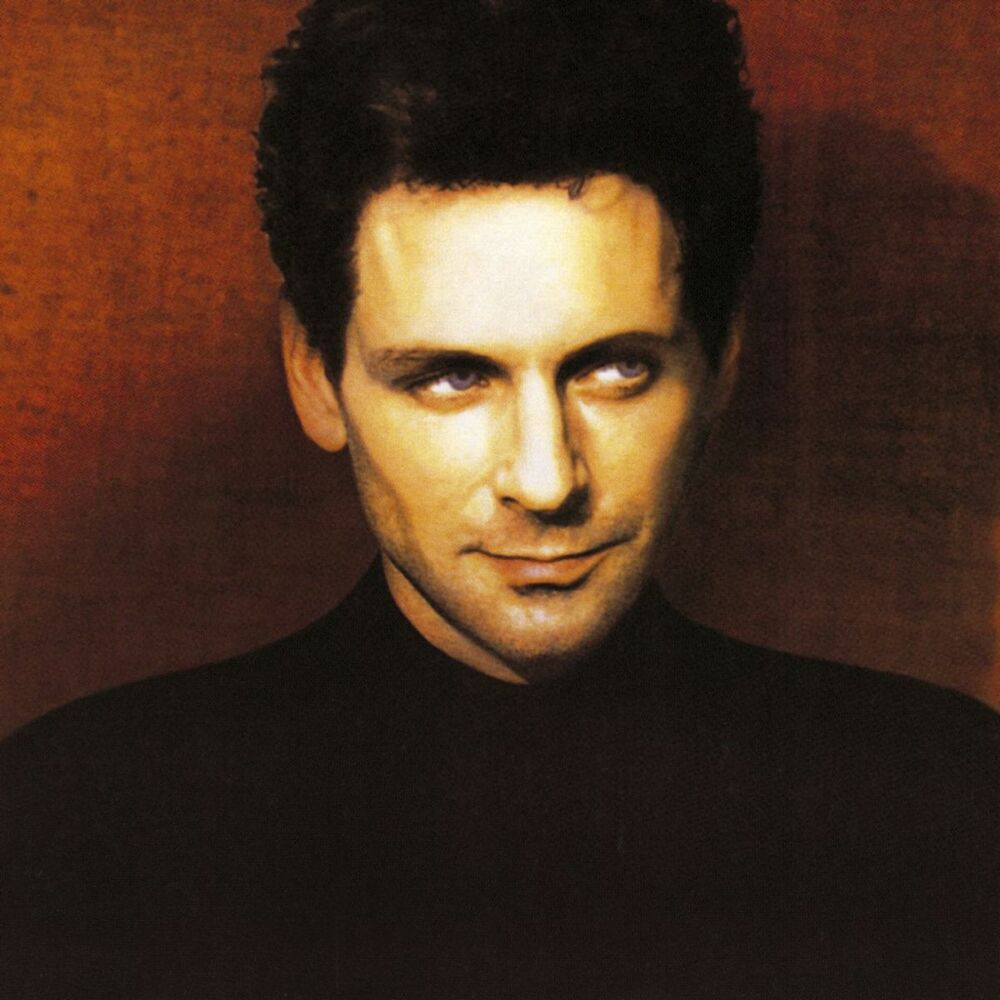
Out of the Cradle
- Released12 June 1992
- UK peak No. 51
- Weeks on UK chart 1
- Entered UK chart 2 August 1992
- LabelReprise
- Tracks13 · 49 min
Tracks
| 1 | Instrumental Introduction / Don't Look Down | 3:12 | |
| 2 | Wrong | 4:20 | |
| 3 | Countdown | 3:23 | |
| 4 | All My Sorrows | 4:02 | |
| 5 | Soul Drifter | 3:29 | |
| 6 | Instrumental Introduction / This Is the Time | 5:31 | |
| 7 | You Do or You Don't | 3:40 | |
| 8 | Street of Dreams | 4:29 | |
| 9 | Spoken Introduction / Surrender the Rain | 4:26 | |
| 10 | Doing What I Can | 4:06 | |
| 11 | Turn It On | 3:51 | |
| 12 | This Nearly Was Mine (Instrumental) | 1:37 | |
| 13 | Say We'll Meet Again | 2:28 |
About the album
Out of the Cradle is the third solo studio album by American singer-songwriter Lindsey Buckingham. Released in 1992, it was Buckingham's first album after his departure from Fleetwood Mac, in 1987 (though Buckingham rejoined the band in 1997). He named the album after Walt Whitman's poem "Out of the Cradle Endlessly Rocking". The album reached No. 128 on the US Billboard 200 album chart, No. 51 on the UK Albums Chart, and No. 70 on the Canada Albums Chart.
Four singles were released from the album, with "Wrong" being album's first single in North America and "Countdown" being selected as the first single in Europe. All four singles reached the top 60 in Canada, with "Countdown" charting the highest at No. 29. In the United States, none of the singles charted on the Billboard Hot 100, although some of them did reach the Album Rock Tracks and Adult Contemporary chart. Ten of the songs on the album (counting "Instrumental Introduction To") were included on Solo Anthology: The Best of Lindsey Buckingham.
Background
Upon his departure from Fleetwood Mac, Buckingham refrained from making music for six months. After this period, he returned to his home studio in Los Angeles, where he adopted a daily ten-twelve hour work schedule that began at 10 a.m. Buckingham mentioned that the arrangement at his home studio allowed him to spend additional time refining his material, which he considered to be a desirable working arrangement that allowed him to "tap into the potential" of his capabilities.
Richard Dashut, who worked with Buckingham on many Fleetwood Mac albums, helped co-produce and co-write much of the material on Out of the Cradle. Dashut served as a "sounding board" for Buckingham during the making of Out of the Cradle and offered input on how to approach some of the songs. Buckingham added that Dashut was "great with broad strokes and seeing the big picture" and said that he "tend[ed] to get lost in small details, so it's good to have him around". Throughout the sessions, Dashut provided feedback to Buckingham, who also received occasional visits from Warner Bros.
Composition and recording
When making Out of the Cradle, Buckingham decided to pivot away from synthesizers in favor of guitars. Buckingham specifically gravitated towards acoustic guitars on Out of the Cradle, particularly nylon-string guitars to make some of his denser compositions sound lighter, although he did utilize electric guitars when the song required it. On "This Is the Time" and "Wrong", Buckingham played a Fender Stratocaster and Telecaster respectively, with the latter song also featuring a guitar developed by Rick Turner.
All of the instruments were recorded directly into the mixing console in mono as opposed to stereo. Buckingham explained that he "wanted to create an aural soundstage where a listener could isolate certain sounds at certain points in each song, as opposed to ingesting a standard-issue stereo spread." Gated sounds and other audio effects were generally avoided during the recording process, although Buckingham doubled and tripled some parts to achieve a "squashed" sound.
I wanted to play more guitar.
Release
Walter Egan created the album's woodcuts, which he gifted to Buckingham as a Christmas present prior to the assembling of the album's packaging. Some of Buckingham's family photos were also included in the liner notes. The photo of Buckingham with various recording gear and a black velvet shrine of Elvis Presley was taken at his home recording studio.
In support of the album, Buckingham embarked on his first solo tour. Initially, Buckingham contemplated the idea of creating a live show that "fell somewhere between Frank Sinatra and Laurie Anderson." He also expressed interest in surrounding himself with a bassist and drummer that could enable him to "develop the guitar sound — almost in a jazz way." Buckingham ultimately opted to assemble an ensemble with four guitarists in addition to himself, three percussionists, a bassist, and a keyboardist who also triggered various samples. Once he assembled his band, Buckingham and his manager booked two nights at The Coach House in San Juan Capistrano, California.
Critical reception
Greg Kot of The Chicago Tribune praised Out of the Cradle as "a dazzling sonic feast, showing Buckingham's range as a balladeer, rocker and Tin Pan Alley-style craftsman" while emphasizing that "the album is not lacking for rock 'n' roll spark. It's far more diverse than his two earlier solo albums, and more quirkily intriguing than his generally streamlined work with the post-Tusk Fleetwood Mac." Stephen Holden of The New York Times hailed Out of the Cradle as one of the ten best albums of the year, calling it an "exquisitely produced studio artifact." The Los Angeles Times wrote that "it's impossible to miss the meaning of Out of the Cradle: the primacy of the guitar as an expressive instrument."
The Washington Post declared: "The album's stories are told with music, and only Brian Wilson, Stevie Wonder, Paul McCartney and a handful of others have made rock-and-roll as rich and powerful as this." Stereo Review labeled Out of the Cradle as the best recordings of the month in the August 1992 edition of the publication.