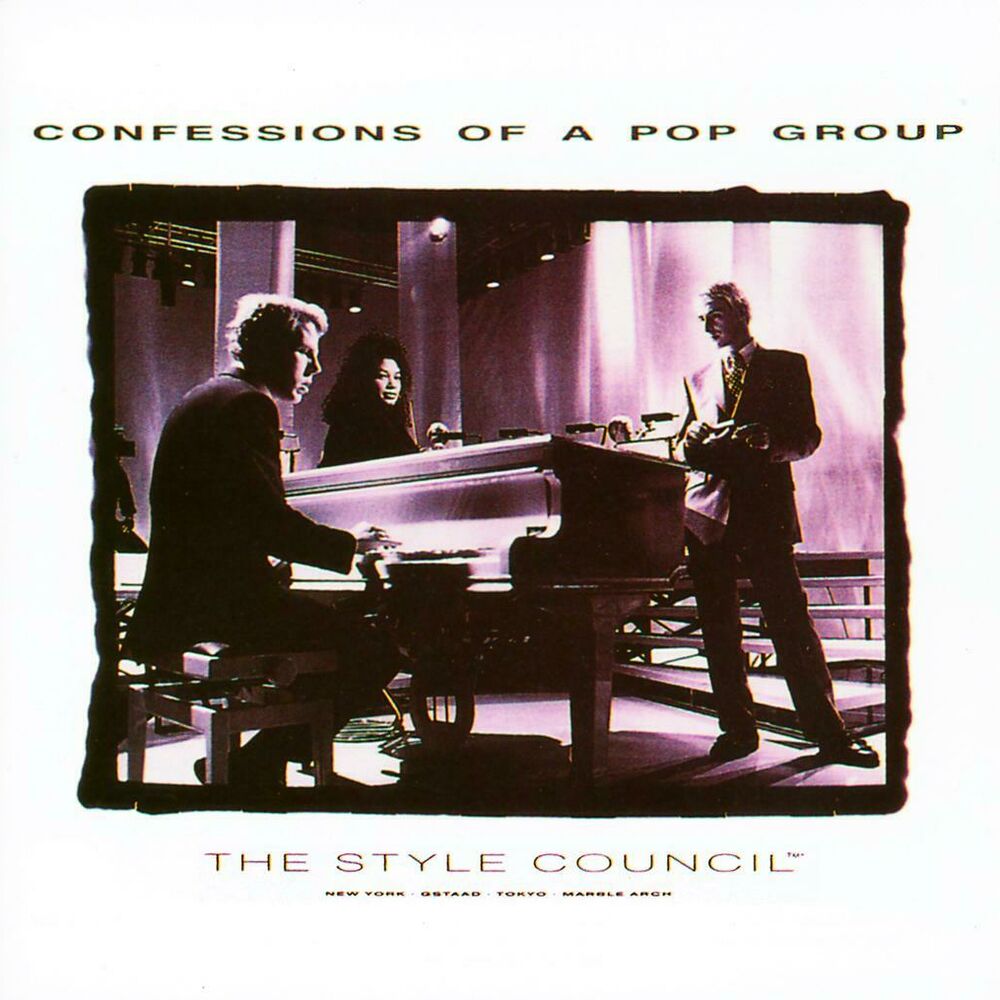
Confessions Of A Pop Group (Digitally Remastered)
- Released1 January 1988
- UK peak No. 15
- Weeks on UK chart 3
- Entered UK chart 26 June 1988
- LabelUMC (Universal Music Catalogue)
- Tracks11 · 57 min
2 tracks from it charted as singles. Press a flag to play it in the chart where it peaked.
Tracks
| 1 | It's A Very Deep Sea | 5:32 | |
| 2 | The Story Of Someone's Shoe | 3:40 | |
| 3 | Changing Of The Guard | 2:49 | |
| 4 | The Little Boy In A Castle / A Dove Flew Down From The Elephant | 3:05 | |
| 5 | The Gardener Of Eden (A Three Piece Suite) | 10:30 | |
| 6 | Life At A Top People's Health Farm No. 28 · 1988 | 4:19 | |
| 7 | Why I Went Missing | 4:43 | |
| 8 | How She Threw It All Away No. 41 · 1988 | 4:13 | |
| 9 | Iwasadoledadstoyboy | 4:27 | |
| 10 | Confessions 1, 2 & 3 | 4:43 | |
| 11 | Confessions Of A Pop-Group | 9:26 |
About the album
Confessions of a Pop Group is the fourth full-length studio album by the English sophisti-pop band the Style Council, released by Polydor on 20 June 1988. Following the critical failure of The Cost of Loving, tensions between the label and lead singer Paul Weller intensified, although Polydor provided Weller with a substantial advance to record the album. During recording sessions, backing vocalist Dee C. Lee became an official member of the group, while drummer Steve White departed. The sessions were engineered by Jeremy "Jezar" Wakefield using two 24-track digital recorders, enabling the band to explore recording techniques and musical approaches that had not previously been available to them.
Confessions is split into two distinct sections. The first (The Piano Paintings) consists of compositions influenced by jazz and classical music, while the second (which shares the album's title) features a more conventional and upbeat funk sound. This contrast between styles is reminiscent of the approach taken on the band's debut album, Café Bleu. The use of musical suites has led some to regard Confessions as a concept album. Weller drew inspiration from a range of artists, including composer Erik Satie and the Beach Boys. His socially conscious lyrics are notably more bitter and vitriolic than those on the band's earlier work.
Background
After achieving critical and commercial success in 1985 and 1986, the Style Council's third full-length album, The Cost of Loving, was released in February 1987 to commercial success, reaching number 2 in the UK Albums Chart, but to hostile reviews from music critics. The album, which featured soul music and American-style R&B inspired by Jimmy Jam and Terry Lewis, was dismissed by one later critic as "bland," and several years later, the NME included the album in a list of fourteen albums that "should've been an EP". Later on in 1987, Red Wedge, a collective of musicians, including Style Council lead singer and writer Paul Weller, who had gathered to help spread support for the Labour Party among young voters, failed to displace the Conservative Party in the 1987 general election, and the collective soon disbanded.
The band's popularity was fading and the group were regularly being ridiculed in the music press, with criticism being aimed at Weller in particular.
Recording
Weller and Talbot chose to produce Confessions of a Pop Group alone so they could avoid arguments with outside producers, which had been an occurrence in previous recording sessions for the group. Weller elaborated, saying that self-producing Confessions was always their intention: "We don't like to repeat ourselves, we believe that progression is the most important thing." Jezar engineered the album and later described the sessions as "deeply satisfying on an emotional level." After his experiences working on The Cost of Loving, Weller was more confident with Confessions and told Jezar about things he wanted to try out for the first time, including classical concert harp on the song "The Gardener of Eden" and a capella vocals reminiscent of a barber shop quartet on "The Story of Someone's Shoe".
Music
Confessions of a Pop Group is split into two distinct sides with their own individual names, namely The Piano Paintings (side one) and Confessions of a Pop Group (side two).
The Piano Paintings side features quieter pieces influenced by jazz and classical music, while the more upbeat Confessions side is closer to funk-style pop music. Writer John Reed notes that the album's split motif, complete with the usage of subtitles, hints that the album could be a concept album, a sentiment shared by another writer who felt the album is "edged towards concept album status" by featuring two ten minute epics. A promotional text for the album described it as "somewhat conceptual." By far the band's longest album with a length of almost 57 and a half minutes, it is advised consumers playing the LP version increase the volume of side two as it runs for over thirty minutes.
Writer Paolo Hewitt described the album as a highly experimental release, while another critic found it to be the group's most experimental album.
Artwork
Weller did not want a photograph of the band on the album cover, whereas Polydor did, but Weller relented as he was granted a similar wish for the maligned album cover of The Cost of Loving, and Polydor did not want a repeat of the obscurity of that album's sleeve. Thus, Weller's proposed sleeve was discarded and replaced it with a cover showing a photograph of the trio photographed by Lawrence Watson. On the image, Lee is tactically hidden by a grand piano to hide her pregnancy.
In keeping with the album's classical-inspired bent, each song on the album is accompanied in the liner notes by a specially commissioned painting by Dan Davies, which were put on display at the album's launch party at Hamilton's Gallery. Davies' illustrations visually describe the songs on the album, and were described by Dennis Munday as "quite striking." Talbot later claimed that Davies benefited particularly well financially from the paintings; Munn speculated that Davies' paintings potentially earned more money than the album.
Release
With the album completed, Weller voiced concerns on how Polydor would react to it, fearing they could reject the album. Cover magazine reported that Weller banked a £500,000 advance from the label to deliver Confessions, and when Weller eventually delivered the album to them, it was on a C90 audio cassette with a defiled mugshot of the label's A&R chief, which added to the tension between Weller and Polydor. Weller told the magazine Just 17 that Polydor were "bewildered" by the album, adding "this is going to be difficult, this is going to be trouble."
A press release appeared on 19 May 1988 entitled Life with the Lions, listing 15 bullet points, largely focusing on the release of lead single "Life at a Top People's Health Farm", released on the 20th, but also announcing a 33-minute concert film VHS release. That same day, the band performed the lead single on Channel 4 music interview/music show Wired (a short-lived replacement for The Tube) where the interviewer described it as one of the band's angriest songs.