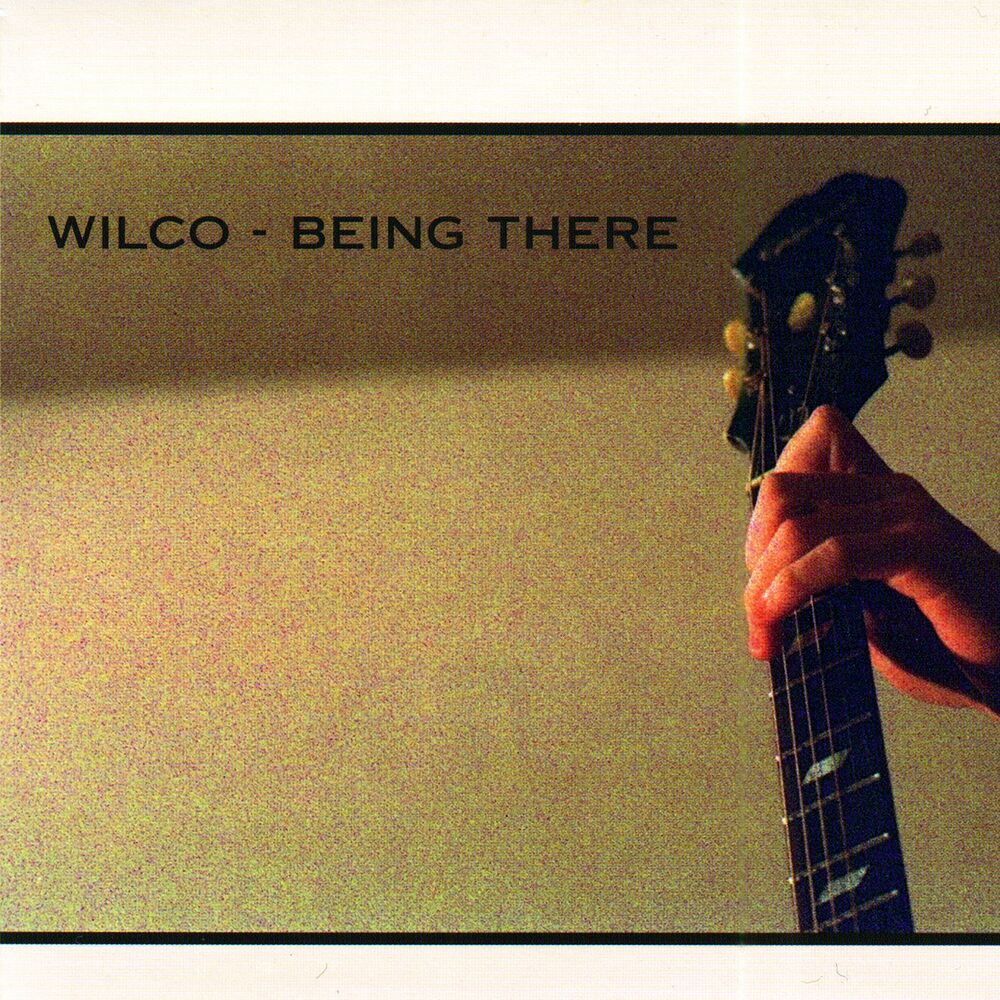
One track from it charted as a single. Press a flag to play it in the chart where it peaked.
Tracks
| 1 | Misunderstood | 6:28 | |
| 2 | Far, Far Away | 3:20 | |
| 3 | Monday | 3:33 | |
| 4 | Outtasite (Outta Mind) No. 97 · 1997 | 2:34 | |
| 5 | Forget the Flowers | 2:47 | |
| 6 | Red-Eyed and Blue | 2:45 | |
| 7 | I Got You (At the End of the Century) | 3:57 | |
| 8 | What's the World Got in Store | 3:09 | |
| 9 | Hotel Arizona | 3:37 | |
| 10 | Say You Miss Me | 4:07 | |
| 11 | Sunken Treasure | 6:51 | |
| 12 | Someday Soon | 2:33 | |
| 13 | Outta Mind (Outta Sight) | 3:20 | |
| 14 | Someone Else's Song | 3:21 | |
| 15 | Kingpin | 5:16 | |
| 16 | (Was I) In Your Dreams | 3:30 | |
| 17 | Why Would You Wanna Live | 4:16 | |
| 18 | The Lonely 1 | 4:48 | |
| 19 | Dreamer in My Dreams | 6:43 |
About the album
Being There is the second studio album by the American rock band Wilco, released on October 29, 1996, by Reprise Records. Despite its release as a double album, Being There was sold at a single album price as a result of a deal between lead singer Jeff Tweedy and the band's label Reprise Records. Compared to their debut album A.M. (1995), the album was an improvement for the band in both sales and critical reception. Taking its name from the 1979 film of the same name, the self-produced album featured more surrealistic and introspective writing than on A.M. This was due in part to several significant changes in Tweedy's life, including the birth of his first child. Musically, it juxtaposed the alternative country styles songs reminiscent of Uncle Tupelo with psychedelic, surreal songs. It was the only Wilco album with steel guitarist Bob Egan, their first with multi-instrumentalist Jay Bennett and their last with multi-instrumentalist Max Johnston.
Background
Jeff Tweedy formed Wilco in 1994 after creative differences between Jay Farrar and Tweedy caused the breakup of Uncle Tupelo. The band entered the recording studio almost immediately afterwards to record and release A.M. in 1995, which saw disappointing sales. Jay Farrar's new band Son Volt released Trace in late 1995 to critical praise and good sales numbers. Trace also provided a college rock hit song in "Drown", which entered the top ten of the Billboard Mainstream Rock Tracks chart, further increasing competition between the two bands.
Tweedy felt that Wilco was incomplete without a second guitarist due to the departure of Brian Henneman after the A.M. recording sessions. Wilco's road manager Bob Andrews helped Tweedy get in contact with Jay Bennett, a multi-instrumentalist who had been looking for a new band to join since his power pop band Titanic Love Affair had been dismissed from its record label.
Production
The first conceptions of material for the album came during a particularly stressful time in Tweedy's life. Tweedy had recently quit smoking marijuana, attendance at Wilco concerts was dwindling, and Tweedy was trying to manage his marriage, a mortgage, and the birth of his first child. He responded to these pressures:
I was a later bloomer. I was in my thirties before I even came to terms with the idea that I was making a living as a recording artist. I was in a punk band for a long time and thought it was my life. I was a bass player in a band making fifty dollars a night, paying eighty dollars a month in rent, making indie records and not getting paid for them, and having this naive sense of well-being that I would always do this and never have much more responsibility than that. I went from that to being a dad and a major-label recording artist who had the pressure of supporting a family and also making something I felt good about artistically.
For Being There, Tweedy wanted to blend the experiences he had making music with the ones he had listening to music.
Reception
Being There was received positively by critics. AllMusic editor Jason Ankeny gave the album a four-and-a-half stars and referred to it as "the group's great leap forward." He praised the band's ability to juxtapose psychedelia and power pop with tracks that "wouldn't sound at all out of place on Exile on Main Street". Greg Kot, writing for Rolling Stone, gave the album four stars and lauded how it "venture[d] out into an anxiety-ridden world sure thing ... the solace they continue to find in rock and roll." Robert Christgau was more modest, writing "there's no point in denying Jeff Tweedy's achievement as long as you recognize its insularity." Ryan Schreiber of Pitchfork called Wilco "massively improved as both a band and as songwriters" but also noted that "the two-disc set is really nothing more than a marketing scheme." Being There was ranked the 14th best album of the year on The Village Voice's Pazz & Jop critics' poll for 1996. In 2003, Pitchfork named it the 88th best album of the 1990s.