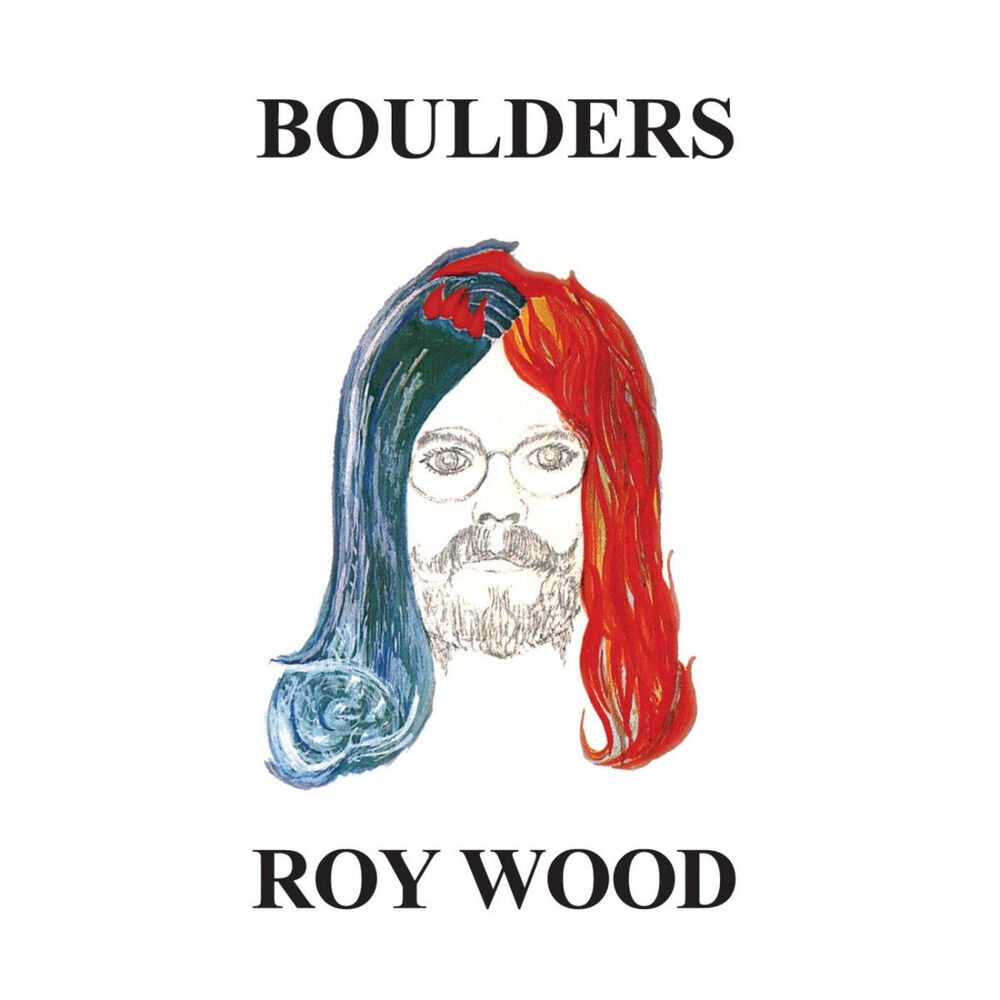
Boulders
- Released18 June 2007
- UK peak No. 15
- Weeks on UK chart 8
- Entered UK chart 12 August 1973
- LabelParlophone UK
- Tracks10 · 44 min
One track from it charted as a single. Press a flag to play it in the chart where it peaked.
Tracks
| 1 | Songs of Praise (2007 Remaster) | 4:46 | |
| 2 | Wake Up (2007 Remaster) | 3:20 | |
| 3 | Rock Down Low (2007 Remaster) | 3:56 | |
| 4 | Nancy Sing Me a Song (2007 Remaster) | 3:32 | |
| 5 | Dear Elaine (2007 Remaster) No. 18 · 1973 | 4:11 | |
| 6 | All the Way over the Hill / Irish Loafer and His Hen (2007 Remaster) | 4:55 | |
| 7 | Miss Clarke and the Computer (2007 Remaster) | 4:25 | |
| 8 | When Gran'ma Plays the Banjo (2007 Remaster) | 3:18 | |
| 9 | Rock Medley: Rockin' Shoes / She's Too Good for Me / Locomotive (2007 Remaster) | 7:34 | |
| 10 | Dear Elaine (Rough Mix) No. 18 · 1973 | 4:12 |
About the album
Boulders is the debut solo album by English musician Roy Wood, recorded from 1969 to 1971 and released on 20 July 1973 by Harvest Records. Wood began work on the album as a whimsical side-project away from his band the Move, and conceived it to explore numerous instruments he had collected in the 1960s but felt unable to use in the Move. Nonetheless, its release was delayed for several years due to his busy schedule with the Move, Wizzard and the Electric Light Orchestra. Apart from harmonium on one song played by John Kurlander, all the instruments on the album, including guitars, cello, saxophones, bouzouki, banjo and recorders, were played by Wood, who also wrote, arranged, and produced the whole record, in addition to providing all the vocals. The musician also painted the unfinished self-portrait on the cover.
The record is eclectic and eccentric in style, exploring numerous genres like classical music, art rock, folk, psychedelia, country and rock and roll, and exemplifies Wood's surreal humour, with songs exploring curious subjects. The textured production includes multitracked choir-like vocals and makes heavy usage of unusual arrangements. Upon release, Boulders was hailed by critics for its individual sound and the extensive contributions from Wood, and today is regarded as one of his strongest works. It peaked at No.
Background and recording
Roy Wood recorded Boulders from 1969 to 1971 at Phonogram Studios and Abbey Road Studios, London. He was still a member of the Move at the time, who he formed some three years before work on Boulders began, and intended the album to be whimsical and childlike in order to represent a "creative holiday" from the band, who were experiencing their commercial peak at the time. In addition to featuring songs that Wood felt was unsuitable for the Move or other artists, some of the material on the album was developed from ideas that he came up with when experimenting with new instrumentation that he did not have an opportunity to use with the Move. He later explained: "I'd started the Move when I was 17, and I used to spend money buying weird instruments and getting them from second-hand shops. It's difficult to have them in your collection and not want to have a go at playing them."
With the exception of harmonium by Abbey Road engineer John Kurlander on "Songs of Praise", all the instrumentation on Boulders was played by Wood, who also provided all lead, harmony and backing vocals.
Composition
Boulders is an eccentric album that features tuneful, melodic songs with unusual arrangements. An eclectic pop record, it features styles of bluegrass, experimental music, classical music, psychedelia, rock and roll, pastoral folk music, art rock, baroque pop, and country, with elements of jazz and blues. The record also features luscious West Coast-style harmonies and instances of studio trickery and surreal humour, embracing what writer Terry Staunton describes as a quaint, curious Englishness. The record's lyrics are said to exemplify Wood's combination of "odd imagination and non-sticky sentimentality".
Release and promotion
Despite being completed in 1971, Boulders was delayed for release until 1973 due to Wood's busy schedule with the Move, Electric Light Orchestra and then Wizzard. Wood's then manager, Don Arden, was particularly demanding that the release of Boulders was delayed, to avoid it clashing with the Move's material. In March 1973, the same month Wizzard released Wizzard Brew, United Artists Records printed a message in Billboard that described the soon-to-be-released Boulders as "an album of which the like you have never heard", describing advance reviews of the record as suggesting the album "could change the face of popular music. We'll leave that to history to decide." An advertisement in Melody Maker ran with the message: "There are solo albums and there are solo albums."
Boulders was released on 20 July 1973 by Harvest Records in the United Kingdom. It peaked at number 15 on the UK Albums Chart, staying on the chart for eight weeks. "When Gran'Ma Plays the Banjo" had been released as a single on 18 January 1972, with "Wake Up" as the B-side, but it failed to chart.
Critical reception
Boulders has received critical acclaim. Pete Butterfield of the Reading Evening Post highlighted the numerous roles Wood undertook, calling it "a real solo effort", and described the "glorious" pop album as "highly interesting – and very enjoyable". Basil Ashmore of the Buckinghamshire Examiner also commended Wood for composing, arranging, producing and playing the entire album. Though he complained about the production, finding Wood's voice to be deliberately "often almost drowned by the instruments", he felt the musicianship was impressive and that the album was easy to admire considering the "ingenuity and sheer hard graft" required to make it.