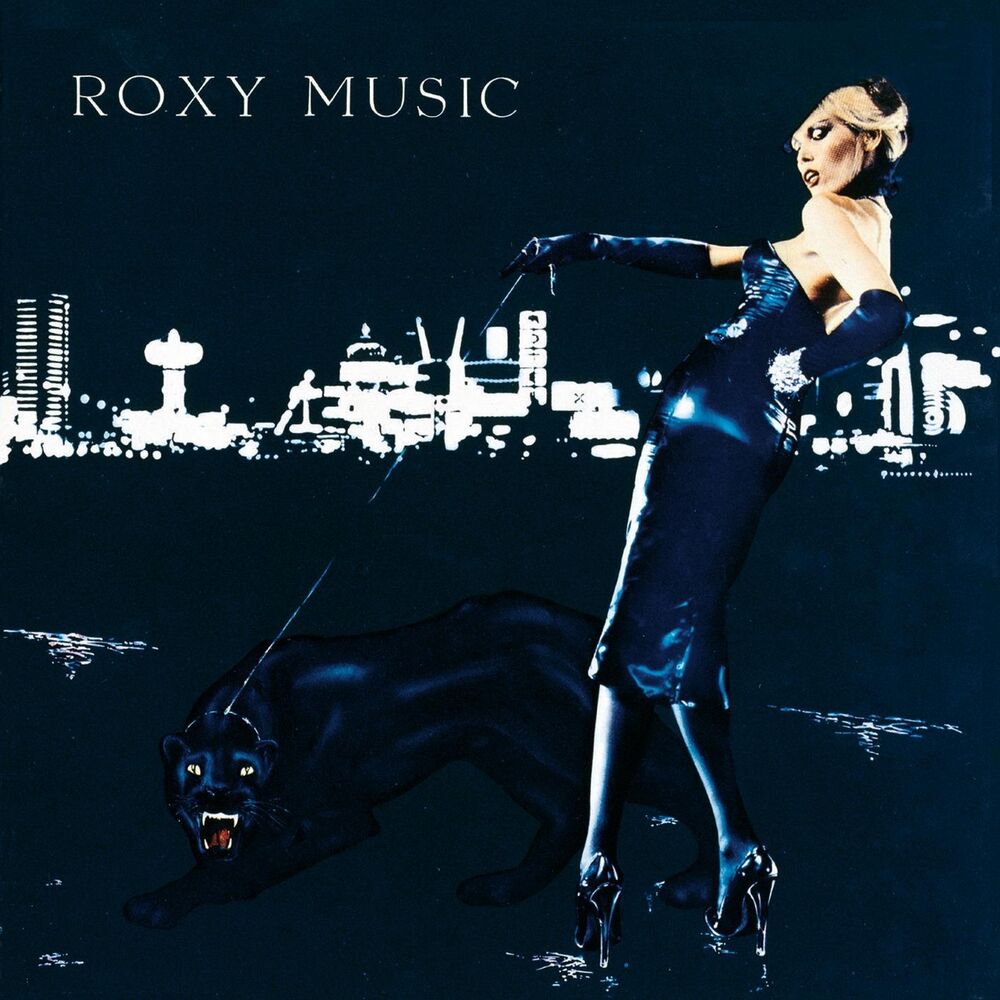
For Your Pleasure
- Released9 November 1999
- UK peak No. 4
- Weeks on UK chart 27
- Entered UK chart 1 April 1973
- LabelEG Records
- Tracks8 · 42 min
Tracks
| 1 | Do The Strand | 4:00 | |
| 2 | Beauty Queen | 4:41 | |
| 3 | Strictly Confidential | 3:48 | |
| 4 | Editions Of You | 3:51 | |
| 5 | In Every Dream Home A Heartache | 5:29 | |
| 6 | The Bogus Man | 9:20 | |
| 7 | Grey Lagoons | 4:13 | |
| 8 | For Your Pleasure | 6:51 |
About the album
For Your Pleasure is the second studio album by the English rock band Roxy Music, released on 23 March 1973 by Island Records. It was their last to feature synthesiser player Brian Eno. The album expanded on the experimental nature of their self-titled debut, featuring a more elaborate production and experimentation.
The album was commercially more successful than their debut, peaking at number four in the UK Album Charts and eventually attaining certified gold status from the British Phonographic Industry. It also yielded one single, "Do the Strand", released outside of the UK in July 1973. The album received positive reviews from critics, who place it as Roxy Music's best album and regard it as one of the greatest glam rock albums of all time.
Background
Bryan Ferry studied under pop art painter and theorist Richard Hamilton at Newcastle University. Hamilton saw a painting as a mood board, pinning his inspirations and goals "that could as easily clash as blend together", which were adapted by Ferry on For Your Pleasure, thematically taking him from the past and into his representation of the future. Hamilton's work Just what is it that makes today's homes so different, so appealing? got its mark on "In Every Dream Home a Heartache", a song about illusions of modern sophistication and the horrors behind them.
In the wake of the For Your Pleasure sessions, Roxy Music sharpened their technique while touring their debut album. They lost some of the "freewheeling wildness", and in return gained a more concentrated, hearty and less experimental sound, which were the qualities that Ferry most yearned for.
Production
Roxy Music recorded For Your Pleasure in February 1973, at London's AIR Studios in Oxford Circus. Bassist Rik Kenton left the band shortly before the sessions. John Porter agreed to play bass temporarily, working on the album and the subsequent tour, but turned down an offer to join permanently. On the album gatefold, he is credited as a "guest artiste". At first, the band wanted to be the sole producers, but the label convinced them otherwise. Ultimately, Roxy Music produced the album themselves with the aid of Chris Thomas, while John Middleton and John Punter worked on the audio engineering side. Thomas recalled that, following the release of their debut, Roxy Music asked John Cale to produce them, letting him choose the recording studio, and Cale chose AIR Studios. However, the project with Cale did not come to fruition, and instead Ferry asked Thomas, whom Ferry met while visiting AIR Studios, to help with production.
The group spent more studio time on this album than on their debut, combining song material by Ferry with more elaborate production treatments.
Artwork
The cover photo was taken by Karl Stoecker. It features Bryan Ferry's girlfriend at the time, the model Amanda Lear, who was also the confidante, protégée, and close friend of the surrealist artist Salvador Dalí. Lear was depicted posing in a skintight leather dress leading a black panther on a leash. The full record sleeve art features a limousine parked on the left side from Lear, with a waiting Ferry acting as a chauffeur.
The cover art is ranked by Rolling Stone and Billboard among the "100 Best Album Covers of All Time". Rob Tannenbaum's Pitchfork put the feeling captured by the sleeve art as an alluring, modern image of appeal, danger, sexual gratification, and luxury lifestyle. Similar to other rock bands, the cover promises "adolescents a misleading fantasy of what adult life is like". Brian Eno disliked the choice for the album's cover art, feeling it was too stereotyped and pretentious.
Music and lyrics
For Your Pleasure has been categorised by critics as an art rock and glam rock record, additionally featuring American R&B and European avant-garde music.
Music biographer David Buckley believed that "Do the Strand" was the song Roxy Music performed most frequently in concert. The song "Beauty Queen" was composed primarily by Ferry, drawing inspiration from the "anxious, feminine side of R&B". He sings about parting ways with a woman gifted with "swimming pool eyes", but his vocal delivery conveys a tone of a marriage proposal. Ferry promises she will be fine without him, carefully catering her with purple prose and using his theatrical and campy baritone, the tone which often, paradoxically, implies Ferry's sincerity. Ferry said at the time that the song has a definite "northern working men's club feel to it". The lyrics of "Editions of You" reflect on the experience of longing for someone who is no longer present.
Release and promotion
For Your Pleasure was originally released by Island Records in the United Kingdom and Warner Bros. Records in the United States. Original pressings of the album featured a gatefold-sleeve picture of the five band members posing with guitars. It has been subsequently reissued by Polydor Records in the UK, and by ATCO Records and Reprise Records in the US.
"Do the Strand", backed with "Editions of You", was released as a single in the US and Europe in 1973; it was finally issued as a UK single in 1978 to promote Roxy Music's Greatest Hits album, released in December the previous year. The non-album single "Pyjamarama", backed with "The Pride and the Pain", was issued in advance of the album in UK, peaking at number ten on the UK Singles Chart.
To promote the album, Roxy Music toured UK and Europe in 1973 with Porter continuing his engagement with the band. They were supported by the Sharks and Lloyd Watson on the UK dates. The band "toned down slightly" on the costumes from the extremes of 1972.
Accolades
Both NME and Rolling Stone included For Your Pleasure in their lists of the "500 Greatest Albums of All Time". Pitchfork placed it among the "Top 100 Albums of the 1970s", while Q magazine gave it a spot on the list of the "100 Greatest British Albums Ever". Classic Rock named it as one of the "10 glam rock albums you should definitely own".