Drums And Wires
- Released3 March 2003
- UK peak No. 34
- Weeks on UK chart 7
- Entered UK chart 26 August 1979
- LabelVirgin Records
- Tracks15 · 56 min
2 tracks from it charted as singles. Press a flag to play it in the chart where it peaked.
Tracks
| 1 | Making Plans For Nigel No. 17 · 1979 | 4:13 | |
| 2 | Helicopter (2001 Digital Remaster) | 3:54 | |
| 3 | Day In Day Out (2001 Digital Remaster) | 3:08 | |
| 4 | When You're Near Me I Have Difficulty (2001 Digital Remaster) | 3:22 | |
| 5 | Ten Feet Tall (2001 Digital Remaster) | 3:16 | |
| 6 | Roads Girdle The Globe (2001 Digital Remaster) | 4:51 | |
| 7 | Reel By Reel (2001 Digital Remaster) | 3:47 | |
| 8 | Millions (2001 Digital Remaster) | 5:39 | |
| 9 | That Is The Way (2001 Digital Remaster) | 2:56 | |
| 10 | Outside World (2001 Digital Remaster) | 2:41 | |
| 11 | Scissor Man (2001 Digital Remaster) | 4:00 | |
| 12 | Complicated Game (2001 Digital Remaster) | 5:04 | |
| 13 | Life Begins At The Hop (Remastered 2001) No. 54 · 1979 | 3:49 | |
| 14 | Chain Of Command (2001 Digital Remaster) | 2:33 | |
| 15 | Limelight (2001 Digital Remaster) | 2:26 |
About the album
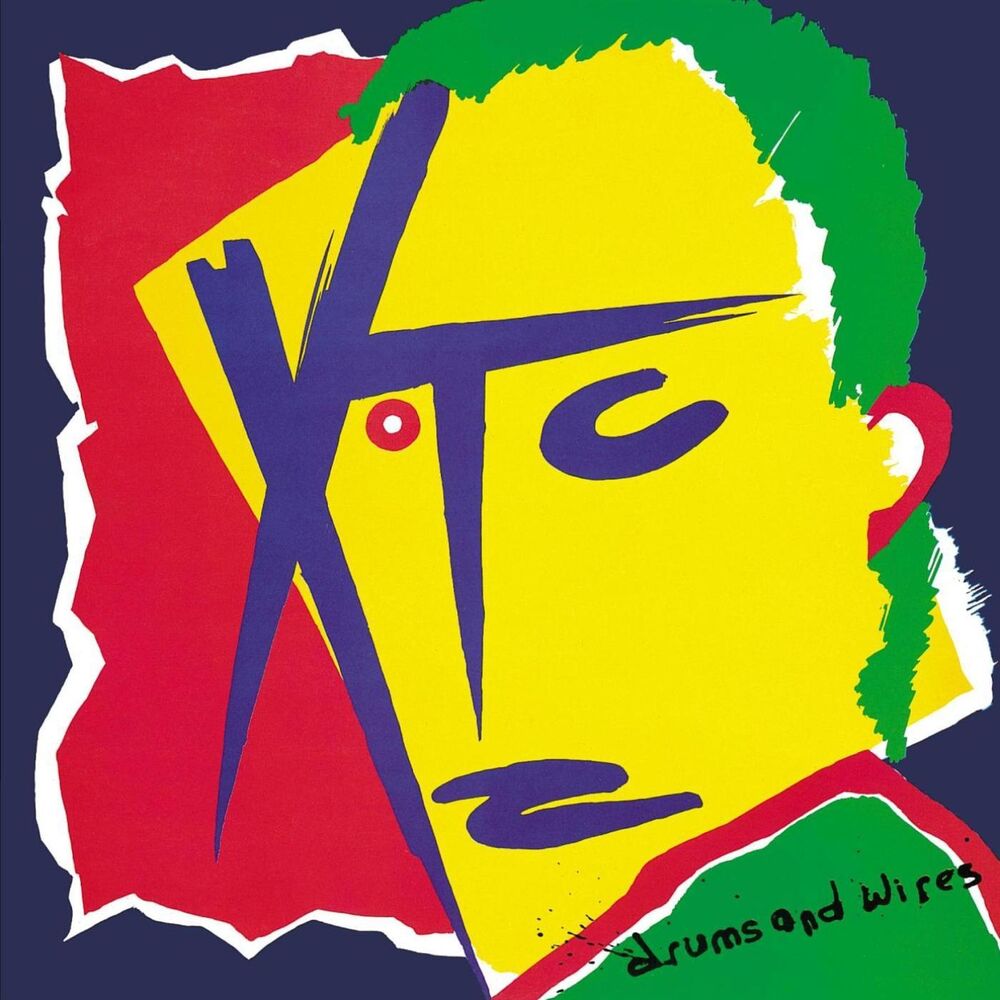
Drums and Wires is the third studio album by the English rock band XTC, released on 17 August 1979 on Virgin Records. It is a more pop-oriented affair than the band's previous effort, Go 2 (1978), and was named for its emphasis on guitars ("wires") and expansive-sounding drums. The album was their first issued in the United States and their first recorded with guitarist Dave Gregory, who had replaced keyboardist Barry Andrews earlier in 1979. It features a mix of pop, art rock, new wave and punk styles with much rhythmic interplay between XTC's two guitarists.
Bassist Colin Moulding's dissatisfaction with XTC's "quirky" reputation inspired the group to take a more accessible approach, starting with the non-album single "Life Begins at the Hop". Drums and Wires was recorded in four weeks at the newly built Town House studio in London with producer Steve Lillywhite and engineer Hugh Padgham, who were beginning to develop their signature gated reverb production technique, as demonstrated on the album opener and lead single "Making Plans for Nigel". Lyrically, the album focuses on the trappings or titillations of the modern world, with several songs about submitting to external forces.
Background
In October 1978, XTC released their second studio album Go 2, a more experimental venture than their debut White Music. It was met with positive reviews and a number 21 chart peak. Keyboardist Barry Andrews left the band in December during their first American tour. Shortly prior, Andrews told journalists that he foresaw the band "explod[ing] pretty soon". Frontman and principal songwriter Andy Partridge commented: "He enjoyed undermining what little authority I had in the band. We were bickering quite a lot. But when he left I thought, Oh shit, that's the sound of the band gone, this space-cream over everything. And I did enjoy his brain power, the verbal and mental fencing." XTC proceeded to run through a "silly half-hearted" process of auditioning another keyboardist.
Production and style
Impressed by the work of Steve Lillywhite, XTC contacted him to produce their third album with a drum sound that would "knock your head off". In the 1998 XTC biography Song Stories, Partridge states that the band hired Lillywhite based on his work for Siouxsie and the Banshees' The Scream (1978). Partridge explained in a 1999 interview: "Lillywhite mainly contributed to the drums' sound, very Siouxsie, more voodoo". In 2019, he retracted his claim, saying that the Lillywhite record the band were impressed by was actually Ultravox's 1977 debut. With Virgin staff engineer Hugh Padgham, they embarked to the newly built Townhouse Studios, "with its now world-famous stone room", as described by Gregory, who recalled that Padgham had "yet to develop his trade-mark 'gated ambience' sound". Gregory stated that, ultimately, "most of the ideas were Andy's but we were all contributing and Lillywhite was there as some sort of mediator more than anything. He's credited with producing it but really I think it was about 50/50.
Packaging and leftover tracks
Partridge came up with the concept for the album's cover artwork. As he remembers:
... I quite liked the idea of the letters, the X - T and C, and the little underline there actually making the features of [a] face. And I did a rough version, and we were in the studio and I didn't have time to do any finished artwork. And we got together with a girl, I think she was working at Design Clinic [Virgin's art department] at the time, who did a lot of our sleeves. And I ... said, "Okay - here's the sketch. I want it done in real primary colors. And then the back I want done in more muted kind of khakis and browns. But on the front I want really, really bright primaries." And she took away this sketch and I think she just cut it out of colored paper or something, originally.
Release
"Life Begins at the Hop" was released on 4 May 1979 and became the first charting single for the band, rising to number 54 on the UK Singles Chart. They played a 23-date English tour, playing to half- or quarter-full concert halls. In July, music videos directed by Russell Mulcahy were filmed for "Making Plans for Nigel" and "Life Begins at the Hop". From 25 July to 17 August, they embarked on another tour of Australia, which was more successful. Immediately following the tour, the band arrived in Japan and played four dates in Osaka. Partridge recalled the band encountering much fan hysteria in Japan: "We could hardly go anywhere without being screamed at. You'd walk into a hotel lobby and there'd be a crowd of girls sitting around waiting for you."
Drums and Wires was released on 17 August, with lead single "Making Plans for Nigel" following on 5 September. From 11 September to 5 October, XTC embarked on another underwhelming British tour. Gregory remembered: "in Wolverhampton [there were] about 200 people in a place that holds about 1,500.
Legacy
Drums and Wires became the best-known album of XTC's discography. Partridge and Moulding reflected on the period as the point in which XTC's "career really started". Gregory did not think he would remain with the band. He remembered: "I don't think I took my role in XTC seriously right up to English Settlement. Drums and Wires was just great fun to me. ... The next thing we knew we were getting four-star reviews in all the papers. How did that happen?" Lillywhite and Padgham returned for the band's follow-up album Black Sea (1980). Only Padgham was recruited for the record after, English Settlement (1982), as Partridge felt "it was Hugh who was getting all the great sounds".
In Moulding's recollection, "Up until that point, we were viewed as a poor man's Talking Heads or something. People called us 'quirky.' But when we came out with Drums and Wires it was like a different band, really. Mainly, that was probably my fault." He was surprised when the label began choosing his songs, instead of Partridge's, as singles.