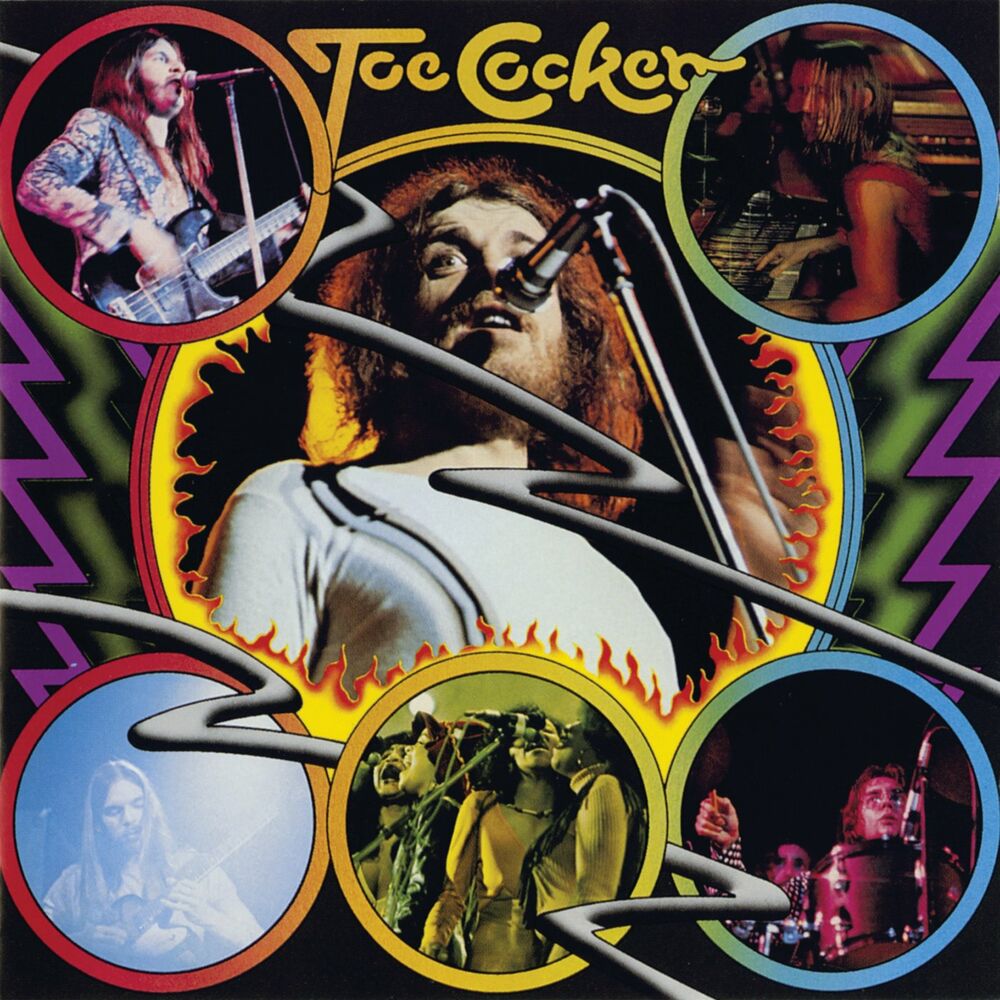
Joe Cocker
- Released4 December 2015
- UK peak No. 29
- Weeks on UK chart 4
- Entered UK chart 30 April 1972
- LabelA&M
- Tracks9 · 43 min
4 tracks from it charted as singles. Press a flag to play it in the chart where it peaked.
Tracks
| 1 | Pardon Me Sir No. 51 · 1973 | 3:16 | |
| 2 | High Time We Went No. 22 · 1971 | 4:29 | |
| 3 | She Don't Mind | 3:13 | |
| 4 | Black-Eyed Blues | 4:36 | |
| 5 | Something To Say | 5:22 | |
| 6 | Midnight Rider No. 27 · 1972 | 3:59 | |
| 7 | Do Right Woman | 7:00 | |
| 8 | Woman To Woman No. 56 · 1973 | 4:29 | |
| 9 | St. James Infirmary Blues | 6:25 |
About the album
Joe Cocker! is the second studio album by English singer Joe Cocker, released in November 1969. Following the template of his first LP, the album features numerous covers of songs originally performed by Bob Dylan ("Dear Landlord"), the Beatles ("She Came in Through the Bathroom Window" and "Something" – both released almost simultaneously with original versions; "Let It Be" was also recorded and released as a B-side), Leonard Cohen ("Bird on the Wire"), and future touring partner Leon Russell ("Delta Lady" and “Hello Little Friend”). Cocker also co-wrote one song, "That's Your Business Now", with Chris Stainton, who was a frequent songwriting partner.
Cocker is backed by the Grease Band, two of whom, Chris Stainton and Henry McCullough, appeared on his first album. The Grease Band backed the singer at the Woodstock Festival in August 1969. However, Cocker would part ways with the group following the release of this record, citing a reluctance to tour; when they needed to meet live commitments in America, Cocker decided to organise a new band (the Mad Dogs and Englishmen) with the help of keyboardist Leon Russell, heralding a new musical direction for the singer on his subsequent studio releases.
The album charted in the UK in May 1972 at number 29 when it was re-released as a double pack with Cocker's first LP With a Little Help from My Friends.
Production notes
Recorded at A&M Studios, Hollywood, CA, and Sunset Sound Studios, Hollywood, CA, 1969
Produced by Denny Cordell and Leon Russell
Engineered by Henry Lewy, Brian Ingoldsby
Remixed and remastered by Glyn Johns