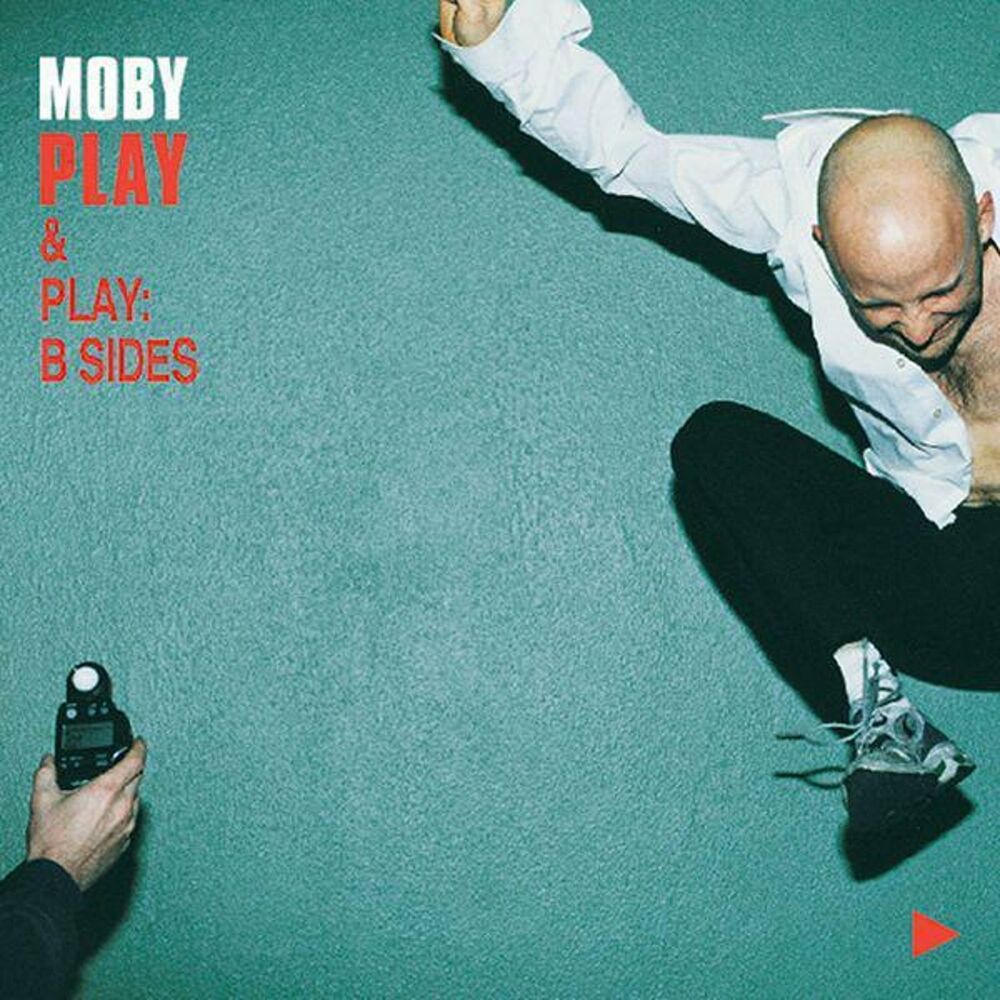
Play & Play: B Sides
- Released2 June 2008
- UK peak No. 1
- Weeks on UK chart 108
- Entered UK chart 23 May 1999
- LabelLittle Idiot
- Tracks25 · 101 min
7 tracks from it charted as singles. Press a flag to play it in the chart where it peaked.
Tracks
| 1 | Honey No. 33 · 1998 | 3:29 | |
| 2 | Find My Baby | 3:59 | |
| 3 | Porcelain No. 5 · 2000 | 4:01 | |
| 4 | Why Does My Heart Feel So Bad? No. 16 · 1999 | 4:24 | |
| 5 | South Side No. 14 · 2001 | 3:49 | |
| 6 | Rushing | 3:00 | |
| 7 | Bodyrock No. 38 · 1999 | 3:36 | |
| 8 | Natural Blues No. 11 · 2000 | 4:13 | |
| 9 | Machete | 3:37 | |
| 10 | 7 | 1:02 | |
| 11 | Run On No. 33 · 1999 | 3:45 | |
| 12 | Down Slow | 1:34 | |
| 13 | If Things Were Perfect | 4:18 | |
| 14 | Everloving | 3:25 | |
| 15 | Inside | 4:48 | |
| 16 | Guitar Flute & String | 2:09 | |
| 17 | The Sky Is Broken | 4:18 | |
| 18 | My Weakness | 3:38 | |
| 19 | Flower | 3:26 | |
| 20 | Sunday | 5:03 | |
| 21 | Memory Gospel | 6:42 | |
| 22 | Whispering Wind | 6:02 | |
| 23 | Summer | 5:58 | |
| 24 | Spirit | 4:08 | |
| 25 | Flying Foxes | 6:16 |
About the album
Play is the fifth studio album by American electronic musician Moby. It was released on May 17, 1999, through Mute Records internationally and V2 Records in North America. Recording of the album began in mid-1997, following the release of Moby's fourth album, Animal Rights (1996), which deviated from his electronica style; Moby's goal for Play was to return to electronica, blending downtempo with blues and roots music samples. Originally intended to be his final record, the album was recorded at Moby's home studio in Manhattan.
While some of Moby's earlier work had garnered critical and commercial success within the electronic dance music scene, Play was both a critical success and a commercial phenomenon. Initially issued to lackluster sales, it topped numerous album charts months after its release and was certified platinum in more than 20 countries. The album introduced Moby to a worldwide mainstream audience, not only through a large number of hit singles that helped the album to dominate worldwide charts for two years, but also through unprecedented licensing of its songs in films, television shows, and commercials. Play eventually became one of the biggest-selling electronica albums of all time, with over 12 million copies sold worldwide.
In 2003 and 2012, Play was ranked number 341 on Rolling Stone magazine's list of the 500 greatest albums of all time.
Background
The second half of the 1990s saw Moby in career turmoil after years of success in the techno scene. The release in 1996 of Animal Rights, a dark, eclectic, guitar-fueled record built around the punk and metal records that he loved as a teenager, proved a critical and commercial disaster that left him contemplating quitting music altogether. He explained: "I was opening for Soundgarden and getting shit thrown at me every night onstage. I did my own tour and was playing to roughly fifty people a night." However, positive reactions to Animal Rights from fellow artists such as Terence Trent D'Arby, Axl Rose, and Bono inspired Moby to continue producing music.
Moby started work on Play in August 1997 and put it on hold several times to complete touring obligations. At the time, he planned on making the album his last before ending his career. Recording sessions took place at Moby's Mott Street home studio in Manhattan, New York. Play was delayed due to Moby's dissatisfaction with the initial mix of the album that he had produced at home.
Music
According to Spin magazine's Will Hermes, Play was "the high-water mark for populist electronica" and a "millennial roots and blues masterwork", while John Bush from AllMusic said it balanced Moby's early electronica sound with the emergent breakbeat style of techno. Chicago Sun-Times critic Jim DeRogatis noted its incorporation of such disparate musical influences as early blues, African-American folk music, gospel, hip-hop, disco, and techno, "all within the context of his own distinctly melodic ambient stylings." Complex described Play as "an organic downtempo masterpiece" that fused live studio recordings and "found sounds".
Play was particularly notable for its use of samples from field recordings collected by Alan Lomax and compiled on the 1993 box set Sounds of the South: A Musical Journey from the Georgia Sea Islands to the Mississippi Delta. Moby was introduced to the box set through a friend, Gregor Ehrlich, who loaned the CDs to him.
Release and promotion
Play was released on May 17, 1999, by Mute, and on June 1, 1999, by V2. On its release, it underperformed commercially. The record debuted at number 33 on the UK Albums Chart, but thereafter descended the chart. Moby recounted that the first show he played in support of Play, at the basement of the Virgin Megastore in Union Square, was attended by only around 40 people. Further damaging the album's commercial prospects, Play's songs received little airplay from radio stations or television networks such as MTV.
Moby and his management, however, soon found another approach to increasing public exposure of Play, by way of licensing its songs for use in films, television shows, and commercials. According to Moby, their goal "was simply to get people to hear the music".
Critical reception
Play received widespread critical acclaim upon release. On Metacritic, which assigns a normalized rating to reviews from mainstream critics, the album has a score of 84 out of 100 based on 20 reviews, indicating "universal acclaim".
Reviewing for The Village Voice in 1999, Robert Christgau said the album's sampled recordings would not "shout anywhere near as loud and clear" without Moby's "ministrations—his grooves, his pacing, his textures, his harmonies, sometimes his tunes, and mostly his grooves, which honor not just dance music but the entire rock tradition it's part of." He deemed the album "no more focused" than Moby's previous "brilliant messes" but still "one of those records whose drive to beauty should move anybody who just likes, well, music itself." In his review for AllMusic, John Bush stated that Play showed Moby "balancing his sublime early sound with the breakbeat techno evolution of the '90s." Barry Walters from Rolling Stone said "the ebb and flow of eighteen concise, contrasting cuts writes a story about Moby's beautifully conflicted interior world while giving th
Legacy
According to Rolling Stone, "Play wasn't the first album to make a rock star out of an insular techno nerdnik, but it was the first to make one a pop sensation. [...] Play made postmodernism cuddly, slowly but surely striking a chord with critics and record-buyers alike." Ranking it among the best electropop albums, Classic Pop suggested that "perhaps more than any album ever, Play propelled electronic music into the mainstream consciousness." Wired said that the songs on Play—which became the first album ever to have all of its tracks licensed for use in films, television shows, or commercials—"have been sold hundreds of times [...] a licensing venture so staggeringly lucrative that the album was a financial success months before it reached its multi-platinum sales total." In a retrospective piece for Wondering Sound, Robert Christgau wrote:
Although some techno futurists still disparage the gorgeous Play, it qualified as a futurist work simply by redefining the concept of "commercial." Clubs would never take a CD mega, and no way could these anonymously sung tracks crack any hit-ba