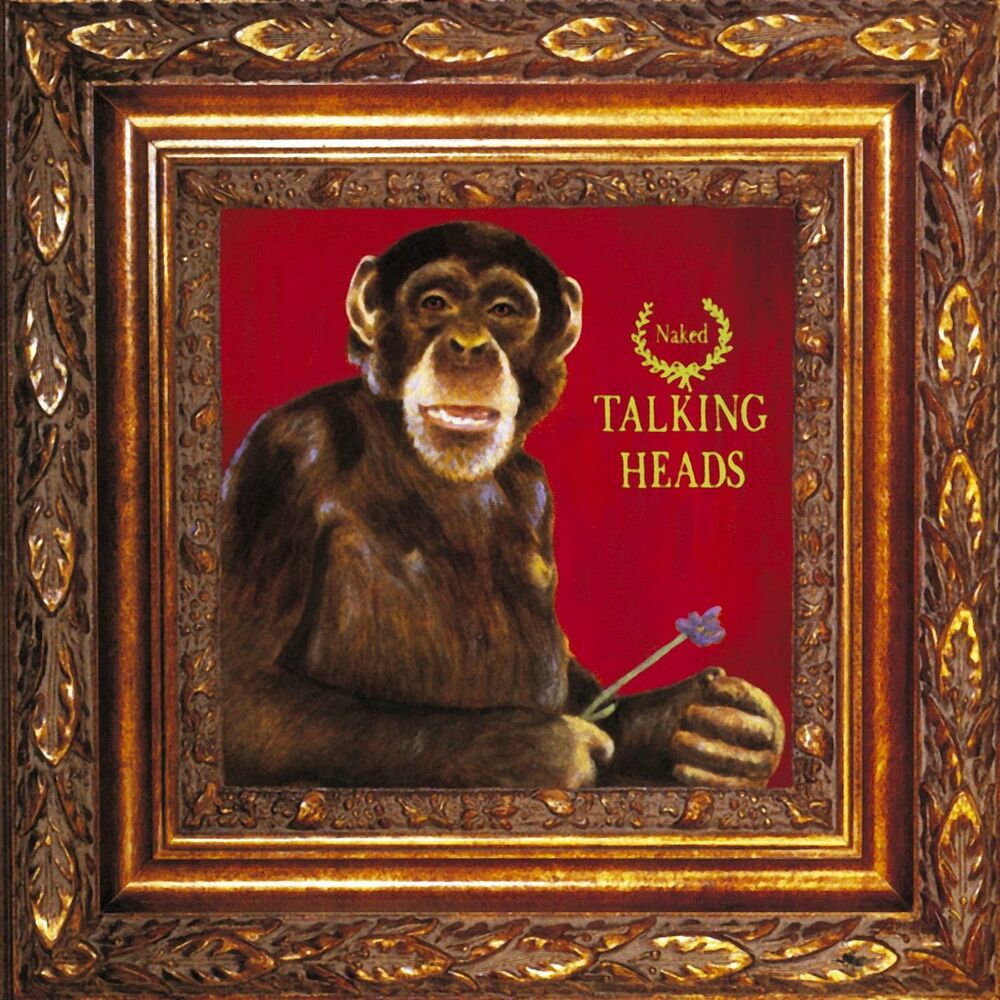
Naked
- Released15 March 1988
- UK peak No. 3
- Weeks on UK chart 15
- Entered UK chart 20 March 1988
- LabelWarner Records
- Tracks11 · 53 min
One track from it charted as a single. Press a flag to play it in the chart where it peaked.
Tracks
| 1 | Blind No. 59 · 1988 | 5:00 | |
| 2 | Mr. Jones | 4:20 | |
| 3 | Totally Nude | 4:11 | |
| 4 | Ruby Dear | 3:50 | |
| 5 | (Nothing But) Flowers | 5:34 | |
| 6 | The Democratic Circus | 5:04 | |
| 7 | The Facts of Life | 6:28 | |
| 8 | Mommy Daddy You and I | 3:58 | |
| 9 | Big Daddy | 5:38 | |
| 10 | Bill | 3:22 | |
| 11 | Cool Water | 5:16 |
About the album
Naked is the eighth and final studio album by American new wave band Talking Heads, released on March 15, 1988, by Sire Records. Following the more straightforward new wave and pop rock sound on Little Creatures (1985) and True Stories (1986), Naked marked a return to the worldbeat stylings of both Remain in Light (1980) and Speaking in Tongues (1983), blending elements of Afrobeat, Latin funk, and art pop. The album's songs were formed from improvisational jam sessions recorded in Paris, which featured the participation of numerous guest musicians such as former Smiths guitarist Johnny Marr and singer Kirsty MacColl. Lyrics and vocals were then added in New York City following the Paris recordings.
Naked was positively received by critics, who viewed it as a return to form for the band following the mixed responses to True Stories; retrospective assessments, however, have been more lukewarm. The album was also a moderate commercial success, peaking at No. 19 on the US Billboard 200 and No. 3 on the UK Albums Chart, later being certified gold by both the RIAA and BPI. Following the album's release, Talking Heads officially went on hiatus, with its members focusing on various side-projects over the course of the next few years; frontman David Byrne announced in December 1991 that the band had dissolved.
Recording
Wanting to try something different after their use of regional American music and the pop song format on their previous two albums Little Creatures (1985) and True Stories (1986), Talking Heads decided to record their next album in Paris with a group of international musicians. According to the album's liner notes, the decision to do so was in part a reaction to the foreign policy of the Ronald Reagan administration, which had grown increasingly isolationist in approach. Prior to leaving for France, the band recorded about 40 improvisational tracks that would serve as the foundation for the sessions in Paris.
In Paris, the band, along with producer Steve Lillywhite, were joined by a number of other musicians in the recording studio where they would rehearse and play for the entire day. At the end of each day, one take was selected as being the ideal version of a particular tune. "Paris is a wonderful place to work," observed drummer Chris Frantz in the liner notes of Once in a Lifetime: The Best of Talking Heads.
Critical reception
Naked was well received by critics, who hailed it as a vast improvement over True Stories. Chris Willman from the Los Angeles Times said the band abandoned "the stripped-down four-piece rock approach of late" in favor of a "far more eclectic big-band, world music extravaganza." In Rolling Stone, Anthony DeCurtis called the album "stylistically bold and intellectually provocative," a "dizzying and disturbing piece of work" that "marks a return to the more open-ended, groove-oriented style the Heads defined on Remain in Light." He noted that "the vital human harmony suggested by the international band of players .. is the strongest counterpoint to the album's pervasive themes of alienation and dread." He concluded by interpreting the view of the album's lyrics: "The human race consists of some pretty cool people ... but it's got a very destructive monkey on its back. Human survival is not guaranteed.