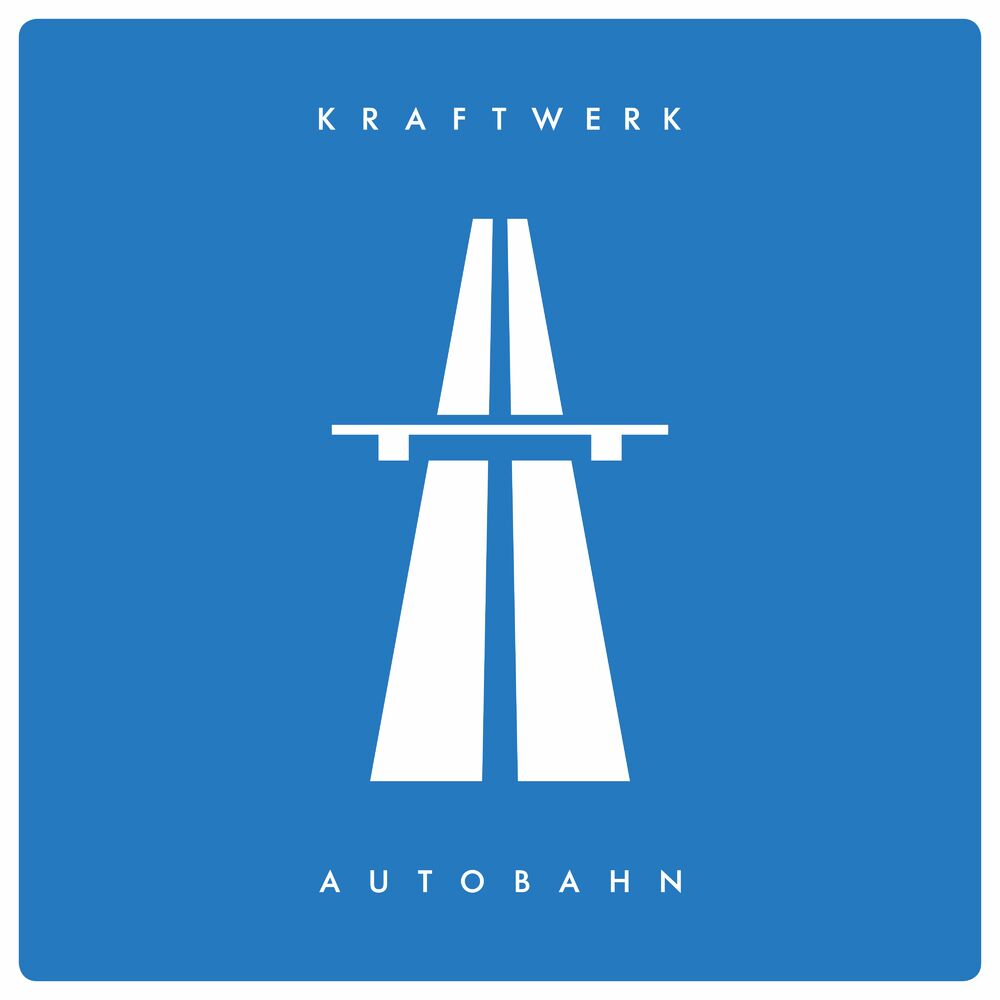
Autobahn (2009 Remaster)
- Released12 October 2009
- UK peak No. 4
- Weeks on UK chart 22
- Entered UK chart 11 May 1975
- LabelParlophone UK
- Tracks5 · 43 min
One track from it charted as a single. Press a flag to play it in the chart where it peaked.
Tracks
| 1 | 22:47 | ||
| 2 | Kometenmelodie 1 (2009 Remaster) | 6:41 | |
| 3 | Kometenmelodie 2 (2009 Remaster) | 5:31 | |
| 4 | Mitternacht (2009 Remaster) | 3:45 | |
| 5 | Morgenspaziergang (2009 Remaster) | 4:02 |
About the album
Autobahn is the fourth studio album by German electronic music band Kraftwerk, released in November 1974 by Philips Records. The album marked several personnel changes in the band, which was initially a duo consisting of Florian Schneider and Ralf Hütter; later, the group added Klaus Röder on guitar and flute, and Wolfgang Flür on percussion. The album also completed the group's transition from the experimental krautrock style of their earlier work to an electropop sound consisting mostly of synthesizers and drum machines. Recording started at the group's own Kling Klang facility, but was predominantly made at Conny Plank's studio. Autobahn also includes lyrics and a new look for the group that was suggested by Emil Schult, an associate of Schneider and Hütter.
Most of the album is taken up by the 22-minute "Autobahn", featuring lyrics by Schneider, Hütter, and Schult. The song was inspired by the group's joy of driving on Germany's autobahns, and recorded music that reflected a trip emulating the sounds of a vehicle. The album's release in West Germany saw little press attention. "Autobahn" was released as a single and received airplay at a Chicago radio station, leading it to spread across the United States. In 1975, the song became an international hit and Kraftwerk's first release of their music in the US.
Background and production
Prior to the release of Autobahn, Kraftwerk consisted of Florian Schneider and Ralf Hütter, who had released an album titled Ralf & Florian in October 1973. Prior to Autobahn, electronic music did not develop a popular following in the United States with a few exceptions such as the works of fellow German band Tangerine Dream. According to critic Lynn Van Matre of the Chicago Tribune in 1975, "far too often much of what has been profferred has been either boring, painfully self-indulgent, or just plain painful". In comparison, Van Matre found "Autobahn" to be "what you might call middle-of-the-road electronics". Comparing the album's sounds to the group's earlier work, Michael Hooker of the Los Angeles Times noted the music of Ralf & Florian is more traditional compared to that of Autobahn, noting its resemblance to the works of composers Morton Subotnik and Edgar Froese rather than the "monotonous pulse" of Autobahn. Kraftwerk became more conscious of their visual image and, under the guidance of their associate Emil Schult, they began redesigning their look.
Music
In the book Kraftwerk: Music Non-Stop, Carsten Brocker said that with Autobahn, Kraftwerk completed the transition from their earlier style of experimental krautrock to electropop music. The album was recorded primarily on synthesizer and drum machine, with occasional flute and guitar. Brocker commented on the group's simple melodies and harmonies suggest pop music. According to Bartos, the group's change in style occurred because Hütter and Schneider came from a classical music background, and they moved to pop music by adding lyrics because "There is no pop music without lyrics apparently". The change in musical direction was influenced by Schult, who was not trained as a musician but has an ear for melody and chose effective parts of improvised sessions, and led Hütter and Schneider to explore by simplifying their own musical sessions.
Release
Autobahn was released in Germany in November 1974 by Philips Records as the third of the group's three-album deal with the label. The album was released in the United States in January 1975, and the group's first album to be released in the US. Autobahn charted in the US for 22 weeks on Billboard's Top LPs and Tapes chart and peaked at number 5 on 3 May 1975. In the UK, the album was released by Phonogram with a blue-and-white motorway logo rather than Schult's painted cover. The UK cover became the default sleeve on later reissues. Autobahn was digitally remastered for released on CD, LP and cassette in 1985. In 2009, Kraftwerk remastered and released eight of their albums, including Autobahn, as part of a compilation called The Catalogue. In 2025 a 50th anniversary blu-ray edition was released.
A Chicago radio station was the first to play the single release of "Autobahn", which it had received as an import. Jem Records in New Jersey imported a large quantity of the studio album, leading Vertigo Records to release both the single and the album in the US.
Legacy
Kraftwerk later signed with EMI to establish the Kling Klang company. This worldwide licensing deal placed them with Electrola for Germany, Austria and Switzerland, EMI in the United Kingdom, Vertigo in the United States and Pathé-Marconi in France. Kraftwerk followed-up Autobahn with Radio-Activity, which was released in 1975. Kraftwerk did not repeat the high sales of Autobahn on any subsequent album in the 1970s but were one of the most commercially successful groups in their style, selling well throughout Europe. Hütter and Schneider later dismissed Kraftwerk's earlier music; according to Hütter, Autobahn was "really the first", and Schneider called the earlier music "history, archaeology".
Autobahn was Conny Plank's final work with Kraftwerk.