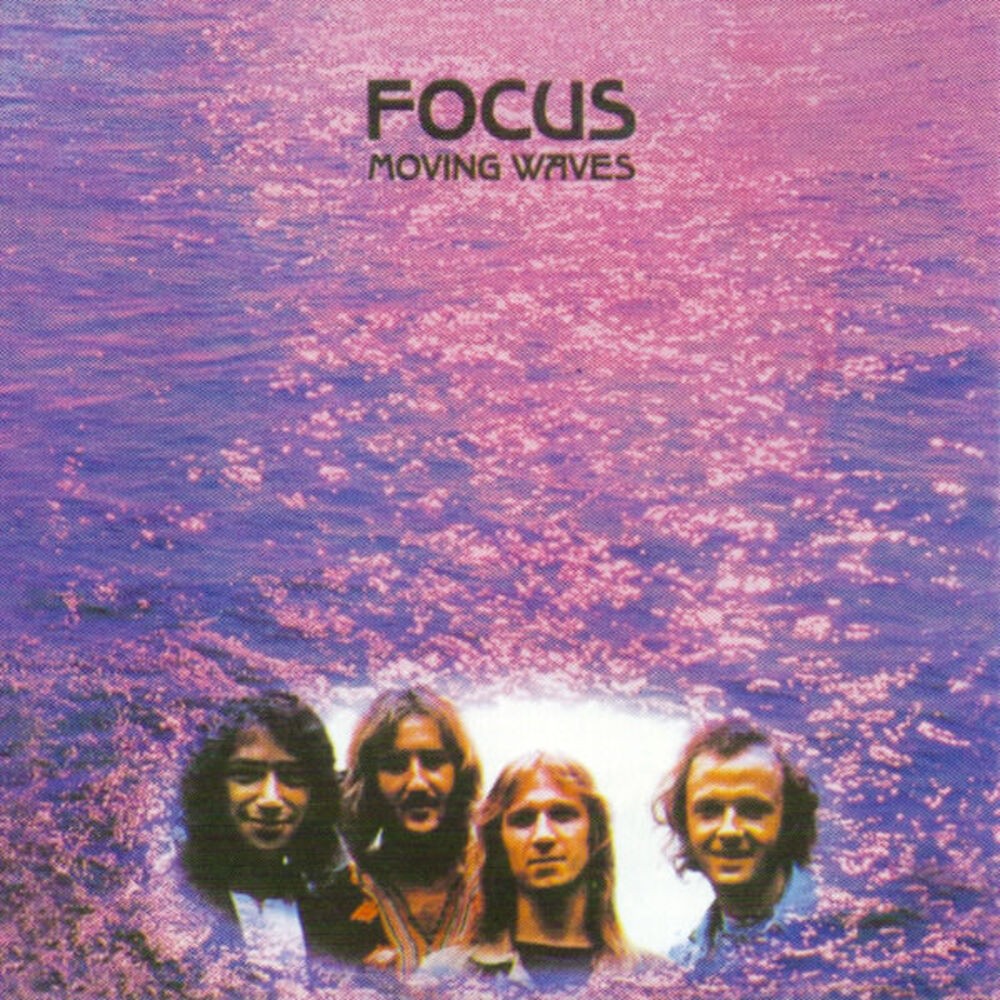
Moving Waves
- Released1 January 2010
- UK peak No. 2
- Weeks on UK chart 34
- Entered UK chart 5 November 1972
- LabelRed Bullet
- Tracks6 · 42 min
One track from it charted as a single. Press a flag to play it in the chart where it peaked.
Tracks
| 1 | 6:42 | ||
| 2 | Le Clochard | 2:00 | |
| 3 | Janis | 3:08 | |
| 4 | Moving Waves | 2:42 | |
| 5 | Focus II | 4:03 | |
| 6 | Eruption | 23:02 |
About the album
Focus II (better known by its international title, Moving Waves) is the second studio album by Dutch progressive rock band Focus, released in October 1971 on Imperial Records. Following the departure of original bassist Martin Dresden and drummer Hans Cleuver in 1970, the band recruited Cyril Havermans and Pierre van der Linden, respectively, and prepared material for a new album. Recording took place in London in April and May 1971 with Mike Vernon as producer. The album features "Hocus Pocus", a hard rock song featuring keyboardist Thijs van Leer's yodelling, scat singing, and whistling, and "Eruption", a 22-minute track inspired by the opera Euridice by Italian composer Jacopo Peri.
The album was released to a mostly positive response and remains one of their most commercially successful albums, reaching No. 2 in the UK, No. 4 in the Netherlands, and No. 8 in the US. "Hocus Pocus" was released as a single in the Netherlands in June 1971, followed by its international release in 1973, where it reached No. 9 in the US and No. 20 in the UK. The album is certified gold by the Recording Industry Association of America for selling 500,000 copies in the US.
Background
Focus was formed in Amsterdam in 1969 by keyboardist, vocalist, and flautist Thijs van Leer, bassist Martin Dresden, drummer Hans Cleuver, and guitarist Jan Akkerman. After releasing their debut album Focus Plays Focus (1970), the group suffered a setback when Akkerman requested that van Leer fire Dresden and Cleuver so his former Brainbox bandmate, drummer Pierre van der Linden, could join the band. Van Leer reluctantly agreed, and the trio subsequently recruited bassist Cyril Havermans. After a series of gigs, the group travelled to London to record a follow-up album. Session took place from 13 April–14 May 1971 at Sound Techniques and Morgan Studios with Mike Vernon as their producer.
Release
Moving Waves was released in October 1971 to mainly positive reception. It went on to peak at number 2 on the UK Albums Chart, number 8 on the US Billboard 200, and number 4 on the Dutch Album Top 100 chart.
The single "Hocus Pocus" peaked at number 9 on the Billboard Hot 100.
Moving Waves came in at number 24 in Q and Mojo's list of "40 Cosmic Rock Albums".