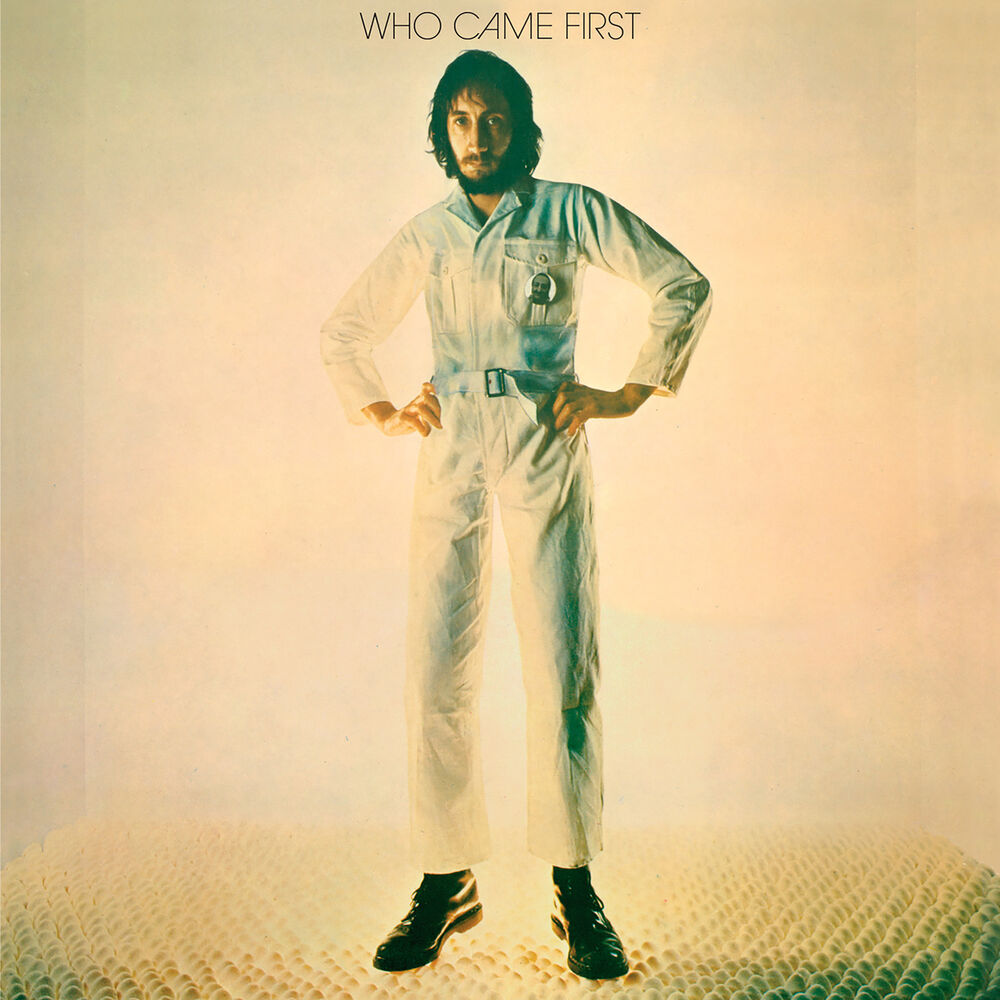
Who Came First (Deluxe)
- Released20 April 2018
- LabelUMC (Universal Music Catalogue)
- Tracks25 · 104 min
Tracks
| 1 | Pure And Easy (Remastered 2017) | 5:32 | |
| 2 | Evolution (Remastered 2017) | 3:43 | |
| 3 | Forever's No Time At All (Remastered 2017) | 3:05 | |
| 4 | (Nothing Is Everything) Let's See Action (Remastered 2017) | 6:22 | |
| 5 | Time Is Passing (Remastered 2017) | 3:25 | |
| 6 | There’s A Heartache Following Me (Remastered 2017) | 3:21 | |
| 7 | Sheraton Gibson (Remastered 2017) | 2:36 | |
| 8 | Content (Remastered 2017) | 2:43 | |
| 9 | Parvardigar (Remastered 2017) | 6:49 | |
| 10 | His Hands (Remastered 2017) | 2:07 | |
| 11 | The Seeker (2017 Edit / Remastered 2017) | 4:36 | |
| 12 | Day Of Silence (Remastered 2017) | 2:57 | |
| 13 | Sleeping Dog (Remastered 2017) | 2:56 | |
| 14 | Mary Jane (Stage A / Alternative Take) | 2:35 | |
| 15 | I Always Say (June 2017 Edit) | 4:58 | |
| 16 | Begin The Beguine (2017 Mix) | 4:41 | |
| 17 | Baba O'Riley (Instrumental Version / Remastered 2017) | 9:49 | |
| 18 | The Love Man (Stage C) | 4:54 | |
| 19 | Content (Stage A) | 2:46 | |
| 20 | Day Of Silence (Alternative Version) | 4:38 | |
| 21 | Parvardigar (Alternative Version) | 7:12 | |
| 22 | (Nothing Is Everything) Let's See Action (Incomplete Take) | 3:57 | |
| 23 | There’s A Fortune In Those Hills | 4:09 | |
| 24 | Meher Baba In Italy | 2:20 | |
| 25 | Drowned (Live In India) | 2:02 |
About the album
Who Came First is the debut solo studio album by the English musician Pete Townshend, released in 1972 on Track Records in the UK and Track/Decca in the US.
It includes previously released material as well as tracks that originated as demos for the Who's aborted concept album Lifehouse, which became the basis of Who's Next (1971).
The original release had a gatefold cover and included a poster with additional photos of Meher Baba from the Louis van Gasteren film Beyond Words (1967). The cover photo of Townshend standing on eggs is a reference to the eternal question "Which came first: the chicken or the egg?” (although the album title changes it to "Who Came First" as a reference to the Townshend's band the Who).
The album peaked at number 30 on the UK Albums Chart and at number 69 on the US Billboard 200.
Background and content
Townshend had already participated with other artists on two previous albums in tribute to his guru Meher Baba, Happy Birthday and I Am. These albums were distributed in very small quantities between 1970 and 1972 in the UK. Soon after Decca asked Townshend for permission to release the recordings, as inferior copies were circulating in the US as bootlegs. Rather than re-issuing the original albums Townshend decided to change the track list substantially and develop the project into his first "official" solo album. Three of Townshend's demos for Lifehouse were selected, along with two songs each from the earlier tribute albums and two additional songs.
Lifehouse
The Lifehouse demos included are: "Pure and Easy," edited from its original length of 8:35; "Let's See Action"; and (with minor overdubs added) "Time Is Passing." Of these, only "Let's See Action" had seen prior release, as a single by the Who in 1971. The Who's versions of the remaining two Lifehouse songs were eventually released on Odds & Sods (1974) and its reissued version.
Release history
Original UK copies were on Track Records, reissued by Polydor Records after Track ceased operations in 1978. The first US issue appeared on the silver Track/Decca label. In 1973 it was reissued in the US on the MCA Records black with rainbow label, but without the gatefold cover or the poster.
The first compact disc release by Rykodisc appeared in 1992 with six bonus tracks taken from the privately distributed albums, also issued in a limited edition deluxe version with extra artwork. A remastered edition appeared in 2006 on Hip-O Records, the legacy division of the Universal Music Group, with nine bonus tracks, the first six being the ones from the Rykodisc reissue. The nine bonus songs on the Hip-O reissue comprise the remaining Townshend performances from Happy Birthday and the 1976 record, With Love, along with the track "I Always Say" recorded between 1968 and 1970.
Critical reception
Reviewing in Christgau's Record Guide: Rock Albums of the Seventies (1981), Robert Christgau wrote: Townshend sounds as relaxed in this rather folkish Meher Baba tribute cum 'gynormouse ego trip' as Paul McCartney in his do-it-yourself studio, and a lot less self-absorbed—other musical gurumongers sound 'Content' (title of worst song here), but Pete seems happy, too. So much so that some of this music is a little lightweight—expressing the kind of undiscriminating joy in the everyday one might expect from somebody who considers 'You always were, you always are, and you always will be' both a profound sentiment and a snappy way to finish off a concept album. But I'm encouraged that Ronnie Lane (singer-songwriter on 'Evolution') offers a drink (alcohol, get it?) to the Master and his Truth. And in the end the homely sweetness and frailty of his music prevails.