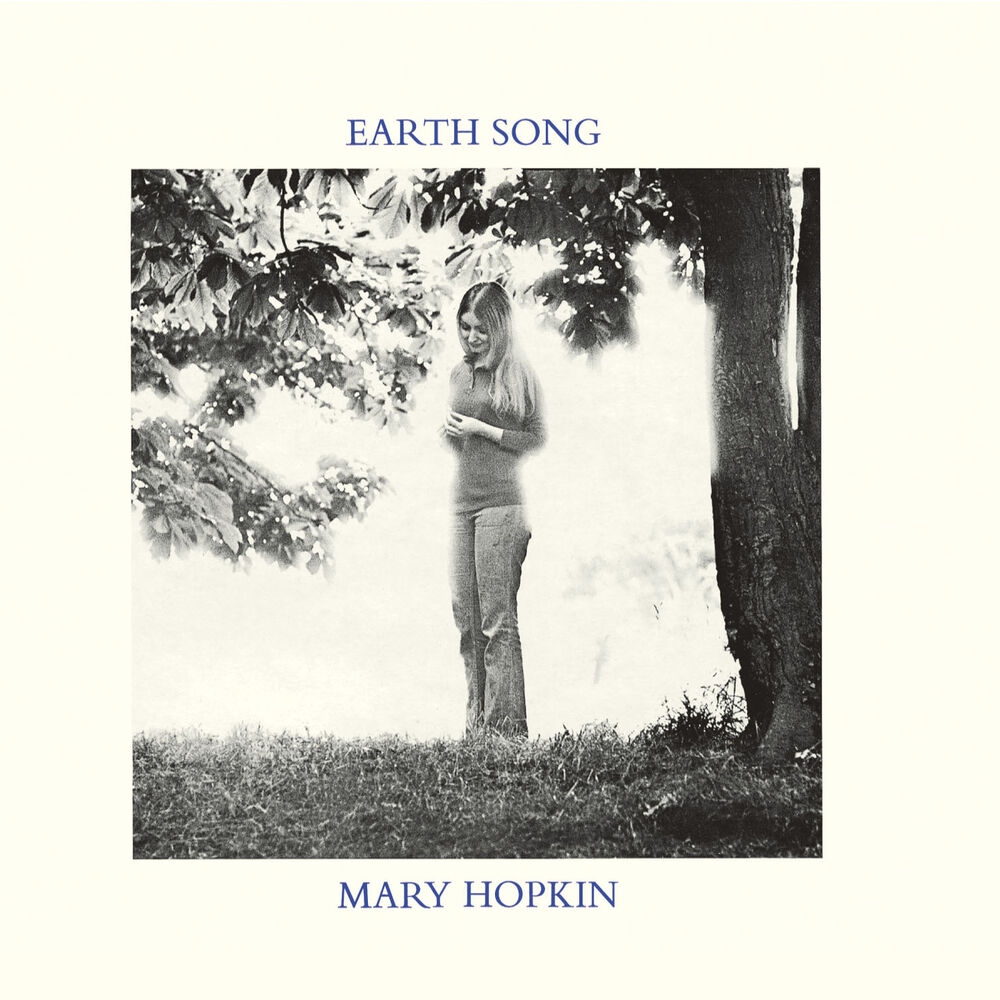
Earth Song - Ocean Song (Remastered 2010)
- Released22 October 2010
- LabelEMI Catalogue
- Tracks13 · 48 min
One track from it charted as a single. Press a flag to play it in the chart where it peaked.
Tracks
| 1 | International (Remastered 2010) | 3:37 | |
| 2 | There's Got To Be More (Remastered 2010) | 3:56 | |
| 3 | Silver Birch And Weeping Willow (Remastered 2010) | 2:49 | |
| 4 | How Come The Sun (Remastered 2010) | 5:44 | |
| 5 | Earth Song (Remastered 2010) | 3:54 | |
| 6 | Martha (Remastered 2010) | 4:53 | |
| 7 | Streets Of London (Remastered 2010) | 4:30 | |
| 8 | The Wind (Remastered 2010) | 2:06 | |
| 9 | Water, Paper And Clay (Remastered 2010) | 4:11 | |
| 10 | Ocean Song (Remastered 2010) | 4:15 | |
| 11 | Kew Gardens (Remastered 2010) | 2:24 | |
| 12 | When I Am Old One Day (Remastered 2010) | 2:26 | |
| 13 | Let My Name Be Sorrow (Remastered 2010) No. 46 · 1971 | 3:31 |
About the album
Earth Song/Ocean Song is the second studio album by the Welsh singer Mary Hopkin, released in October 1971 by Apple Records. It was released over two years after her first album, Post Card, and would be her last for eighteen years.
Background and recording
After signing to the Beatles' record label Apple, Hopkin became a star worldwide in 1968 following the success of "Those Were the Days", produced by Paul McCartney. The ensuing album, Post Card (comprising several songs written by Donovan and a number of show tunes), and follow-up single "Goodbye" in 1969, also both under McCartney's direction, continued Hopkin's success. However, later in the year, Hopkin agreed to stop working with McCartney, as she needed to release more material and he did not have the time. One of the producers put forward was Tony Visconti who had worked on the debut album for labelmate Badfinger (then known as the Iveys). His audition was recording a vocal overdub for Hopkin's Welsh version of "Sparrow". Not knowing who he was, and not realising it was an audition for her next producer, Hopkin did not mention Visconti to Apple, so they assumed he had not made an impression on her. Following this, Apple decided that Mickie Most might be a good fit as he had produced albums by Donovan.
Release and reception
Prior to being able to record Earth Song/Ocean Song, Apple asked Hopkin to record one more pop song. Visconti chose an adaptation of a French song called "Quand je te regarde vivre" originally recorded by Gilles Marchal in 1970. The adaptation, "Let My Name Be Sorrow", had been recorded and released several months prior to Hopkin by Françoise Hardy. Hopkin's version was released as a single in June 1971, and was not the traditional pop song Apple were expecting, with one reviewer describing it as "probably the nicest thing she has recorded, but also the least commercial".
Earth Song/Ocean Song was released at the beginning of October 1971 in the UK and the following month in the US. Whilst the album was critically well received, it was not a commercial success. One single, "Water, Paper & Clay", was released in November 1971. Reviewing the album for Record Mirror, Bill McAllister praised Hopkin's vocals, the song selection and the arrangements, describing it as "a gorgeous album which you would do well to possess.