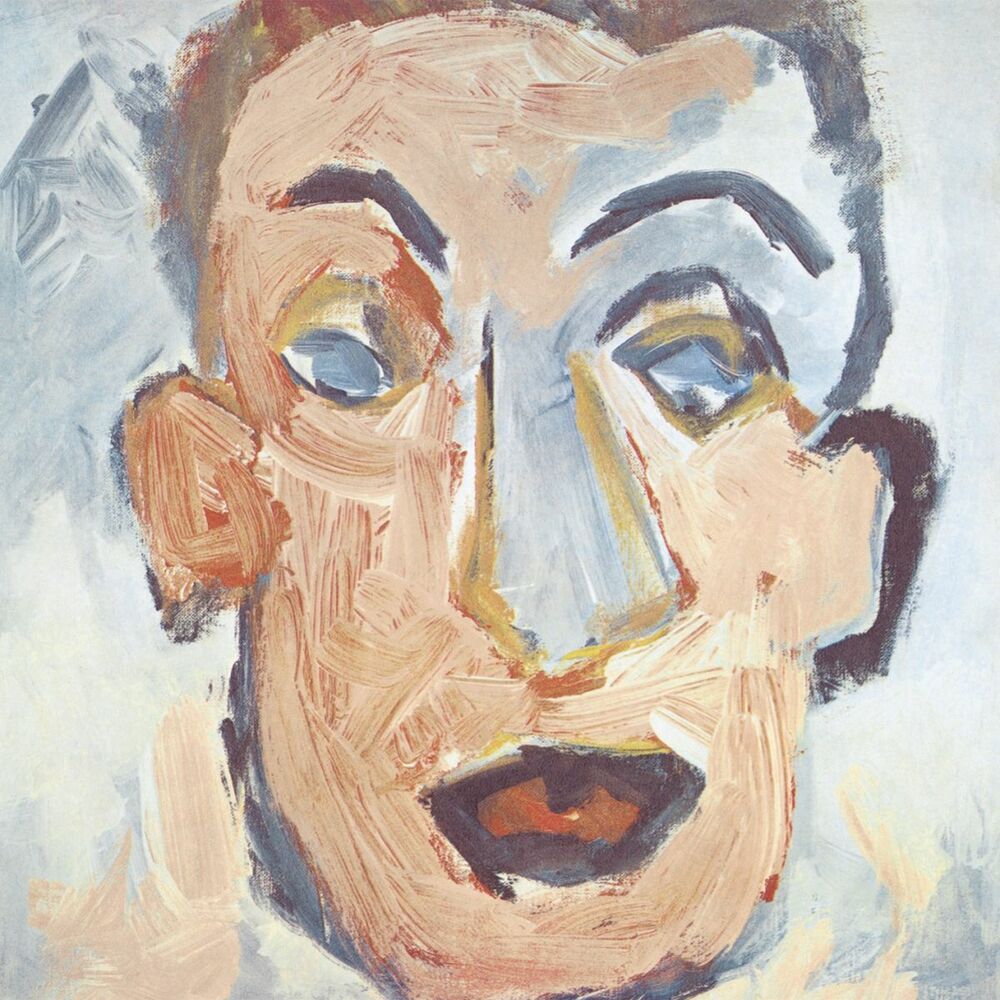
Self Portrait
- Released8 June 1970
- UK peak No. 1
- Weeks on UK chart 15
- Entered UK chart 5 July 1970
- LabelColumbia/Legacy
- Tracks24 · 73 min
2 tracks from it charted as singles. Press a flag to play it in the chart where it peaked.
Tracks
| 1 | All the Tired Horses | 3:09 | |
| 2 | Alberta #1 | 2:55 | |
| 3 | I Forgot More Than You'll Ever Know | 2:21 | |
| 4 | Days of '49 | 5:25 | |
| 5 | Early Mornin' Rain | 3:32 | |
| 6 | In Search of Little Sadie | 2:25 | |
| 7 | Let It Be Me | 2:58 | |
| 8 | Little Sadie | 1:58 | |
| 9 | Woogie Boogie | 2:05 | |
| 10 | Belle Isle | 2:27 | |
| 11 | Living the Blues | 2:40 | |
| 12 | 5:15 | ||
| 13 | Copper Kettle | 3:31 | |
| 14 | Gotta Travel On | 3:05 | |
| 15 | Blue Moon | 2:26 | |
| 16 | The Boxer | 2:45 | |
| 17 | (Quinn the Eskimo) The Mighty Quinn (Live at the Isle of Wight, UK - August 1969) | 2:45 | |
| 18 | Take Me as I Am (Or Let Me Go) | 3:00 | |
| 19 | Take a Message to Mary | 2:43 | |
| 20 | It Hurts Me Too | 3:12 | |
| 21 | Minstrel Boy (Live at the Isle of Wight, UK - August 1969) | 3:31 | |
| 22 | She Belongs to Me (Live at the Isle of Wight, UK - August 1969) | 2:41 | |
| 23 | Wigwam No. 41 · 1970 | 3:06 | |
| 24 | Alberta #2 | 3:14 |
About the album
Self Portrait is the tenth studio album by American singer-songwriter Bob Dylan. It was released on June 8, 1970, through Columbia Records. The album was produced by Bob Johnston and was Dylan's second double album, after Blonde on Blonde (1966). The record is compiled of cover songs, live recordings, and new originals, while the arrangements and vocal performances continue in the country vein of the preceding Nashville Skyline (1969).
Self Portrait was released to negative reviews and confusion from critics and fans alike. Criticism was directed at the album's production, performances, and the lack of new material. Dylan himself has since referred to the album as having been released with the purpose of confounding the public's expectations of him, and to counter the "spokesman of a generation" tag which had been placed on him throughout the 1960s.
Despite the critical reception, the album was a commercial success, reaching number four in the US and topping the chart in the UK. In 2013, Dylan released The Bootleg Series Vol. 10: Another Self Portrait (1969–1971), which resulted in further positive critical revaluation.
Production
The motives behind Self Portrait have been subject to wild speculation and great debate.
Critic Robert Shelton was under the impression that Self Portrait was intended as a serious release. "I told Dylan that Self Portrait confused me," Shelton wrote in 1986. "Why had he recorded 'Blue Moon'? He wouldn't be drawn out, although obviously he had been stung by the criticism. 'It was an expression,' he said. He indicated that if the album had come from Presley or the Everly Brothers, who veered toward the middle of the road, it wouldn't have shocked so many."
However, in a Rolling Stone interview, in 1984, Dylan gave a different reason for the album's release:
At the time, I was in Woodstock, and I was getting a great degree of notoriety for doing nothing. Then I had that motorcycle accident [in 1966], which put me outta commission. Then, when I woke up and caught my senses, I realized that I was just workin' for all these leeches. And I didn't wanna do that. Plus, I had a family, and I just wanted to see my kids.
Reception
Self Portrait received negative reviews by critics and consumers alike. Critical disdain seemed universal. At best, a number of journalists, including Robert Christgau, felt there was a concept behind Self Portrait that had some merit.
"Conceptually, this is a brilliant album," wrote Christgau, "which is organized, I think, by two central ideas. First, that 'self' is most accurately defined (and depicted) in terms of the artifacts—in this case, pop tunes and folk songs claimed as personal property and semispontaneous renderings of past creations frozen for posterity on a piece of tape and (perhaps) even a couple of songs one has written oneself—to which one responds. Second, that the people's music is the music people like, Mantovani strings and all."
However, few critics expressed any interest in the music itself. "[I]n order for a concept to work it has to be supported musically—that is, you have to listen," Christgau admitted. "I don't know anyone, even vociferous supporters of this album, who plays more than one side at a time. I don't listen to it at all.