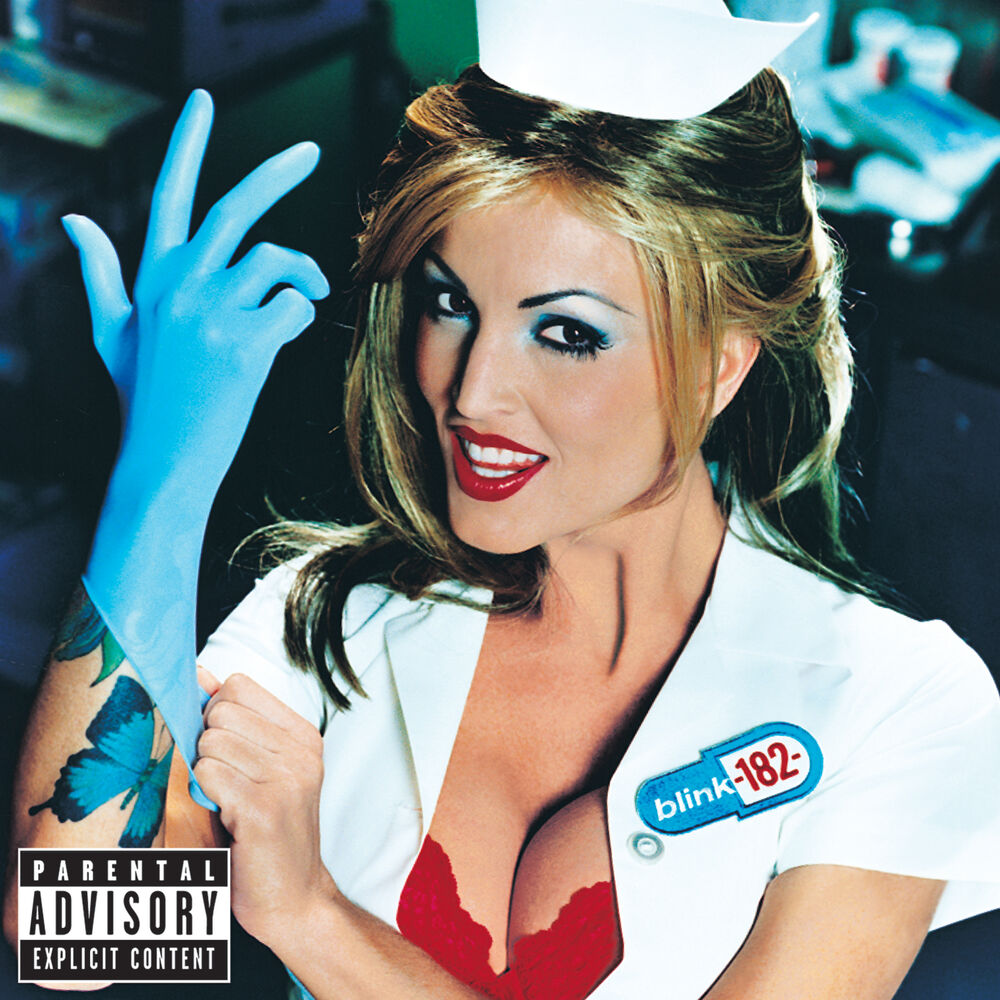
Enema Of The State
- Released14 September 2018
- UK peak No. 15
- Weeks on UK chart 38
- Entered UK chart 27 February 2000
- LabelGeffen
- Tracks12 · 35 min
2 tracks from it charted as singles. Press a flag to play it in the chart where it peaked.
Tracks
| 1 | Dumpweed | 2:23 | |
| 2 | Don't Leave Me | 2:23 | |
| 3 | Aliens Exist | 3:12 | |
| 4 | Going Away To College | 2:59 | |
| 5 | 2:30 | ||
| 6 | Dysentery Gary | 2:44 | |
| 7 | Adam's Song | 4:09 | |
| 8 | 2:52 | ||
| 9 | The Party Song | 2:19 | |
| 10 | Mutt | 3:23 | |
| 11 | Wendy Clear | 2:50 | |
| 12 | Anthem | 3:39 |
About the album
Enema of the State is the third studio album by the American rock band Blink-182, released on June 1, 1999, by MCA Records. The band formed in Southern California, earning an early fanbase with their fast tempos, catchy hooks, and trademark irreverence. The band gained greater visibility after releasing their second album, Dude Ranch (1997), which featured the modern rock hit "Dammit". For its follow-up, the band recruited veteran producer Jerry Finn, who became a key creative partner and an important figure in defining their sound. It also marked their first recording with drummer Travis Barker, whose speed, precision, and versatility helped elevate their musicianship.
Recorded across their hometown of San Diego and Los Angeles over three months, Enema of the State introduced a cleaner, more melodic approach that contrasted with the band's rawer early work. Finn's glossy production emphasized tight arrangements, bright harmonies, and a polished pop sensibility that would become emblematic of mainstream pop-punk. Guitarist Tom DeLonge and bassist Mark Hoppus primarily culled stories from friends and autobiographical situations to craft summer-related tracks revolving around teenage breakups, suburban parties and maturity, as well as more offbeat subject matter such as UFO conspiracy theories.
Background
Blink-182 emerged from the early 1990s San Diego skate-punk scene, forming in 1992 when bassist Mark Hoppus, guitarist Tom DeLonge, and drummer Scott Raynor began writing songs together, united by a shared enthusiasm for West Coast punk and irreverent humor. The trio developed a loyal local following through performances at venues such as SOMA and released their debut album, Cheshire Cat (1995), through Cargo Music. Extensive touring, including appearances on the Vans Warped Tour, expanded the band's audience beyond Southern California, particularly among skateboarding and surfing communities. By the mid-1990s, punk rock was breaking through on a national scale, aided by high-profile releases by bands like Rancid and Green Day. Blink-182 subsequently signed with MCA Records, which released their second album, Dude Ranch (1997).
Recording
The record label allocated a $300,000 recording budget for the album. The recording process for the album was completed over a period of four months, and production was handled at several production facilities in southern California, including Signature Sound and Studio West in San Diego, Big Fish Studios in Encinitas, and Conway Recording Studios and The Bomb Factory in Los Angeles. The first step was to record drums, which were tracked at Chick Corea's Mad Hatter Studios in L.A. in January 1999. After completing his drum tracks, Barker was largely absent from the remainder of the recording sessions, having left to tour with the Vandals. Afterwards the band tracked guitars, bass and vocals. Finn came with an array of instruments, amps, and effects; previously the band were forced to rent such equipment. Finn was not afraid to critique the young band, delivering sharp feedback that ultimately helped them improve. Hoppus credited Finn with knowing a great deal about punk rock music, but also helping the band establish a more pop-inspired sound.
Artwork
The cover depicts model Janine Lindemulder in a stylized nurse's uniform, with a red bra visible beneath it. Wearing blue eye shadow, she is shown pulling a latex glove onto her right hand in a suggestive pose. The photograph is framed against a white background, with the album title displayed inside a capsule-shaped logo and the band's name printed above. The band appears on the back cover in their underwear, with Lindemulder preparing for some sort of injection. The album cover has since been described as iconic by numerous publications and is widely regarded as one of the defining images of late-1990s rock. In 2015, Billboard ranked the cover among the top 15 "greatest of all-time," calling it "an image that was burned into the mind of every TRL viewer, one that became instantly iconic."
Art director Tim Stedman oversaw the album's visual identity, although both he and photographer David Goldman have variously credited themselves with conceiving the cover concept in later interviews.
Promotion
Following the commercial breakthrough of Dude Ranch, MCA Records substantially increased its investment in Blink-182, viewing them as a "marquee act" for the label. Determined to capitalize on the band's momentum, manager Rick DeVoe kept Blink-182 on a relentless promotional schedule, explaining that his philosophy was to "strike while the iron's hot." The label mobilized its publicity, promotion, and sales departments to support the release through press coverage, radio promotion, in-store appearances, autograph signings, and prominent retail displays. Boberg later said MCA approached Blink-182 as a "lifestyle-oriented band", initially marketing the trio to its established skateboarding fanbase before broadening the campaign to mainstream audiences.
Commercial performance
Before Enema of the State reached store shelves, MCA executives immediately recognized its commercial potential. In his memoir, Barker recalled that label staff "freaked out" after receiving the completed record, convinced it would become a blockbuster. According to manager Rick DeVoe, MCA president Jay Boberg was similarly enthusiastic, telling him that Blink-182 would soon be headlining arenas. Sales targets were higher than its predecessor. In May 1999, the Los Angeles Times ran a Sunday feature on the band two days prior to release, noting that "The musicians are sanguine about chances to repeat or exceed the sales of Dude Ranch, noting the always-shifting sands of pop culture and that they've already done better than they'd ever anticipated." Momentum began to build when US radio stations received advance copies of Enema of the State ahead of its June 1 bow. On release day, the trio were in Detroit for a free secret show sponsored by Coca-Cola.
Singles
To promote Enema of the State, MCA Records released three singles in support: "What's My Age Again?," "All the Small Things," and "Adam's Song." This followed a standard formula labels used for rock albums in the nineties, where the lead single would be high-energy and upbeat, the follow-up more of an album cut, and the third single a ballad. The singles were bigger than anyone in the band expected, crossing over into Top 40 radio format and experiencing major commercial success. "What's My Age Again?" became an "airplay phenomenon," achieving mass success on both radio and television. It achieved the highest success on Billboard's Modern Rock Tracks chart, where it peaked at number two. It registered within the top 20 on UK Singles Chart as well, peaking at number 17. The music video for "What's My Age Again?," directed by Marcos Siega, famously depicted the band running naked through the streets of Los Angeles.