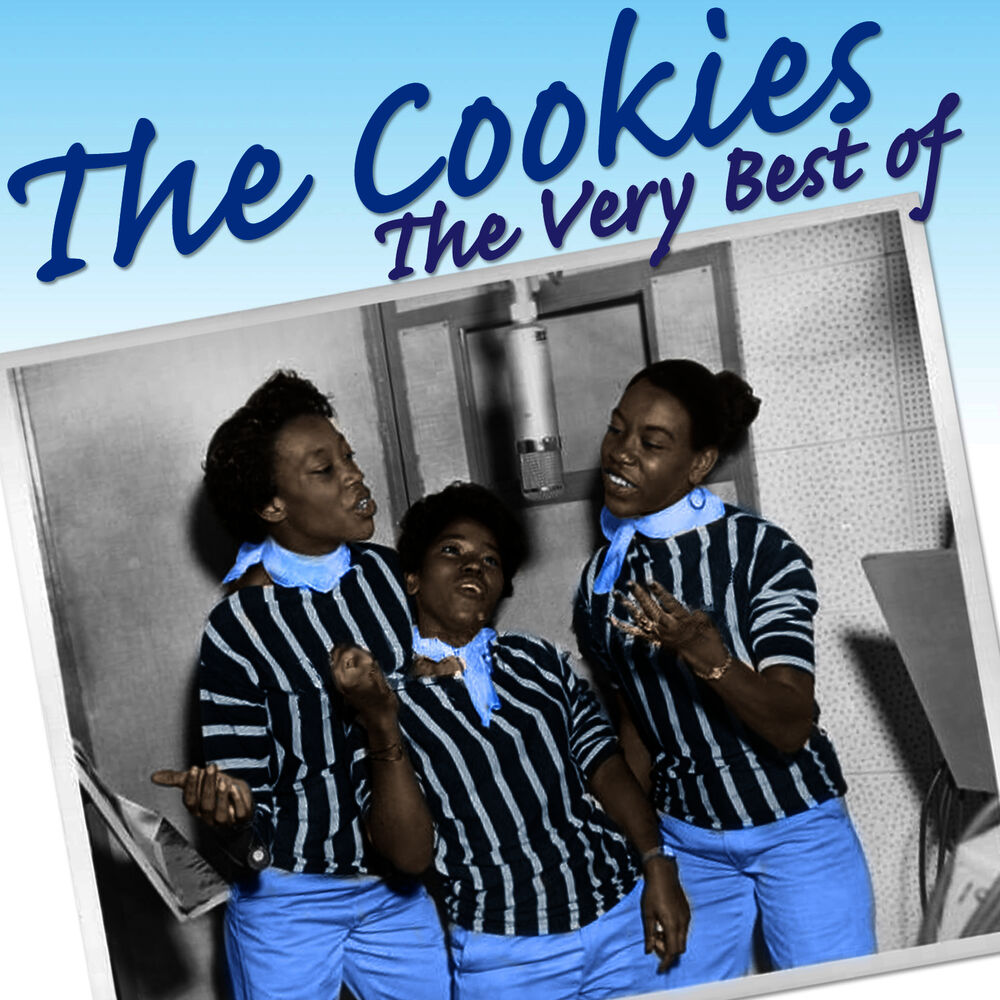
3 tracks from it charted as singles. Press a flag to play it in the chart where it peaked.
Tracks
| 1 | Down By The River | 2:37 | |
| 2 | On Broadway | 2:01 | |
| 3 | Foolish Little Girl | 2:22 | |
| 4 | King Of Hearts | 2:33 | |
| 5 | Don't Let Go | 2:33 | |
| 6 | The Old Crowd | 2:43 | |
| 7 | Happy Dippy Daddy | 2:02 | |
| 8 | They're Jealous Of Me | 2:54 | |
| 9 | Softly In The Night | 2:03 | |
| 10 | 2:31 | ||
| 11 | Stranger In My Arms | 2:35 | |
| 12 | Passing Time | 2:45 | |
| 13 | We Love & Learn | 2:36 | |
| 14 | Later Later | 2:45 | |
| 15 | Precious Love | 2:58 | |
| 16 | I'm Into Something Good | 2:53 | |
| 17 | I Want A Boy For My Birthday | 2:42 | |
| 18 | In Paradise | 2:34 | |
| 19 | All Night Mambo | 2:16 | |
| 20 | Don't Say Nothin' (Bad About My Baby) | 2:45 | |
| 21 | Randy | 2:14 | |
| 22 | Will Power No. 72 · 1963 | 2:34 | |
| 23 | Only To Other People | 2:35 | |
| 24 | I Never Dreamed | 2:36 | |
| 25 | Girls Grow Up Faster Than Boys No. 33 · 1964 | 2:46 |
About the album
Cookie: The Anthropological Mixtape is the fourth studio album by American soul singer and rapper Meshell Ndegeocello, released on June 4, 2002, by Maverick Records. Following the commercial underperformance of her third studio album, Bitter (1999), her label encouraged her to return to her earlier sound and record an album that sounded more "black". Ndegeocello collaborated with a number of prominent Black musicians, including Talib Kweli, Missy Elliott, and Tweet, as well as her backing band, the Conscientious Objectors, and recorded the album during the summer of 2001. The record, which Ndegeocello modeled on the mixtapes of her childhood, adopted a hip-hop and R&B-influenced sound and political lyrics similar to that of her debut album, Plantation Lullabies (1993), focusing on themes such as consumerism, revolution, religion, and same-sex attraction. Throughout the album, Ndegeocello also features samples of recorded speeches by Black activists, poets, and musicians, such as Angela Davis, Gil Scott-Heron, Countee Cullen, and Etheridge Knight.
The album was originally slated to come out in 2001, but its release was repeatedly delayed due to some lyrics regarded as related to the September 11 attacks. Upon its release, the album received universal acclaim from music critics, who praised Ndegeocello's politically conscious lyrics, as well as the assortment of musical styles.
Background
Ndegeocello released her debut studio album, Plantation Lullabies, in 1993 on Maverick. The album received praise in Europe and the US, particularly for its politically conscious lyrics, but some within the queer community expressed disappointment that the album didn't include any songs that explicitly discussed same-sex attraction. A proposed music video for the project would have included a lesbian love scene, but Maverick declined to finance the video, fearing commercial repercussions, and instead aimed to guide Ndegeocello into mainstream success, as with her John Mellencamp duet, "Wild Night". Peace Beyond Passion, her second album, was released in 1996 and featured extensive focus on queer themes. Ndegeocello wanted to record a jazz album for her next project, but after her label discouraged her, she instead recorded Bitter, an album drawing inspiration from acoustic jazz and artists like Bill Withers and Marvin Gaye.
Style and themes
The album incorporates elements of jazz, go-go, rap, funk, and soul. Ndegeocello told KCRW in an interview that she regards Cookie as an R&B album and as more easily classified than Bitter. It was regarded as a departure from her previous studio album and a return to the style of Plantation Lullabies, with less confessional lyrics but with more "audaci(ous)" arrangements and "dark" lyrics. Wired argued that the album contrasted with her two "progressively mellow" previous albums, and that on Cookie she was "back with an attitude". In Out, Barry Walters wrote that the album incorporated elements of both Plantation Lullabies and Bitter, combining the former's "confrontational social commentary" and the latter's "hushed pillow talk". A review in Orlando Weekly noted that the album's political themes are reminiscent of her first two albums, but than in comparison to them, Cookie mostly "explores the political inside the personal". Ndegeocello told the Chicago Tribune that revolution was a recurring theme on the album, elaborating that to her, the word refers to "how things evolve.
Release and promotion
The release of Cookie: The Anthropological Mixtape was repeatedly delayed. It was first set to be released in October 2001; however, following the September 11 attacks, the album was put on hold due to a lyric in "Hot Night" in which Ndegeocello sings that "we suffer in a world trade paradise". On October 25, 2001, the Washington Post reported that the album's tentative title was Cookie: The Anthropological Mixtape, and that it was due to be released "early next year". The release date was pushed to February 12, 2002, but the release date was delayed again, with the Chicago Reader reporting in December 2001 that the album would be released in March 2002. The album's release date was eventually pushed to June 2002. In addition to the album's delayed release, the label forced Ndegeocello to use a different album cover, deeming the initial one inappropriate in the aftermath of the attacks. She stated that she wanted the lead single to be "Hot Night", but that her label would not allow it, given the world trade lyric.
The album was officially released on June 4, 2002.
Reception
Upon its release, Cookie: The Anthropological Mixtape received universal acclaim from music critics. In the issue of Billboard dated June 8, 2002, the album was featured among the new release "Spotlights", with Paoletta writing that the album "crackles with intensity, be it of the sexual, political, or religious kind", and concluding that the album "offers huge rewards" to open minded listeners. Austin Chronicle music critic Christopher Coletti, writing a joint review of new albums by P.Diddy, Eminem, Nelly, Wyclef Jean, Lauryn Hill, and Ndegeocello, regarded Cookie as the "most luscious" of the six records, writing that Ndegeocello "hits harder" than Hill. The Christian Science Monitor, in an overview of female musicians' new albums, called Ndegeocello "a female Gil Scott-Heron" and praised her "masterly" fusion of different musical styles. A review for The A.V.
Accolades
The album was also regarded as significant by critics and academics: Upon its release, some outlets described the record as one of the all-time best conscious hip-hop albums. Mark Anthony Neal recognized it as "the first major pop recording that speaks to the era of 'newblackness'", referring to a term coined by Mama Soul. At the end of 2002, music critic Robert Christgau ranked the album at number 76 on the Pazz & Jop 2002 Dean's List, while the Honolulu Star-Bulletin named the album one of the year's ten best albums, with critic Gary C.W. Chun praising its "earthy richness".
At the 45th Annual Grammy Awards, held in 2003, Cookie was nominated for Best Contemporary R&B Album, the first year of the award's existence. It marked Ndegeocello's third album to receive a Grammy nomination, after Plantation Lullabies and Peace Beyond Passion, and her seventh nomination overall.