One track from it charted as a single. Press a flag to play it in the chart where it peaked.
Tracks
| 1 | Hardrock No. 65 · 1984 | 6:10 | |
| 2 | Metal Beat | 4:56 | |
| 3 | Karabali | 5:14 | |
| 4 | Junku | 5:32 | |
| 5 | People Are Changing | 6:05 | |
| 6 | Sound System | 5:55 | |
| 7 | Metal Beat (Extended Version) | 6:45 |
About the album
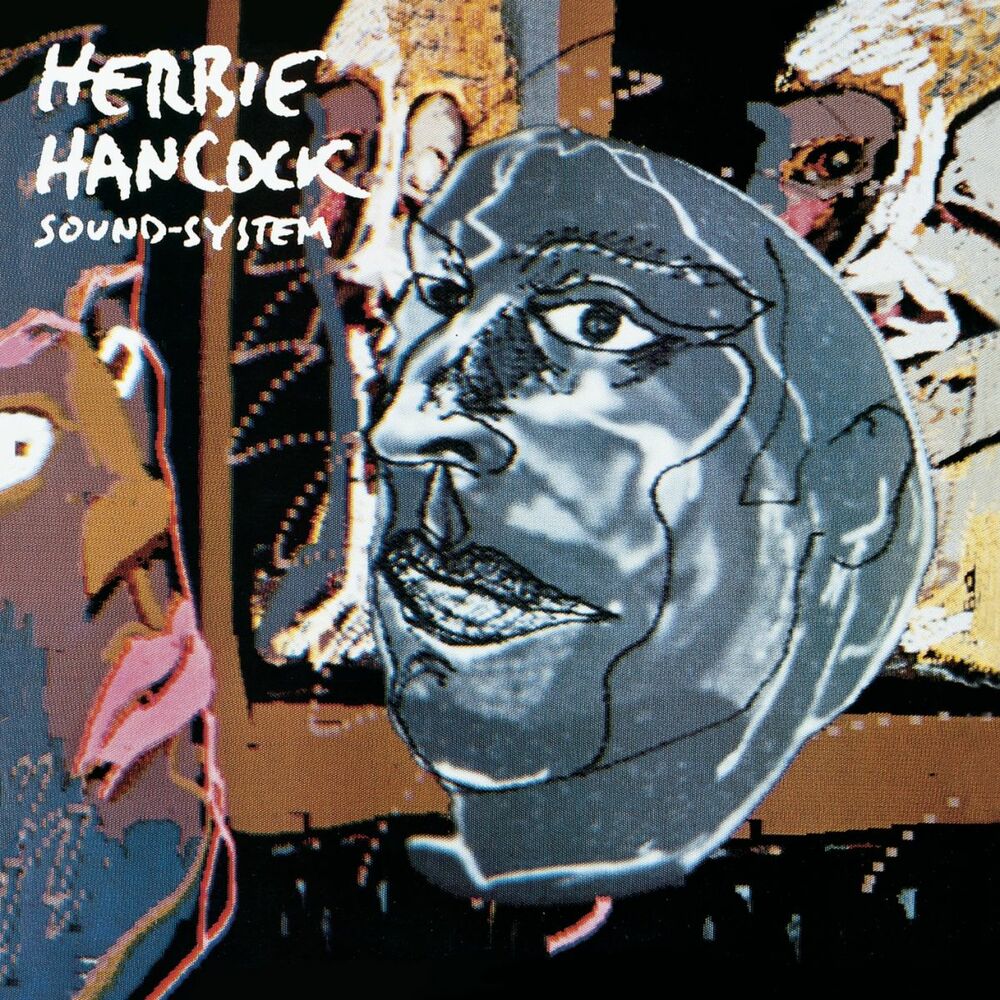
Sound-System is the thirtieth album by jazz pianist Herbie Hancock and the second of three albums co-produced by Bill Laswell with the ‘Rockit’ Band. Guest artists include saxophonist Wayne Shorter, guitarist Henry Kaiser, kora player/percussionist Foday Musa Suso and drummer Anton Fier.
Background
The second of the three Rockit band albums, Sound-System was another smash for Herbie Hancock. Winning his second Grammy award for Best R&B Performance (his second-straight award), this album tried to capture the success of the previous Future Shock, with some more twists and turns.
"Junku" for instance, featured Foday Musa Suso and also was written for the 1984 Summer Olympics in Los Angeles. It served as the "Field" theme. It also was used during Hancock's appearance on the long-running NBC sketch comedy Saturday Night Live.
"Sound System" sounded like "Junku" in many ways, while "Karabali" features Wayne Shorter on soprano saxophone and evokes Hancock's African themed Mwandishi band from the early 1970s.
Reception
Robert Christgau commented "Future Shock was a pretty good album despite its dink quotient; this is a better album despite its schlock quotient. Where's-the-melody is beside the point, because even when they're just hooks the melodies seem a little obvious, without the physical or intellectual bite of the rhythm tracks (nowhere mightier than on the amazing "Metal Beat," recommended to those who think Trevor Horn is into something heavy). And me, I doubt Herbie should be playing more "jazz"—several of the false moments here are provided by Saint Wayne Shorter himself. The African exotica of Foday Musa Suso and Aiyb Dieng, on the other hand, sounds right at home. As does the South Bronx exotica of D.St." Richard S. Ginell of AllMusic noted "In the grand tradition of sequels, Sound-System picks up from where Future Shock left off – if anything, even louder and more bleakly industrial than before ... Hancock's electric music still retained its adventurous edge.
Production
Herbie Hancock – producer
Bill Laswell – producer
Material – producers
Tony Meilandt – associate producer
Rob Stevens – engineer, recording
Lawrence A. Duhart – engineer
Billy Youdelman – engineer
Carolyn Collins – assistant engineer
Sam Fishkin – assistant engineer
Haun Rowe – assistant engineer
Lothar Segeler – assistant engineer
Dave Jerden – mixing
Howie Weinberg – mastering
David Em – cover image artwork
Norman Seeff – photography
Studios
Recorded at Evergreen Studios (New York City, NY); Studio Media (Evanston, IL); El Dorado Studios and Garage Sale Recording (Los Angeles, CA).
Mixed at El Dorado Studios (Los Angeles, CA).
Mastered at Masterdisk (New York City, NY).