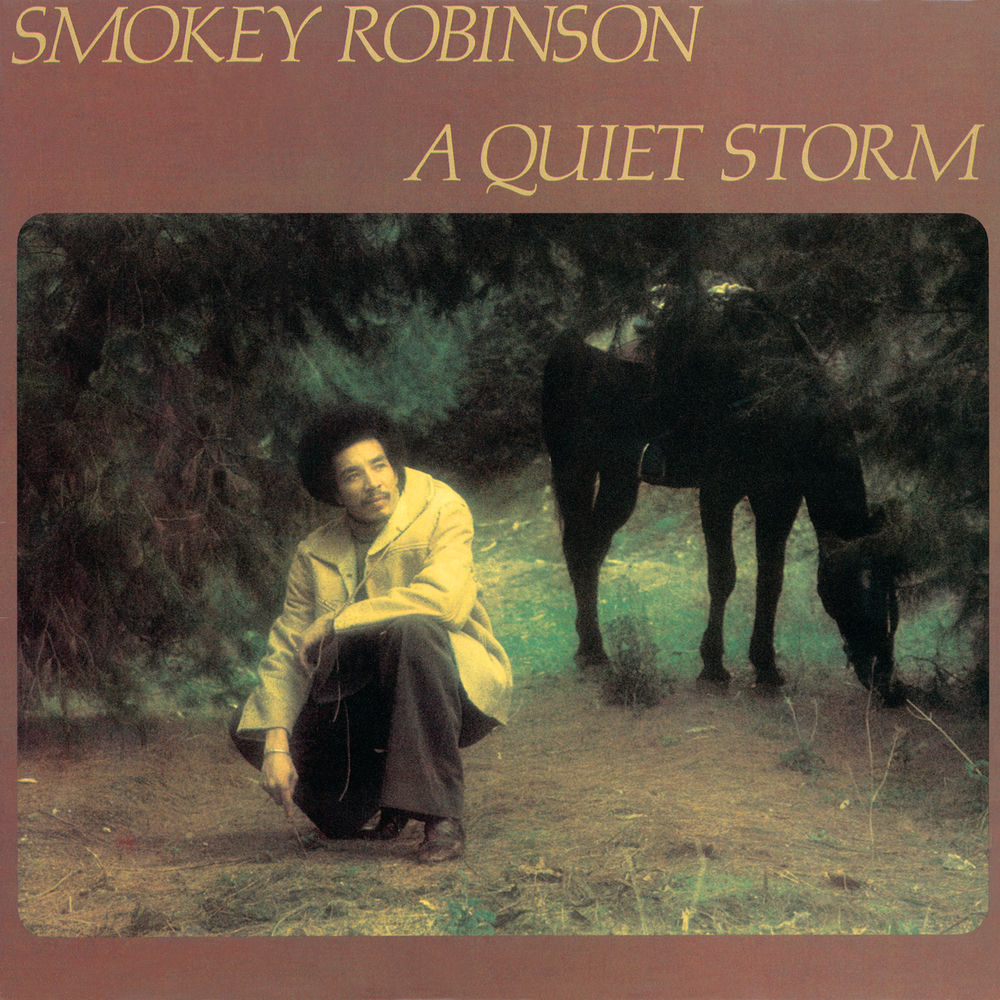
3 tracks from it charted as singles. Press a flag to play it in the chart where it peaked.
Tracks
| 1 | Quiet Storm No. 61 · 1976 | 7:49 | |
| 2 | The Agony And The Ecstasy No. 36 · 1975 | 4:47 | |
| 3 | Baby That's Backatcha No. 26 · 1975 | 3:48 | |
| 4 | Wedding Song | 3:35 | |
| 5 | Happy (Love Theme From "Lady Sings The Blues") | 7:12 | |
| 6 | Love Letters | 4:12 | |
| 7 | Coincidentally | 5:10 |
About the album
A Quiet Storm is the third solo album by American soul singer, songwriter, and producer Smokey Robinson. Released in March 1975, the album received generally positive reviews, and spawned the hit single "Baby That's Backatcha", which spent one week at the top of the Billboard Hot Soul Singles chart.
According to Pitchfork journalist Eric Harvey, A Quiet Storm revitalized Robinson's career after having left his group the Miracles, and typified what would become known as the quiet storm radio format.
Critical reception
A Quiet Storm is one of the most highly-acclaimed soul albums of the 1970s. This album spawned three hit singles, including Robinson's first disco hit "Baby That's Backatcha", rising to number 7 on the Billboard Disco chart (Top 10 R&B). The album re-established Robinson's reputation as a master songwriter and producer and solidified his solo success after leaving his influential Hall of Fame group, the Miracles.
In a contemporary review for Rolling Stone, Robert Palmer said A Quiet Storm proved Robinson was "still a dynamic creative force" as it succeeded on the strength of his singing and production, although he highlighted the "sexy directness" of the title track and "Baby That's Backatcha". Vince Aletti ranked it as the year's third best album in his ballot for the 1975 Pazz & Jop critics poll.