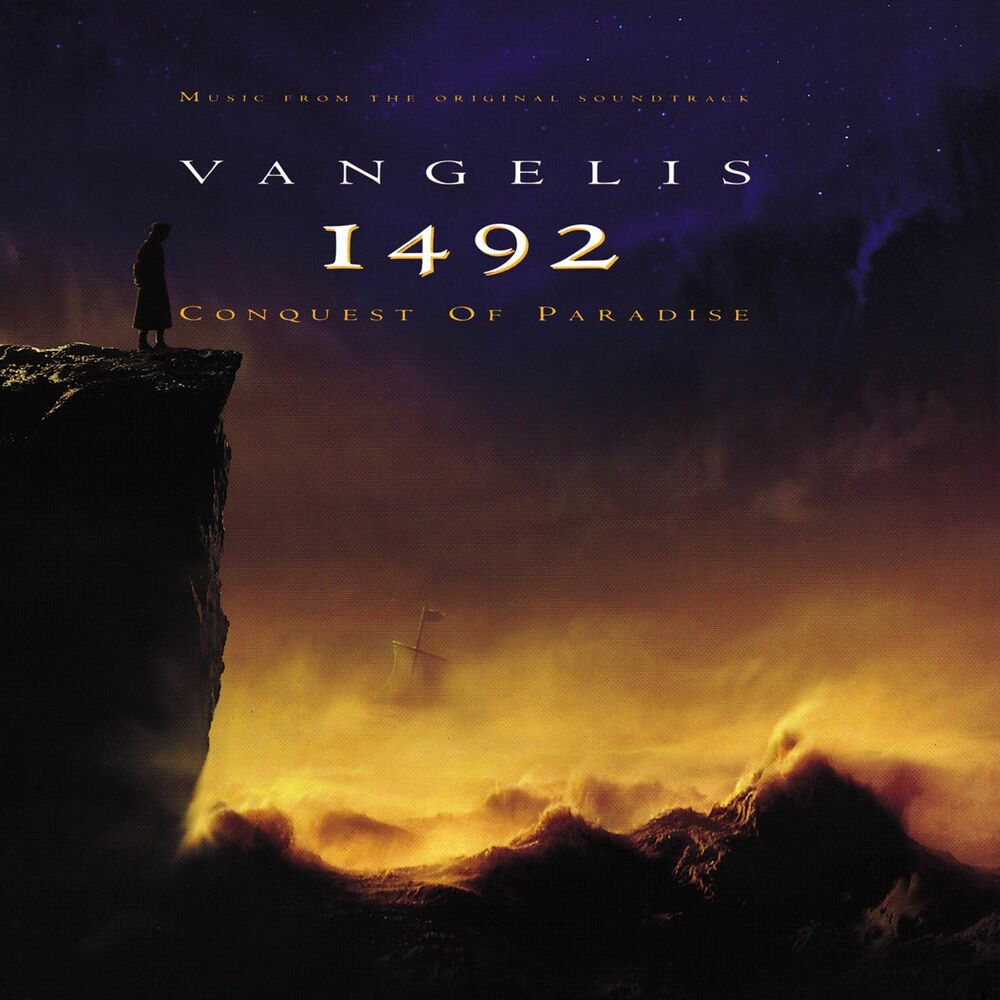
1492: Conquest of Paradise
- Released22 September 1992
- UK peak No. 33
- Weeks on UK chart 6
- Entered UK chart 18 October 1992
- LabelRhino
- Tracks12 · 55 min
One track from it charted as a single. Press a flag to play it in the chart where it peaked.
Tracks
| 1 | Opening | 1:21 | |
| 2 | Conquest of Paradise No. 60 · 1992 | 4:38 | |
| 3 | Monastery of La Rabida | 3:38 | |
| 4 | City of Isabel | 2:16 | |
| 5 | Light and Shadow | 3:46 | |
| 6 | Deliverance | 3:28 | |
| 7 | West Across the Ocean Sea | 2:53 | |
| 8 | Eternity | 1:58 | |
| 9 | Hispanola | 4:56 | |
| 10 | Moxica and the Horse | 7:06 | |
| 11 | Twenty Eighth Parallel | 5:14 | |
| 12 | Pinta, Nina, Santa Maria | 13:20 |
About the album
1492: Conquest of Paradise is a 1992 music score to the film of the same name by Greek electronic composer and artist Vangelis. The film, a recount of the voyage to America in 1492 by Christopher Columbus, was directed by Ridley Scott, for whom Vangelis had previously composed the music score for Blade Runner, in 1982. The album and the single "Conquest of Paradise" enjoyed a revival in 1995 for various reasons and broke many sales records.
Due to the soundtrack's success, Vangelis won an Echo Award as "International Artist of the Year", and RTL Golden Lion Award for the "Best Title Theme for a TV Film or a Series" in 1996. The album was nominated for "Best Original Score - Motion Picture" at the 50th Golden Globe Awards in 1993.
Lyrics
In "Monastery of La Rabida" and "Deliverance", the choir sings latin hymns ("De Profundis" and "Dies Irae, respectively"). In "Conquest of Paradise" and "Light and Shadow" Vangelis used a pseudo-Latin invented language.