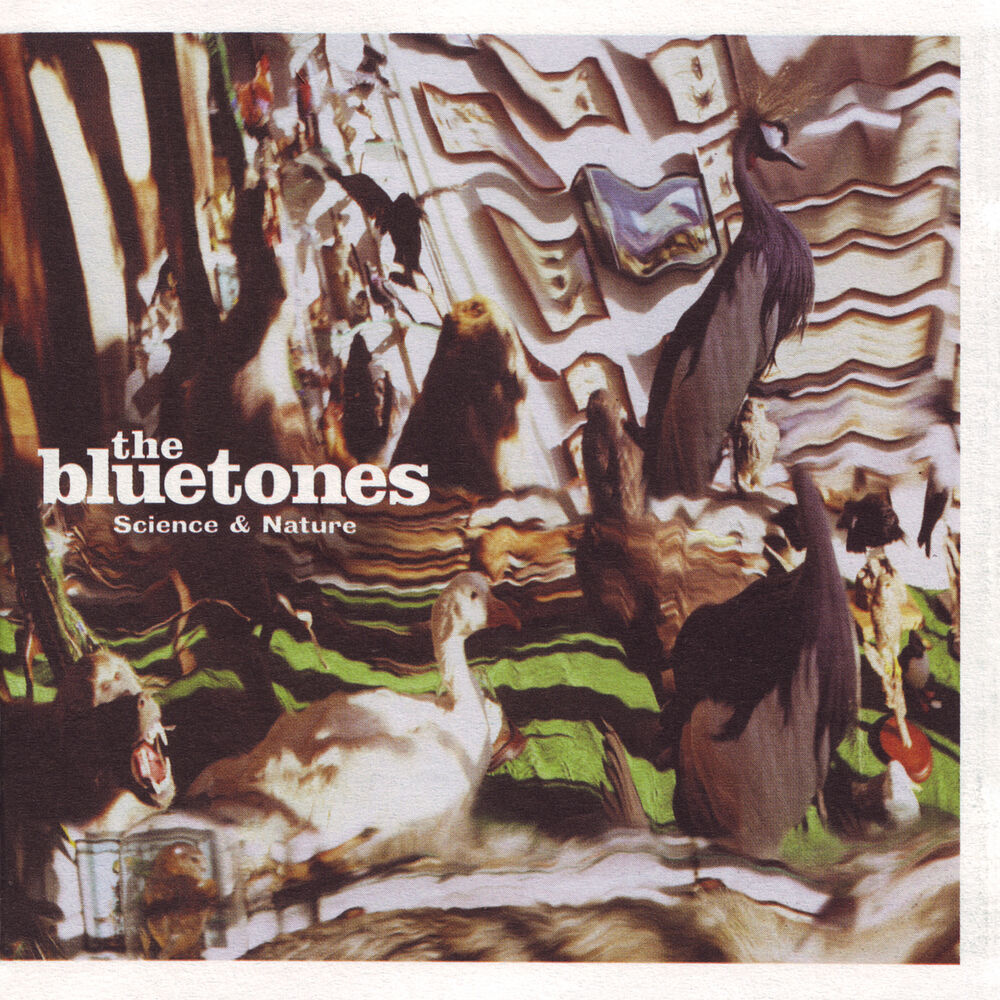
Science & Nature
- Released14 July 2009
- UK peak No. 7
- Weeks on UK chart 4
- Entered UK chart 21 May 2000
- LabelUMC (Universal Music Catalogue)
- Tracks11 · 45 min
One track from it charted as a single. Press a flag to play it in the chart where it peaked.
Tracks
| 1 | Zorrro | 3:39 | |
| 2 | The Last Of The Great Navigators | 3:48 | |
| 3 | Tiger Lily | 3:25 | |
| 4 | Mudslide | 4:21 | |
| 5 | One Speed Gearbox | 3:45 | |
| 6 | Blood Bubble | 3:34 | |
| 7 | Autophilia Or How I Learned To Stop Worrying And Love My Car | 5:00 | |
| 8 | Keep The Home Fires Burning No. 13 · 2000 | 3:28 | |
| 9 | The Basement Song | 5:14 | |
| 10 | Slack Jaw | 3:00 | |
| 11 | Emily's Pine | 6:03 |
About the album
Science & Nature is the third studio album by the English indie rock band the Bluetones, released on 15 May 2000 by Mercury Records. Produced by John Cornfield, it was the band's first album that their keyboardist Richard Payne played on. It spawned the hit singles "Keep the Home Fires Burning" and "Autophilia (or How I Learned to Stop Worrying and Love My Car)". The album itself peaked at number 7 on the UK Albums Chart. "Mudslide" was released as an EP in October 2000.
In 2019, the LP was reissued on 180g translucent vinyl for the first time through Demon Music Group, alongside the heavyweight blue vinyl reissue of their following 2002 greatest hits compilation, The Singles, which had never been released on vinyl until then.
Production
Science & Nature was recorded over the course of nine weeks at Sawmills Studios in Golant, Cornwall during the summer of 1999. In their first rehearsal session, the band recorded three songs with former Orange Juice lead singer Edwyn Collins – "Tiger Lily", "Autophilia (or How I Learned to Stop Worrying and Love My Car)", and "One Speed Gearbox". According to their frontman, Mark Morriss, they came out sounding "plain awful", which led them to think they had lost their "mojo" but realised it was their choice of producer. At the time, Collins had been heavily drinking and was focussed on his Channel 4 sitcom, West Heath Yard. Since time was running out for the album's production, the band decided to find a new producer.
The band enjoyed Supergrass' eponymous album and so got in touch with their current producer, John Cornfield. They said they could have recorded the album within around three weeks but decided to spend more time enjoying the process as their budget could allow it.
Reception
Iain Forrester of Stylus Magazine stated that Science & Nature "abandons the sound they stuck to rigidly elsewhere," and "while being successfully aware of their limitations throws everything they can think of (country, jazz, folk, prog) at melodic pop." He called it "inventive and gently surprising." Drowned in Sound's Thomas Blatchford briefly reflected on the record in a later review, saying that it contained "invention and refined sensibility."
Jason Damas of AllMusic felt that the album was largely not as new wave-influenced as many suggested prior to release, except on "Mudslide", but did find the album to contain "a bit more of a pop leaning." Dotmusic's Jackie Flynn argued that "if the Bluetones didn't exist then there'd be no real need to invent them. All they do is make pleasantly satisfying records and unfortunately that's not really enough these days." John Harris of Q magazine praised the album and rated it highly, with a reputation of previously strongly criticising the band's material.