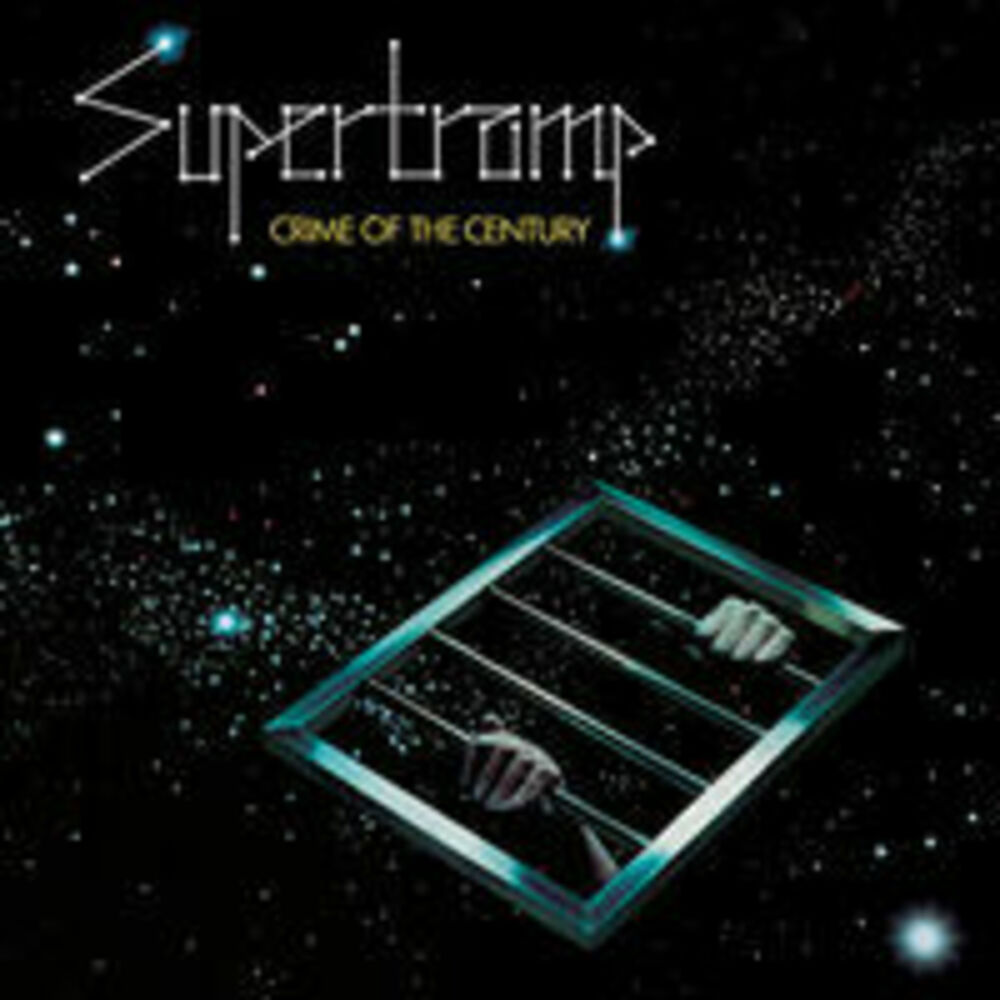
Crime Of The Century (Remastered)
- Released8 December 2014
- UK peak No. 4
- Weeks on UK chart 22
- Entered UK chart 17 November 1974
- LabelUniversal Music Group International
- Tracks8 · 44 min
2 tracks from it charted as singles. Press a flag to play it in the chart where it peaked.
Tracks
| 1 | School | 5:35 | |
| 2 | Bloody Well Right No. 35 · 1975 | 4:32 | |
| 3 | Hide In Your Shell | 6:49 | |
| 4 | Asylum | 6:49 | |
| 5 | 3:33 | ||
| 6 | Rudy | 7:20 | |
| 7 | If Everyone Was Listening | 4:05 | |
| 8 | Crime Of The Century | 5:32 |
About the album
Crime of the Century is the third studio album by the British rock band Supertramp, released on 25 October 1974, by A&M Records. Crime of the Century was Supertramp's commercial breakthrough in many countries, most notably in the UK, Canada and Germany where it peaked in the Top 5 while also making the Top 20 in Australia and France. It was the band's first album to chart in the United States, reaching No. 38 on the Billboard 200. The single "Dreamer" reached No. 13 on the UK singles chart, but listeners in the United States preferred its B-side, "Bloody Well Right", which peaked at No. 35 on the Billboard Hot 100. "School" was another popular track, particularly on album rock-oriented radio stations. The album was eventually certified Gold in the US in 1977 after the release of Even in the Quietest Moments.... In Canada, it was eventually certified Diamond (sales of one million copies). The album was Supertramp's first to feature drummer Bob Siebenberg (at the time credited as Bob C. Benberg), saxophone and clarinet player and vocalist John Helliwell, bassist Dougie Thomson, and co-producer Ken Scott.
Background and recording
After the commercial failure of their first two albums and an equally unsuccessful tour, it looked like the end of Supertramp. However, Rick Davies and Roger Hodgson revitalized the band, recruiting drummer Bob C. Benberg, woodwinds player and backing vocalist John Helliwell, and bassist Dougie Thomson. Their record label, A&M, in particular A&R man Dave Margereson (who would become their manager for the next ten years), sent this new line-up to a seventeenth-century farm in west Dorset to rehearse their next album together.
The album was recorded at several studios, including Trident Studios and Ramport Studios (owned by the Who), with co-producer Ken Scott. While recording the album, Davies and Hodgson recorded approximately 42 demo songs, from which only 8 were chosen to appear on the album.
Six tracks were first recorded for the soundtrack of Tony Klinger's 1971 film Extremes "about British youth, lifestyles and drug addiction".
Artwork
The photograph for the cover was Paul Wakefield's first album work. A&M Records' art director Fabio Nicoli invited Wakefield to the studio where the band were recording and had him read the lyrics. With the album title already chosen, Wakefield started asking himself "what an appropriate sentence could be for 'the crime of the century'" and combined it with a line from the song "Asylum": "when they haunt me and taunt me in my cage." One of his ideas, a prison cell window floating in space with a person silently screaming through the bars, was approved by the band, and when Wakefield started to develop the idea, he reduced the prisoner to just hands clutching the bars, "a resignation to fate that the other didn’t have. It felt like there would be no reprieve." A friend made the set of polished aluminum bars and welded it to a stand, and underneath it Wakefield's twin brother grabbed the bars, with his hands whitened with stage make-up.
Reception
Crime of the Century was Supertramp's first U.S. Top 40 album and was eventually certified Gold in the U.S. in 1977, after the release of Even in the Quietest Moments.... The album also marked the commercial breakthrough for the band in the United Kingdom; Crime of the Century peaked at number four in the album chart in March 1975, and "Dreamer" reached number thirteen on the singles chart in the same month. The album was particularly successful in Canada, staying on the album chart for over two years, peaking at number four, and being certified Diamond (10 x platinum) signifying sales of over one million copies.
In 1978, Crime of the Century was ranked 108th in The World Critic Lists, which recognised the 200 greatest albums of all time as voted for by notable rock critics and DJs. Village Voice critic Robert Christgau was ambivalent towards the album's "straight-ahead art-rock", which he called "Queen without preening.