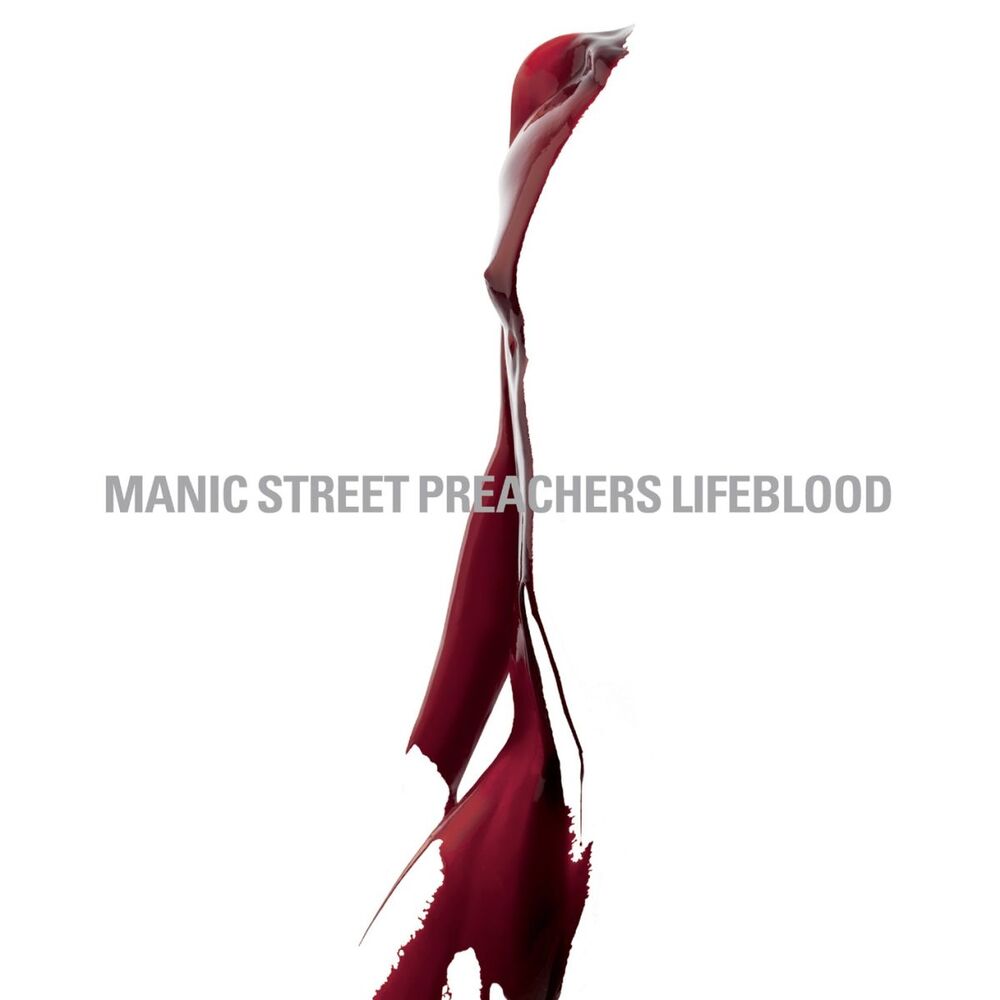
Lifeblood
- Released1 January 2001
- UK peak No. 13
- Weeks on UK chart 4
- Entered UK chart 7 November 2004
- LabelSony Music UK
- Tracks12 · 45 min
2 tracks from it charted as singles. Press a flag to play it in the chart where it peaked.
Tracks
| 1 | 1985 | 4:07 | |
| 2 | The Love of Richard Nixon No. 2 · 2004 | 3:38 | |
| 3 | Empty Souls No. 2 · 2005 | 4:04 | |
| 4 | A Song for Departure | 4:18 | |
| 5 | I Live to Fall Asleep | 3:55 | |
| 6 | To Repel Ghosts | 3:57 | |
| 7 | Emily | 3:33 | |
| 8 | Glasnost | 3:12 | |
| 9 | Always / Never | 3:40 | |
| 10 | Solitude Sometimes Is | 3:20 | |
| 11 | Fragments | 4:01 | |
| 12 | Cardiff Afterlife | 3:27 |
About the album
Lifeblood is the seventh studio album by Welsh alternative rock band Manic Street Preachers, released on 1 November 2004 by Sony Music UK. Two singles were released from the album: "The Love of Richard Nixon" and "Empty Souls".
While the album was met with generally positive reviews from critics, it is the band's least commercially successful album, peaking at number 13 in the UK Album Charts and has often been derided by the band members themselves, although they have expressed more positive opinions in recent years.
An expanded and remastered edition was released in 2024 to mark its 20th anniversary.
Writing and recording
The working title of Lifeblood was Litany, hinting that the song "Litany", recorded during the Lifeblood sessions, was originally intended for inclusion. The track, however, ultimately only appeared as a B-side on the "Empty Souls" CD single.
Although the album includes songs about disgraced U.S. president Richard Nixon and British suffragette leader Emmeline Pankhurst ("Emily"), the band's earlier political lyrics are largely replaced by personal reflection, such as on their own past ("1985") and missing member Richey Edwards ("Cardiff Afterlife"). Lyricist Nicky Wire talked about the ghosts that haunted this record and stated that the record was a retrospective: "The main themes are death and solitude and ghosts. Being haunted by history and being haunted by your own past. Sleep is beautiful for me. I hate dreaming because it ruins ten hours of bliss. I had a lot of bad dreams when Richey first disappeared. Not ugly dreams, but nagging things. Until we wrote 'Design for Life', it was six months of misery.
Release
Lifeblood was preceded by the single "The Love of Richard Nixon", released on 18 October 2004. During the mid-week chart the single was at the No. 1 position, but dropped and ended up peaking at No. 2 on the UK singles chart.
Lifeblood was released on 1 November 2004. It entered the UK Albums Chart at No. 13, selling 23,990 in the first week and spending only 4 weeks in the Top 100 in total (3 of them in the Top 75 including a re-entry at No. 27 in 2024). The album went Silver, but was the least commercially successful album by the band. By 2011 it had only sold around 90,000 copies in the UK.
"Empty Souls", the second and final single from the album, was released on 10 January 2005. Like the previous single, it debuted and peaked at No. 2.
Reception
Lifeblood received generally positive reviews from critics, which had not happened for the band's previous effort Know Your Enemy. The album has a weighted average score of 66 out of 100 on Metacritic based on 9 reviews, indicating "generally favorable reviews".
AllMusic awarded the album three stars out of five and stated: "Lifeblood is a pleasant listen, but once you peel away the keyboards, sensitively strummed guitars and tasteful harmonies and concentrate on Bradfield's nakedly open voice and Wire's terminally collegiate lyrics, it's hard to escape the unintentional pathos that winds up defining the album and, conceivably, the band's latter-day career."
Barry Nicolson of NME wrote: "Where Know Your Enemy strived vainly for relevance, Lifeblood is seemingly content to exist as a highbrow rock record. Out go song titles that were half-baked political manifestos in themselves ('Freedom of Speech Won't Feed My Children' anyone?), in come elegiac pop anthems ('1985') and the welcome presence of Bowie producer Tony Visconti to add a glacial sheen to the whole affair.
Legacy
In a reappraisal of the album following its 2024 re-issue, Clash argued that "‘Lifeblood’ was the starting point of the more varied textures that would follow in their music of the past two decades. Knowing when to ease off the bombast and how to present soulful, emotive ideas was a process most intently learnt in the writing of this record." Similarly, Louder Than War stated that the album "provided a blueprint for some of the Manics’ more sedate recent albums, including 2021’s The Ultra Vivid Lament" and that it "elicits melancholy in razor-sharp quality."
The band themselves have also begun speaking positively about the album and how they had previously been dismissive of it. Wire explained in 2024: "I think we’ve realised that it’s one of our best records. My problem was just that it was so unsuccessful."
In Under The Radar, Jimi Arundell noted the change in perception by the band's fans. "It may have had a frosty reception initially, but their cold, crystalline record now receives a warm welcome back."