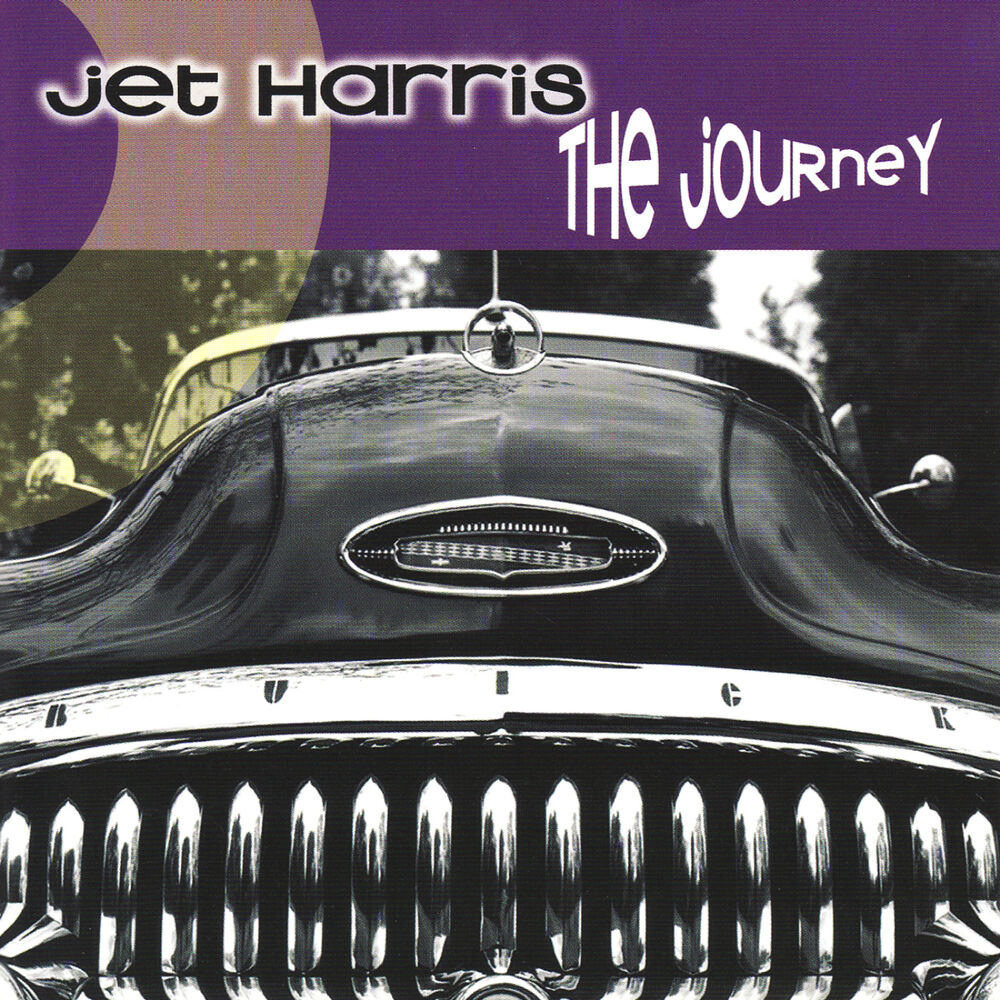
One track from it charted as a single. Press a flag to play it in the chart where it peaked.
Tracks
| 1 | In the Beginning | 5:08 | |
| 2 | San Antonio | 4:20 | |
| 3 | It Bites | 4:50 | |
| 4 | Krakatoa | 4:10 | |
| 5 | The Journey | 4:37 | |
| 6 | Ignition | 3:56 | |
| 7 | The 4th Man | 4:52 | |
| 8 | hello Sid | 2:07 | |
| 9 | Play It Down | 5:04 | |
| 10 | Song for Tony | 4:15 | |
| 11 | Shot to Pieces | 4:35 | |
| 12 | San Antonio | 4:24 | |
| 13 | El Vampiro | 5:18 | |
| 14 | Diamonds No. 1 · 1963 | 3:43 |
About the album
Band on the Run is the third studio album by the British rock band Paul McCartney and Wings, released on 30 November 1973 in the United Kingdom and 5 December 1973 in the United States. It was Paul McCartney's fifth album after leaving the Beatles in April 1970 and his final album on Apple Records. A rock and pop rock album, Band on the Run's songs reflect themes of escape and freedom.
The album was mostly recorded at EMI's studio in Lagos, Nigeria, as McCartney wanted to make an album in an exotic location. Shortly before departing for Lagos, drummer Denny Seiwell and guitarist Henry McCullough left the group. With no time to recruit replacements, McCartney went into the studio with just his wife Linda and Denny Laine. McCartney therefore played bass, drums, percussion and most of the lead guitar parts. The studio was of poor quality, and conditions in Nigeria were tense and difficult; the McCartneys were robbed at knifepoint, losing a bag of song lyrics and demo tapes. After the band returned to England, they completed final overdubs and further recording in London, mostly at AIR Studios.
Background
By 1973, three years after the break-up of the Beatles, Paul McCartney had yet to regain his artistic credibility or find favour with some music critics for his post-Beatles work. After completing a successful UK tour with his band Wings in July 1973, he planned their third album as a means to re-establish himself after the mixed reception given to Wild Life (1971) and Red Rose Speedway (1973).
Keen to record outside the United Kingdom, McCartney asked EMI to send him a list of all their international recording studios. He selected Lagos in Nigeria and was attracted to the idea of recording in Africa. In August, the band – consisting of McCartney and his wife Linda, ex-Moody Blues guitarist and pianist Denny Laine, Henry McCullough on lead guitar, and Denny Seiwell on drums – started rehearsals for the new album at the McCartneys' Scottish farm. During one rehearsal session, McCullough and McCartney argued, and McCullough quit. Seiwell left a week later, the night before the band flew out to Nigeria.
Music and lyrics
A rock and pop rock album, Band on the Run contains ballads and rockers. Several of the songs reflect themes of escape and freedom, while the structure of the album recalled the Beatles' Sgt. Pepper's Lonely Hearts Club Band and Abbey Road. The song "Band on the Run" was partly inspired by a remark George Harrison had made during one of the many business meetings the Beatles attended in 1969 in an effort to address the problems afflicting their Apple Corps enterprise. Four years later, the album's creation coincided with what author Peter Doggett terms McCartney's "moral victory in the debate over Allen Klein", as Harrison, John Lennon, and Ringo Starr now became embroiled in litigation against Klein – the business manager they had appointed to run Apple in 1969, despite strong opposition from McCartney. Doggett writes that McCartney was perhaps liberated creatively by this recent development, resulting in Band on the Run bearing "a frothy self-confidence that was reminiscent of the Beatles at their most productive".
Artwork and packaging
The album cover photograph was taken at Osterley Park, West London, on 28 October 1973 by photographer Clive Arrowsmith from a concept by Hipgnosis and McCartney. Mirroring the theme of the title track, it depicts the McCartneys, Laine, and six celebrities dressed as convicts and posed as though caught by a prison searchlight. The six celebrities are television presenter and journalist Michael Parkinson, singer and actor Kenny Lynch, actor James Coburn, broadcaster and politician Clement Freud, actor Christopher Lee, and boxer John Conteh. Arrowsmith said the photo used for the cover was one of four he found acceptable out of the 24 pictures he took during the session. The spotlight's low potency meant everyone had to stand still for two seconds for proper exposure, which was made difficult by the photographer and subjects reportedly being in a "substance haze" following a party held by Paul McCartney. The golden hue of the picture comes from Arrowsmith's use of daylight film instead of nighttime Tungsten film, which would have been more typical for the setting.
Release
Apple Records issued Band on the Run in the UK on 30 November (as Apple PAS 10007), and in the U.S. on 5 December (as Apple SO 3415). Its release came two weeks after John Lennon's Mind Games. Rather than having the band promote the album on radio and television or with a tour, McCartney undertook a series of magazine interviews, most notably with Paul Gambaccini for Rolling Stone. The conversations with Gambaccini took place at various locations from September 1973 onward, and combined to form, in the words of authors Chip Madinger and Mark Easter, "a remarkably forthcoming interview in comparison to the 'thumbs-aloft' profiles usually allowed by [McCartney]". It was McCartney's last album released on Apple Records.
"Helen Wheels" was released as a non-album single in the UK on 19 October 1973, and became a top 10 hit in America the following January. For commercial reasons, Capitol Records, Apple's US distributor, requested "Helen Wheels" be added to the album.
Commercial performance
Initially, the album did not sell especially well, with the record-buying public wary after Wings' preceding releases. On the UK Albums Chart, Band on the Run climbed to number 9 on 22 December, remaining there for a second week before dropping to number 13. On America's Billboard Top LPs & Tape chart, it peaked at number 7 on 2 February 1974, and then spent the next six weeks in the lower reaches of the top ten. The album went on to achieve considerable success, however, thanks to the popularity of the two singles "Jet" and the title track. Writing in 1981, Bob Woffinden described Band on the Run as the first Beatles-related release to be "planned with a marketing strategy", as Capitol Records now assumed a fully active role in promoting the album following the removal of Klein's ABKCO Industries as managers of Apple.