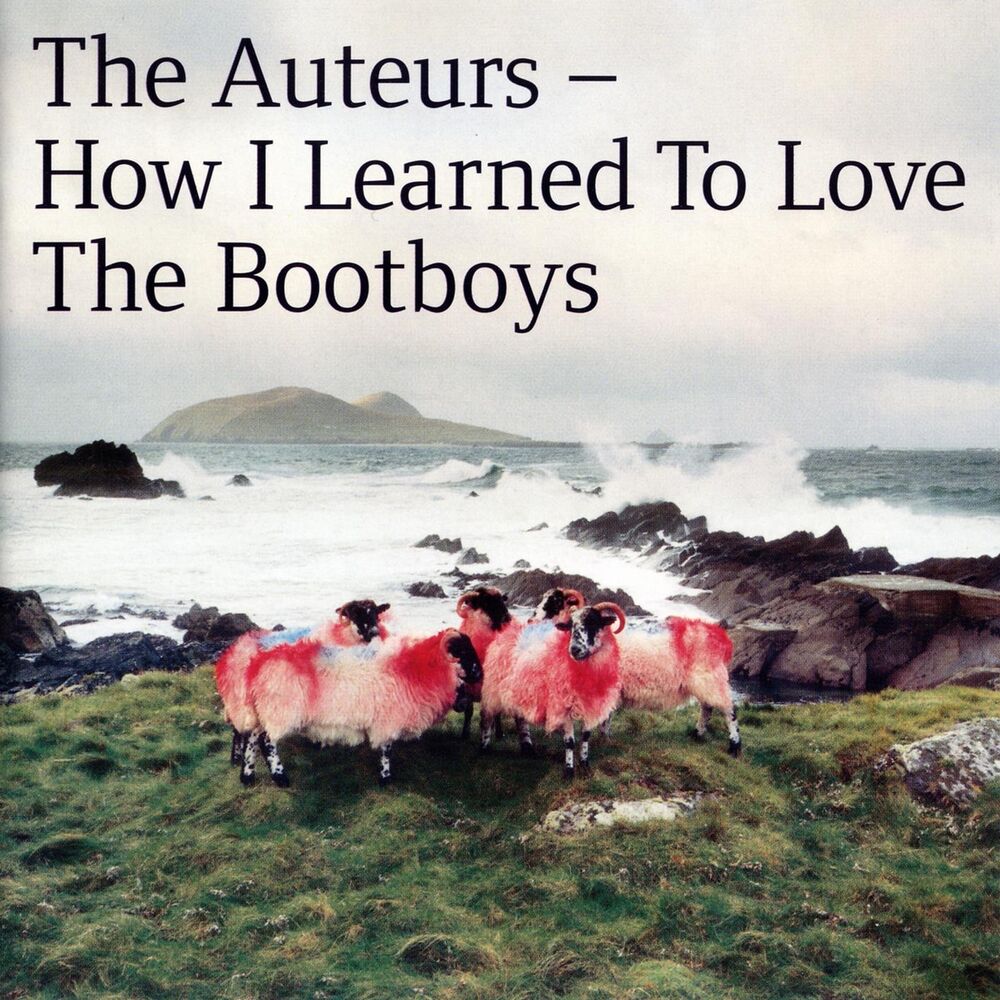
One track from it charted as a single. Press a flag to play it in the chart where it peaked.
Tracks
| 1 | The Rubettes No. 66 · 1999 | 3:27 | |
| 2 | 1967 | 2:42 | |
| 3 | How I Learned To Love The Bootboys | 3:05 | |
| 4 | Your Gang, Our Gang | 1:46 | |
| 5 | Some Changes | 3:19 | |
| 6 | School | 2:58 | |
| 7 | Johnny & The Hurricanes | 3:51 | |
| 8 | The South Will Rise Again | 2:24 | |
| 9 | Asti Spumante | 3:27 | |
| 10 | Sick Of Hare Krisna | 2:51 | |
| 11 | Lights Out | 2:10 | |
| 12 | Future Generation | 3:11 |
About the album
How I Learned to Love the Bootboys is the fourth and final album by British rock band the Auteurs. It was released on 5 July 1999 through Hut and Virgin Records. Following their third studio album After Murder Park (1996), Haines started the Baader Meinhof and Black Box Recorder projects. He regrouped with the Auteurs to start work on a concept album under the name ESP Kids, though sessions halted as Black Box Recorder worked on their debut album England Made Me (1998). The Auteurs re-started recording their next album in January 1998 at RAK Studios in London; Hut and Virgin were not happy with the lack of single-sounding songs. After writing "The Rubettes", the band finished recording in April 1998. How I Learned to Love the Bootboys is a glam rock album that takes atmospheric influence from England Made Me.
How I Learned to Love the Bootboys received generally favourable reviews from critics, some of whom praised the quality of the songs, while others commented on the nostalgia aspect. Ahead of the album's release, "The Rubettes" appeared as its lead single in May 1999, which was followed by performances in France and a tour of the United Kingdom in October 1999. That same month, "Some Changes" was released as the second single from the album. The Auteurs broke up shortly afterwards.
Background and recording
The Auteurs released their third studio album After Murder Park in March 1996. Despite it being well-received critically, it underperformed commercially. Frontman Luke Haines released an album under the name Baader Meinhof later in the year, which he said was met with "duncery and confusion". He debated breaking up the Auteurs as he was confident that their label Virgin Records was going to drop them from the roster. As Haines struggled for a new direction, he opted to play with his friend Ian Bickerton in the folk act Balloon, where he met John Moore and Sarah Nixey. Haines, Moore and Nixey formed the Black Box Recorder project; to Haines' surprise, Virgin and Hut Records greenlit another Auteurs album, with the stipulation it would contain hit singles. Haines instead entered a studio with the rest of the band with the aiming of making a concept album known as ESP Kids. They recorded four songs – "How I Learned to Love the Bootboys", "Johnny and the Hurricanes", "Future Generation" and "School" – before progress halted with Haines continuing to work on Black Box Recorder.
Composition and lyrics
How I Learned to Love the Bootboys is a glam rock album; it takes some of its atmospheric influence from England Made Me. Drowned in Sound writer Alexander Tudor wrote that Haines incorporated the sound of glam "in the form of glossy synths, twinkling xylophones, doowop vocals, perfect pop hooks, and saccharine sentiments" with his "elegant guitar lines, and hushed narration". Haines wrote all of the songs bar "The Rubettes", which is credited to Haines, Moore, Wayne Bickerton and Tony Waddington, and "Asti Spumante", which is credited to Haines and Sie Medway-Smith. Haines referred to it as an anti-nostalgia album that focused on the darker aspects of life in the 1970s, though admitted that it turned out darker than he was expecting. He expanded on this, detailing that the decade consisted of "black and white TVs and the power going off every Saturday night ... And closedown and the bloody national anthem at the end of it".
Release
On 6 March 1999, How I Learned to Love the Bootboys was announced for release in a few months' time. Haines and Moore wrapped up a residency with their other band Black Box Recorder the following month. "The Rubettes" was released as the album's lead single on 31 May 1999, with "Breaking Up" and "Get Wrecked at Home". How I Learned to Love the Bootboys was released by Hut Records on 5 July 1999; it was promoted with one-off performance from the Auteurs at the Embassy Rooms in London 11 days later. They appeared at the Reading and Leeds Festivals, prior to some shows in France and a headlining UK tour in October 1999; the band broke up shortly afterwards. "Some Changes" was released as the album's second single on 18 October 1999.
Haines re-recorded "Future Generation" and "The Rubettes" (the latter as part of a pregap medley) in an orchestral style for Das Capital (2003). Songs from the abandoned ESP Kids project were later released on the Luke Haines Is Dead (2005) compilation, which compiled material from Haines, Baader Meinhof and the Auteurs.
Reception
How I Learned to Love the Bootboys was met with generally favourable reviews from music critics. Kellman said the album's "cohesiveness ... is no small feat, given the wide-ranging sounds and moods". He complimented Haines and Hofmann's "best production yet" as the guitars have "never sounded so fittingly sharp while avoiding abrasiveness". Tudor called it a "daring return to form" after the "intriguing diversion" of the Baader Meinhof project, adding that it was a "more successful and accessible collection of songs and stories than its recourse to glam-stylings might suggest". Select writer Gareth Grundy said Haines was "still the master of the pilthy dismissal", adding that "both conceptually and sonically" this is the album that Haines "has been building towards". Eamon Sweeney of Hot Press saw it as an "almost faultless collection of songs", to which The Irish Times writer Kevin Courtney echoed. Author Dave Thompson wrote in his book Alternative Rock (2000) that it was a "very English album, ...