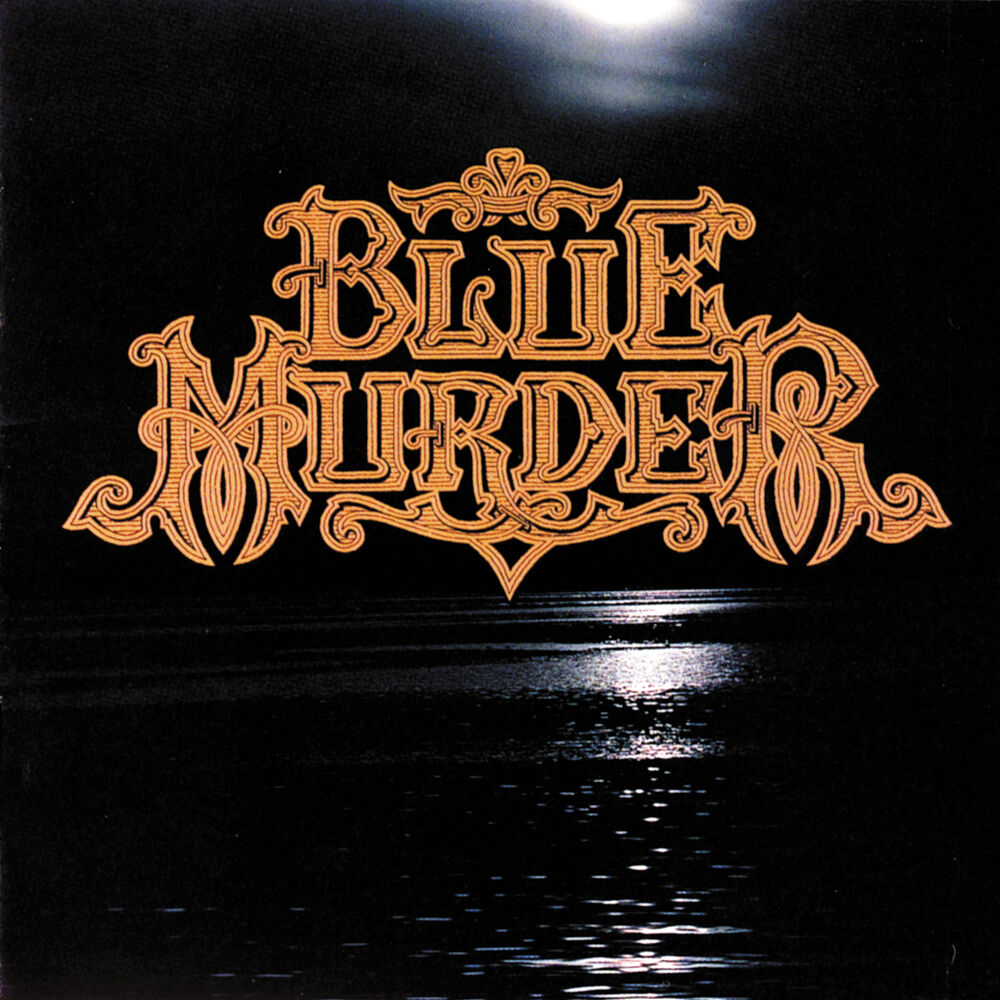
Blue Murder
- Released25 April 1989
- UK peak No. 45
- Weeks on UK chart 3
- Entered UK chart 30 April 1989
- LabelGeffen
- Tracks9 · 52 min
Tracks
| 1 | Riot | 6:22 | |
| 2 | Sex Child | 5:58 | |
| 3 | Valley Of The Kings | 7:51 | |
| 4 | Jelly Roll | 4:44 | |
| 5 | Blue Murder | 4:55 | |
| 6 | Out Of Love | 6:44 | |
| 7 | Billy | 4:11 | |
| 8 | Ptolemy | 6:29 | |
| 9 | Black-Hearted Woman | 4:47 |
About the album
Blue Murder is the debut album by English hard rock band Blue Murder, released on 24 April 1989 by Geffen Records. It was produced by Bob Rock. The band was formed by guitarist John Sykes after his dismissal from Whitesnake. He was eventually joined by bassist Tony Franklin and drummer Carmine Appice. The band entered Little Mountain Sound Studios in early 1988 to begin recording their debut album. After several unsuccessful attempts at finding a lead singer, John Sykes took up the role, having already sung the band's first demos. Following the record's release, Blue Murder embarked on tours supporting Bon Jovi and Billy Squier.
Despite a positive reception from music critics, who touted the band's musicianship and Rock's production, the album underperformed commercially, only peaking at number 45 in the UK and number 69 in the US. Its failure has since been attributed to a variety of internal problems, including a lack of proper promotion, mismanagement and poor business decisions by the band. However, the record has garnered a small cult following since its release. In 2013, it was reissued and remastered by Rock Candy Records.
Background
In 1986, guitarist John Sykes was fired from the English hard rock group Whitesnake by the band's lead vocalist David Coverdale. Sykes had recently finished recording the group's eponymous album, which he co-wrote with Coverdale. The album would go on to achieve multi-platinum status and peak at number two on the Billboard 200 chart. Sykes retreated to his home studio in Blackpool, England, where he started writing new material. Eager to prove himself, Sykes began putting together a new band in February 1987. First to join was drummer Cozy Powell, who had played with Sykes in Whitesnake from 1984 to 1985. Next came bassist Tony Franklin, formerly of The Firm. He was one of Sykes's top choices for the band and, as it happened, the husband of Franklin's cousin was working at Sykes's studio. Through him, they were able to get in touch with one another and, after a brief jam session, Franklin agreed to join the band. Last was singer Ray Gillen, who had previously fronted Black Sabbath for a short time.
Production and composition
The band entered Little Mountain Sound Studios in February 1988 to record their debut album. Bob Rock was chosen to produce, having previously worked with Sykes on Whitesnake's eponymous album. Acting as engineer was Mike Fraser, who mixed the record as well. David Donnelly supervised the mastering process. Keyboardist Nik Green was also brought in to play on the album. Due to Rock's prior engagements with Bon Jovi and The Cult, recording was halted after six weeks, which allowed the band to audition more singers. Among them were David Glen Eisley and Derek St. Holmes. Unable to agree on a frontman, Sykes was eventually persuaded by John Kalodner and the rest of the band to take up the role of lead singer. Having had no proper vocal training, Sykes initially struggled to sing the tracks, but eventually eased into it, drawing upon what he had learned working with David Coverdale and Thin Lizzy frontman Phil Lynott.
The band was named Blue Murder at Tony Franklin's suggestion, after the British idiom "scream blue murder". Their logo was designed by graphic artist Margo Chase.
Music and lyrics
Blue Murder has been described by music critics as hard rock heavy metal, and glam metal. Sykes described the band's sound in an interview with Raw magazine as having elements of both Whitesnake and Thin Lizzy, as well as the blues. Tracks such as "Sex Child", "Valley of the Kings" and "Ptolemy" have also drawn comparisons to Led Zeppelin. Sykes's intent with Blue Murder was to create a heavier record than Whitesnake's eponymous album, while still retaining some of the same groove and vibe. In an interview with Metal Shock magazine, Sykes referred to the band's music as "heavy funk".
The song "Billy" was described by Sykes as his "Thin Lizzy track", with lyrics inspired by the 1949 film White Heat. The album's title-track he characterised as a "police story". He also remarked how the song reminds him the most of his time with Thin Lizzy. "Valley of the Kings" draws from Egyptian culture, while "Jelly Roll" was inspired by a former relationship of Sykes's. When asked to name his favourite track from the album, Sykes chose "Jelly Roll" as it was one of the easiest ones to write.
Release and promotion
Blue Murder was released on 24 April 1989. To promote the record, the band made appearances on MTV's Hard 60 and The Big Al Show, hosted by "Weird Al" Yankovic. They then embarked on an American tour supporting Bon Jovi. Later they performed on a triple-bill tour with Billy Squier and King's X. Blue Murder also played several headline dates in America and Japan. Due to unspecified management issues, a European tour never materialized.
Blue Murder reached number 45 on the UK Albums Chart. It debuted at number 172 on the Billboard 200 chart, eventually peaking at number 69 in June 1989. According to Carmine Appice, the album only sold around 150,000 copies in the United States. Worldwide, the record sold approximately 500,000 copies, according to John Sykes. In 2013, Blue Murder was reissued by Rock Candy Records. The reissue featured a remastered version of the album, a 3,500 word essay by Malcolm Dome and an interview with John Sykes. The initial pressings listed a tenth song, titled "Cold Harbor", as part of the content.
Singles
"Valley of the Kings" was released as a promotional single from the album. A music video, directed by Mary Lambert, was also shot for a reported $150,000. The video was later featured as MTV's "Hip Clip of the Week". The initial plan put forth by John Kalodner was to release "Valley of the Kings" first to "get a buzz going". This would have then been followed up by "Jelly Roll", which would have received a greater push on MTV and radio. However, as the band were on tour, they began demanding a greater push for "Valley of the Kings". In retrospect, Carmine Appice called this a "dumb mistake", as the song was deemed "too long" and "not commercial enough" for MTV. The single was not available to purchase by the general public, something Tony Franklin felt also hurt its success.
"Jelly Roll" was released as the second single from the album. A music video, directed again by Mary Lambert, was shot over the course of two days in North Los Angeles. The video featured model Meg Register, who had a small role in the 1986 film Running Scared.