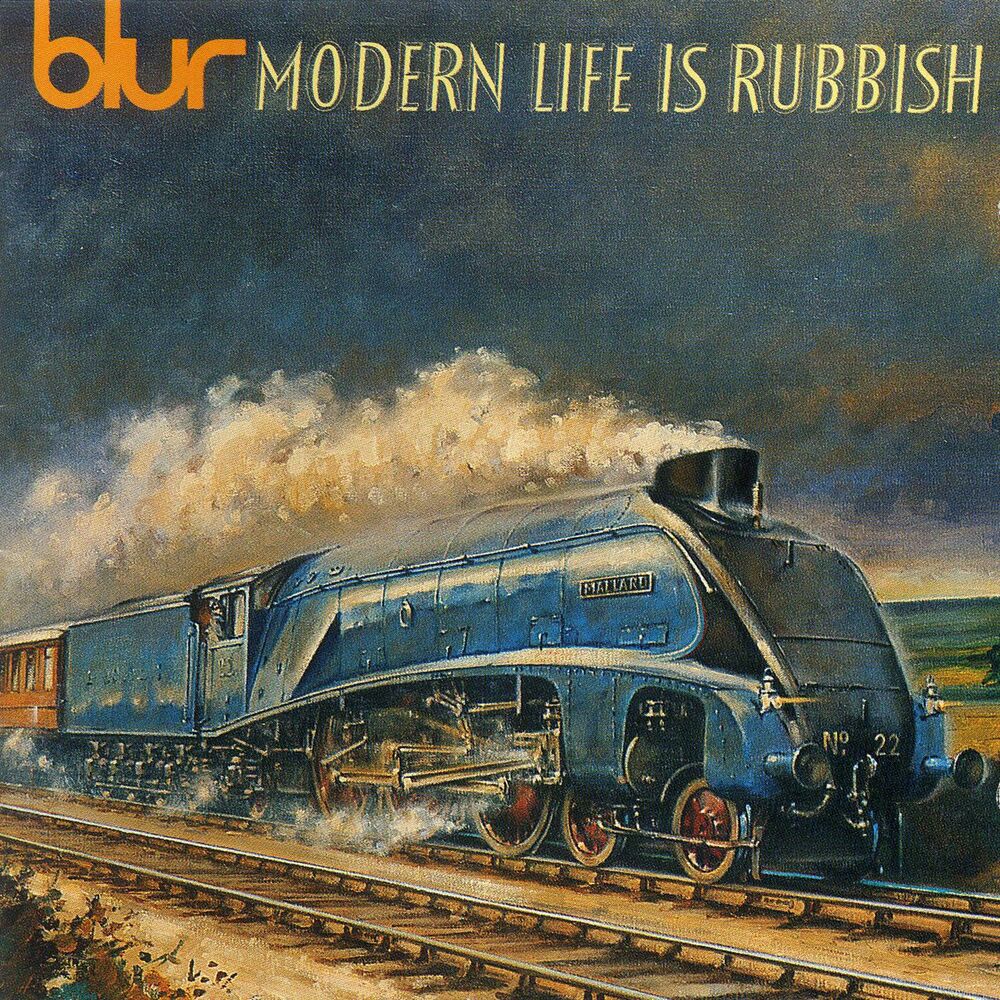
Modern Life Is Rubbish (Special Edition)
- Released10 May 1993
- UK peak No. 15
- Weeks on UK chart 19
- Entered UK chart 16 May 1993
- LabelParlophone UK
- Tracks25 · 106 min
4 tracks from it charted as singles. Press a flag to play it in the chart where it peaked.
Tracks
| 1 | For Tomorrow (2012 Remaster) No. 28 · 1993 | 4:21 | |
| 2 | Advert (2012 Remaster) | 3:45 | |
| 3 | Colin Zeal (2012 Remaster) | 3:16 | |
| 4 | Pressure on Julian (2012 Remaster) | 3:31 | |
| 5 | Star Shaped (2012 Remaster) | 3:26 | |
| 6 | Blue Jeans (2012 Remaster) | 3:54 | |
| 7 | Chemical World (2012 Remaster) No. 28 · 1993 | 6:33 | |
| 8 | Sunday Sunday (2012 Remaster) No. 26 · 1993 | 2:38 | |
| 9 | Oily Water (2012 Remaster) | 5:01 | |
| 10 | Miss America (2012 Remaster) | 5:35 | |
| 11 | Villa Rosie (2012 Remaster) | 3:54 | |
| 12 | Coping (2012 Remaster) | 3:24 | |
| 13 | Turn It Up (2012 Remaster) | 3:22 | |
| 14 | Resigned (2012 Remaster) | 6:12 | |
| 15 | Popscene (2012 Remaster) No. 32 · 1992 | 3:14 | |
| 16 | Mace (2012 Remaster) | 3:25 | |
| 17 | Badgeman Brown (2012 Remaster) | 4:48 | |
| 18 | I'm Fine (2012 Remaster) | 3:03 | |
| 19 | Garden Central (2012 Remaster) | 6:00 | |
| 20 | For Tomorrow (Visit to Primrose Hill Extended; 2012 Remaster) No. 28 · 1993 | 6:01 | |
| 21 | Into Another (2012 Remaster) | 3:55 | |
| 22 | Peach (2012 Remaster) | 3:57 | |
| 23 | Bone Bag (2012 Remaster) | 4:04 | |
| 24 | Hanging Over (2012 Remaster) | 4:27 | |
| 25 | When the Cows Come Home (2012 Remaster) | 3:50 |
About the album
Modern Life Is Rubbish is the second studio album by the English alternative rock band Blur, released in May 1993. Although their debut album Leisure (1991) had been commercially successful, Blur faced a severe media backlash soon after its release, and fell out of public favour. After the group returned from an unsuccessful tour of the United States, poorly received live performances and the rising popularity of rival band Suede further diminished Blur's status in the UK.
Under threat of being dropped by Food Records, for their next album Blur underwent an image makeover championed by frontman Damon Albarn. The band incorporated influences from traditional British guitar-pop groups such as the Kinks and the Small Faces, and the resulting sound was melodic and lushly produced, featuring brass, woodwind and backing vocalists. Albarn's lyrics on Modern Life Is Rubbish use "poignant humour and Ray Davies characterisation to investigate the dreams, traditions and prejudices of suburban England", according to writer David Cavanagh.
Modern Life Is Rubbish was a moderate chart success in the UK; the album peaked at number 15, while the singles taken from the album charted in the Top 30. Applauded by the music press, the album's Anglocentric rhetoric rejuvenated the group's fortunes after their post-Leisure slump.
Background
Blur's baggy-inspired debut album Leisure (1991) was a UK Top 10-charting record that, according to the NME, made the band the "acceptable pretty face of a whole clump of bands that have emerged since the whole Manchester thing started to run out of steam". However, as the baggy scene soon began to fade, Blur were—according to The Guardian—"[s]wiftly exposed as bogus trend-hoppers, [and] they duly caught the wrath of the Madchester backlash". Further, following their fall from public favour, the group found that they were £60,000 in debt, mainly due to mismanagement. Blur hired new manager Chris Morrison and, to recoup losses, were sent by their record label Food to the United States as part of the Rollercoaster tour. To coincide with the start of the tour, Blur released the "Popscene" single; the new release showcased a significant change in musical direction, as Blur traded their shoegaze-derived sound for one influenced by 60s British guitar pop.
Recording
Damon Albarn, in a 2000 Mojo interview, said that "Suede and America fuelled my desire to prove to everyone that Blur were worth it ... There was nothing more important in my life." He felt the popularity that American grunge music was enjoying in Britain at the time would soon fade, and argued that Blur would embody a renaissance of classic British pop on their next album. Food Records owner David Balfe strongly disagreed, and argued with Albarn over the proposed change in Blur's image. After the still-sceptical Balfe relented, Food warily gave Blur the go-ahead to work on their second album with Albarn's first choice of producer, XTC leader Andy Partridge. Partridge said he was dissatisfied with the songs, but was "immensely" fond of the band, likening them to XTC circa Go 2. He said he agreed to the project "for the wrong reasons, the flattery and the money."
Blur began working on the album with Partridge at The Church, a studio in Crouch End owned by David A. Stewart. However, the sessions ended prematurely.
Music and lyrical themes
Modern Life Is Rubbish's sound is highly influenced by the traditional guitar pop of English bands such as the Kinks, the Jam, the Small Faces and the Who. The album's songs explore a number of styles—punk rock ("Advert"), neo-psychedelia ("Chemical World"), and vaudeville music-hall ("Sunday Sunday"). According to music critic Jim DeRogatis, the album “may have been a stylistic mess, but it was valuable psychedelic garbage nonetheless.”
Opening track "For Tomorrow" is, according to NME, "quintessential Blur. Damon, perennially bored, never stops singing, and Graham [Coxon] supplie[s] his usual immaculate guitar accompaniment". While "Oily Water" harked back to the baggy sound of Leisure, NME described "Intermission" as "a pub piano knees-up that rinky-dinks along then gets frazzled in guitars and speeded-up drums". Most of the songs on the album are melodic and lushly produced, often supplemented by a brass section, string arrangements and backing vocals.
Packaging
The album's title derives from stenciled graffiti painted along Bayswater Road in London, created by an anarchist group. For Albarn, the phrase reflected the "rubbish" of the past that accumulated over time, stifling creativity. Albarn told journalist John Harris in 1993 that he thought the phrase was "the most significant comment on popular culture since 'Anarchy in the UK'". Due to Blur's disdain for America at the time, the album's working title was Britain Versus America.
The painting of the steam locomotive Mallard on the album cover was a stock image that Stylorouge—Blur's design consultants—obtained from a photo library in Halifax. According to Design Week magazine, the painting by Paul Gribble (uncle of Stephen Gribble) "evoked the feel of a Just William schoolboy's pre-war Britain". Coxon has stated that the band chose "a Ladybird Books-style painting of the classic Mallard locomotive (because) nothing could be further from what most people expected of an alternative rock LP".
Release
To promote Modern Life Is Rubbish, Food released "For Tomorrow" as the album's lead single in the UK in April 1993. The single, which showcased Blur's new sound and attitude, performed moderately well in the charts, reaching number 28. A few weeks later in May 1993, Modern Life was released. The announcement of the album's release included a press photo that featured the phrase "British Image 1" spraypainted behind Blur members (who were dressed in a mixture of mod and skinhead attire) and a Mastiff. At the time, such imagery was viewed as nationalistic and racially insensitive by the British music press; to quiet concerns, Blur subsequently released the "British Image 2" photo, which was "a camp restaging of a pre-war aristocratic tea party". The album peaked at number 15 on the UK Album Chart. In the next few months Food further issued two UK Top 30-charting singles—"Chemical World" and "Sunday Sunday"—to support the record; however, Modern Life only managed to sell around 40,000 copies at the time.