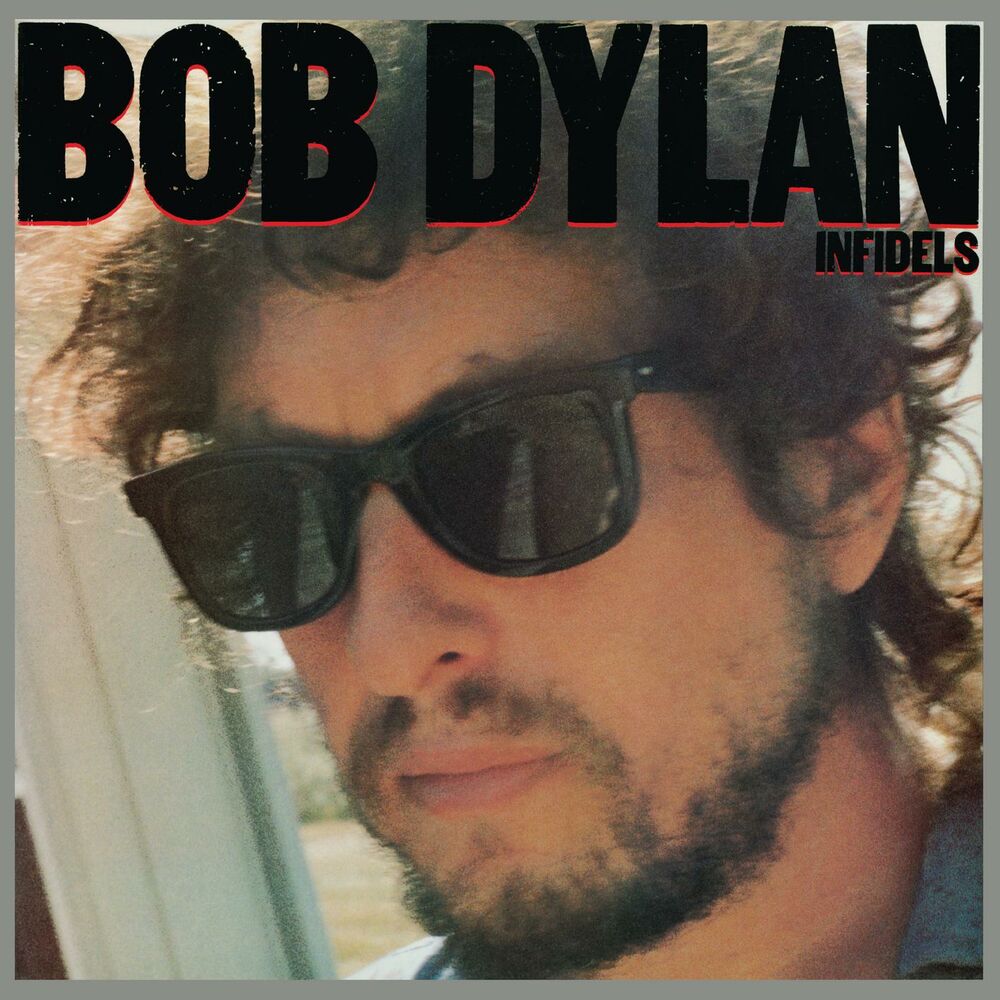
Infidels
- Released1 November 1983
- UK peak No. 9
- Weeks on UK chart 12
- Entered UK chart 6 November 1983
- LabelColumbia
- Tracks8 · 42 min
One track from it charted as a single. Press a flag to play it in the chart where it peaked.
Tracks
| 1 | Jokerman | 6:15 | |
| 2 | Sweetheart Like You No. 55 · 1984 | 4:33 | |
| 3 | Neighborhood Bully | 4:35 | |
| 4 | License to Kill | 3:33 | |
| 5 | Man of Peace | 6:30 | |
| 6 | Union Sundown | 5:22 | |
| 7 | I and I | 5:12 | |
| 8 | Don't Fall Apart on Me Tonight | 5:54 |
About the album
Infidels is the twenty-second studio album by American singer-songwriter Bob Dylan, released on October 27, 1983, by Columbia Records.
Produced by Mark Knopfler and Dylan himself, Infidels is seen as his return to secular music, following a conversion to Christianity, three evangelical records and a subsequent return to a less religious lifestyle. Though he has never entirely abandoned religious imagery, Infidels gained much attention for its focus on more personal themes of love and loss, in addition to commentary on the environment and geopolitics. Christopher Connelly of Rolling Stone called those gospel albums just prior to Infidels "lifeless", and considered Infidels to be Dylan's best poetic and melodic work since Blood on the Tracks.
The critical reaction was the strongest for Dylan in years, almost universally hailed for its songwriting and performances. The album also fared well commercially, reaching No. 20 in the US and going gold, and No. 9 in the UK. The album's highest chart position worldwide was in Norway, where it peaked at No. 1. Fans and critics were disappointed that several songs were inexplicably cut from the album just prior to mastering—primarily "Blind Willie McTell", considered a career highlight by many critics, and not officially released until it appeared on The Bootleg Series Volume III eight years later.
Recording sessions
Infidels was produced by Dire Straits frontman Mark Knopfler, who had previously played guitar on Dylan's Slow Train Coming. Dylan initially wanted to produce the album himself, but feeling that technology had passed him by, he approached a number of contemporary artists who were more at home in a modern recording studio. David Bowie, Frank Zappa and Elvis Costello were all approached before Dylan hired Knopfler.
Knopfler said it was difficult to produce Dylan: You see people working in different ways, and it's good for you. You have to learn to adapt to the way different people work. Yes, it was strange at times with Bob. One of the great parts about production is that it demonstrates to you that you have to be flexible. Each song has its own secret that's different from another song, and each has its own life. Sometimes it has to be teased out, whereas other times it might come fast. There are no laws about songwriting or producing. It depends on what you're doing, not just who you're doing. You have to be sensitive and flexible, and it's fun. I'd say I was more disciplined.
Reception
While Infidels was better received than its predecessor, Shot of Love, Graham Lock of New Musical Express still referred to Dylan as "culturally a spent force ... a confused man trying to rekindle old fires." Rolling Stone and The Village Voice critic Robert Christgau was not impressed either, writing that Dylan had "turned into a hateful crackpot". Greil Marcus dismissed it many years later as another "bad [album] that made no sense, didn't hang together, had no point, and did not need to exist".
But even some of the skeptics found some merit in Infidels. In the same review, Christgau wrote, "All the wonted care Dylan has put into this album shows." Indeed, critics were unanimous in praising the overall sound, "one case where the streamlined production doesn't seem to work against the rugged authority he can still command as a singer," wrote Tim Riley.
Aftermath and legacy
Dylan spent the autumn of 1983 recording demos and various songs at his home in Malibu, California. Rather than work alone, Dylan brought in a number of young musicians, including Charlie Sexton, drummer Charlie Quintana and guitarist JJ Holiday. As Heylin notes, "this was Dylan's first real dalliance with third-generation American rock & rollers." These informal sessions set the stage for Dylan's first public performances since 1982.
Dylan appeared on Late Night with David Letterman on March 22, 1984. He performed with Quintana, Holiday (introduced by Letterman as "Justin Jesting"), and bassist Tony Marsico. Performing three songs with his band of post-punk musicians, the Plugz, Dylan delivered what many consider to be his most entertaining television performance ever. The combo first performed an unrehearsed version of Sonny Boy Williamson's "Don't Start Me to Talking", then a radically different arrangement of "License To Kill". The final song was a peppy, somewhat new-wave version of "Jokerman" that ended with a harmonica solo.