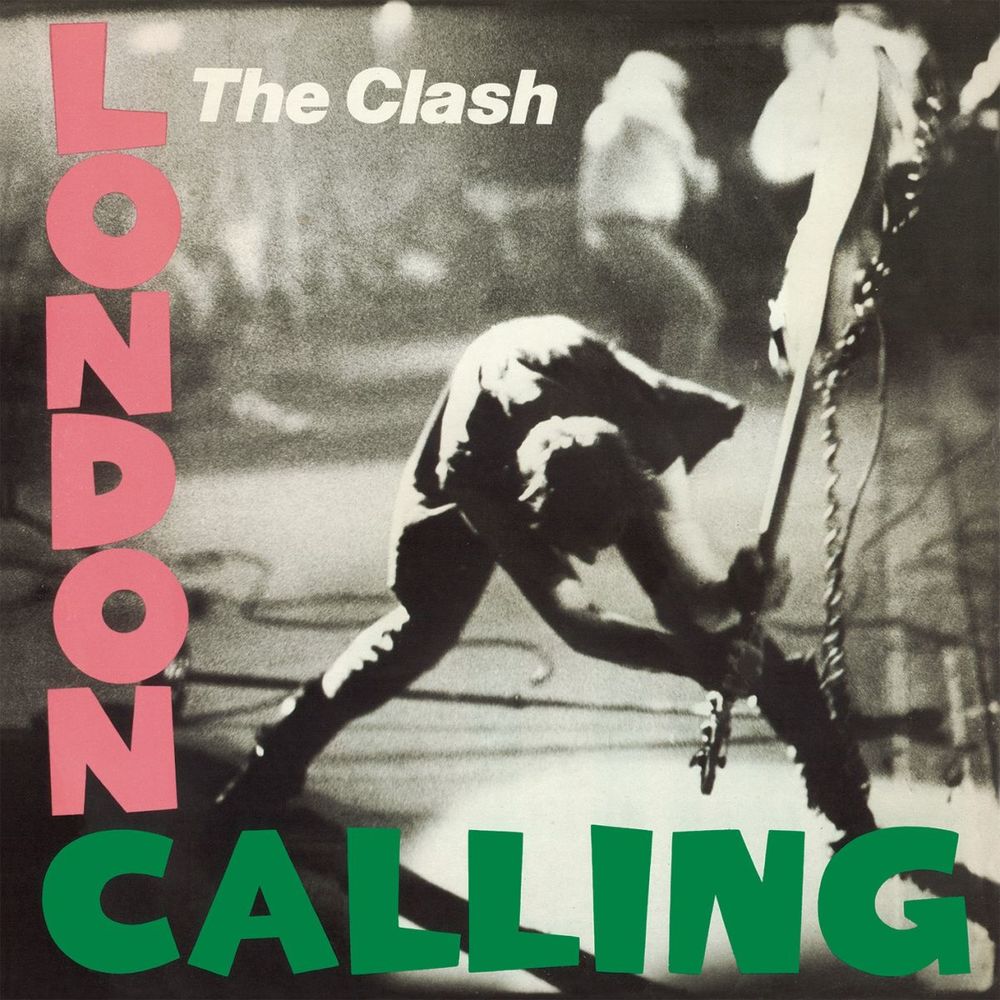
London Calling (Remastered)
- Released5 November 2001
- UK peak No. 9
- Weeks on UK chart 20
- Entered UK chart 16 December 1979
- LabelSony Music UK
- Tracks19 · 65 min
2 tracks from it charted as singles. Press a flag to play it in the chart where it peaked.
Tracks
| 1 | 3:19 | ||
| 2 | Brand New Cadillac (Remastered) | 2:08 | |
| 3 | Jimmy Jazz (Remastered) | 3:54 | |
| 4 | Hateful (Remastered) | 2:43 | |
| 5 | Rudie Can't Fail (Remastered) | 3:28 | |
| 6 | Spanish Bombs (Remastered) | 3:18 | |
| 7 | The Right Profile (Remastered) | 3:54 | |
| 8 | Lost in the Supermarket (Remastered) | 3:46 | |
| 9 | Clampdown (Remastered) | 3:49 | |
| 10 | The Guns of Brixton (Remastered) | 3:10 | |
| 11 | Wrong 'Em Boyo (Remastered) | 3:10 | |
| 12 | Death or Glory (Remastered) | 3:55 | |
| 13 | Koka Kola (Remastered) | 1:47 | |
| 14 | The Card Cheat (Remastered) | 3:49 | |
| 15 | Lover's Rock (Remastered) | 4:03 | |
| 16 | Four Horsemen (Remastered) | 2:55 | |
| 17 | I'm Not Down (Remastered) | 3:05 | |
| 18 | Revolution Rock (Remastered) | 5:33 | |
| 19 | Train in Vain (Stand by Me) (Remastered) No. 23 · 1980 | 3:12 |
About the album
London Calling is the third studio album by the English rock band the Clash. It was originally released as a double album in the United Kingdom on 14 December 1979 by CBS Records, and in the United States and Canada in January 1980 by Epic Records.
The Clash recorded the album with producer Guy Stevens at Wessex Sound Studios in London over a five- to six-week period starting in August 1979, following a change in management and a period of writer's block for songwriters Joe Strummer and Mick Jones. Bridging a traditional punk rock sound and a new wave aesthetic, London Calling reflects the band's growing interest in styles beyond their punk roots, including reggae, rockabilly, ska, New Orleans R&B, pop, lounge jazz, and hard rock. Lyrical themes include social displacement, unemployment, racial conflict, drug use, and the responsibilities of adulthood.
The album was a top ten chart success in the UK, and its lead single "London Calling" was a top 20 single. The album has sold over five million copies worldwide, and was certified platinum in the US for sales of one million. It was also met with widespread critical acclaim and has retrospectively been named one of the greatest albums of all time. On Rolling Stone's list of the 500 Greatest Albums of All Time, London Calling was ranked number 8 in the 2003 and 2012 editions, and number 16 in the 2020 edition.
Background
On their second album Give 'Em Enough Rope (1978), the Clash had started to depart from the punk rock sound. While touring the United States in 1979, they chose supporting acts such as rhythm and blues artists Bo Diddley, Sam & Dave, Lee Dorsey, and Screamin' Jay Hawkins, as well as neotraditional country artist Joe Ely and punk rockabilly band the Cramps. The Clash's growing fascination with rock and roll inspired their direction for London Calling.
After recording Give 'Em Enough Rope, the Clash separated from their manager Bernard Rhodes. This meant they had to leave their rehearsal studio in Camden Town. Tour manager Johnny Green and drum roadie Baker found a new place to rehearse, Vanilla Studios, in the back of a garage in Pimlico.
The Clash arrived at Vanilla in May 1979 with no new songs prepared for their third album.
Writing and recording
The Clash wrote and recorded demos at Vanilla Studios, with Mick Jones composing and arranging much of the music and Joe Strummer writing most of the lyrics. Strummer wrote "Lost in the Supermarket" after imagining Jones' childhood growing up in a basement with his mother and grandmother. "The Guns of Brixton" was the first of bassist Paul Simonon's compositions the band would record for an album, and the first to have him sing lead. Simonon was originally doubtful about its lyrics, which discuss an individual's paranoid outlook on life, but was encouraged by Strummer to continue working on it.
In August 1979, the band entered Wessex Studios to begin recording London Calling. The Clash asked Guy Stevens to produce the album, much to the dismay of CBS Records. Stevens had alcohol and drug problems and his production methods were unconventional. During a recording session he swung a ladder and upturned chairs – apparently to create a rock & roll atmosphere.
Themes
The album's songs are generally about London, with narratives featuring both fictional and life-based characters, such as an underworld criminal named Jimmy Jazz and a gun-toting Jimmy Cliff aspirant living in Brixton ("The Guns of Brixton"). In the opinion of PopMatters journalist Sal Ciolfi, the songs encompass an arrangement of urban narratives and characters, and touch on themes such as sex, depression and identity crisis. "Rudie Can't Fail" chronicles the life of a fun-loving young man who is criticised for his inability to act like a responsible adult. "Clampdown" comments on people who forsake the open-minded idealism of youth and urges young people to fight the status quo. "The Guns of Brixton" explores an individual's paranoid outlook on life, while on "Death or Glory", Strummer examines his life in retrospect and acknowledges the complications and responsibilities of adulthood.
Artwork
The album's iconic front cover features a photograph of bassist Paul Simonon smashing his Fender Precision Bass (now on display at the Museum of London, formerly Cleveland Rock and Roll Hall of Fame) against the stage at the Palladium in New York City on 20 September 1979. Simonon revealed in a 2011 interview with Fender that he smashed the bass out of frustration when he learned that the bouncers at the concert would not allow the audience members to stand up from their seats, explaining: "I wasn't taking it out on the bass guitar, cos there ain't anything wrong with it". Pennie Smith, who photographed the band for the album, originally did not want the photograph to be used. She thought that it was too out of focus, due to her backing away from Simonon as he approached the edge of the stage, but Strummer and graphic designer Ray Lowry thought it would make a good album cover.
Release and promotion
The album was released in the United Kingdom on vinyl on 14 December 1979, and in the United States on vinyl and 8-track tape in January 1980. A gatefold cover design of the LP was only released in Japan. Though London Calling was released as a double album it was only sold for about the price of a single album. The Clash's record label, CBS, at first denied the band's request for the album to be released as a double. In return CBS gave permission for the band to include a free 12-inch single that played at 33⅓ rpm. Ultimately, the planned 12-inch record became a second nine-track LP. The final track, "Train in Vain", was originally excluded from the back cover's track listing. It was intended to be given away through a promotion with NME, but was added to the album at the last minute after the deal fell through.
Upon its release, London Calling sold approximately two million copies. The album peaked at number nine in the United Kingdom and was certified gold in December 1979. The album performed strongly outside the United Kingdom.