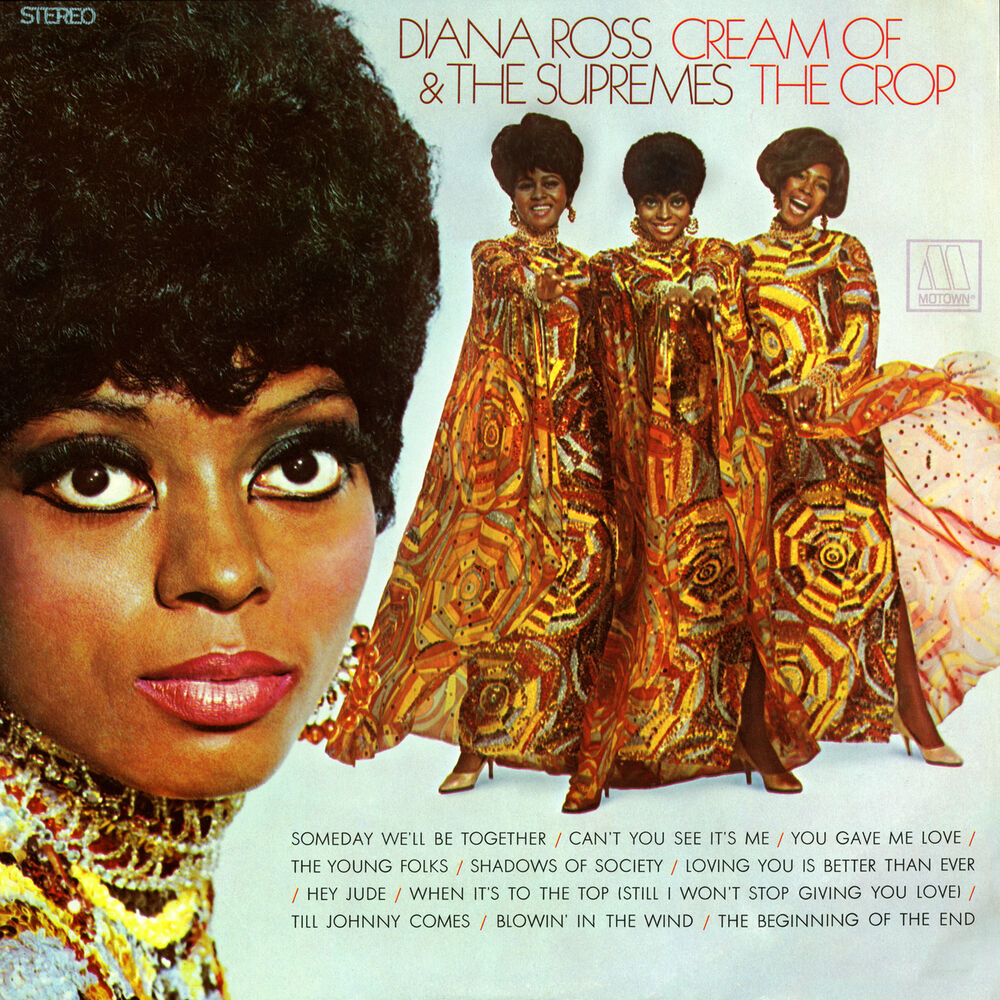
Cream Of The Crop
- Released12 March 2013
- UK peak No. 34
- Weeks on UK chart 4
- Entered UK chart 8 February 1970
- LabelUNI/MOTOWN
- Tracks11 · 32 min
2 tracks from it charted as singles. Press a flag to play it in the chart where it peaked.
Tracks
| 1 | 3:31 | ||
| 2 | Can't You See It's Me | 2:32 | |
| 3 | You Gave Me Love | 2:39 | |
| 4 | Hey Jude | 3:05 | |
| 5 | The Young Folks No. 69 · 1969 | 3:09 | |
| 6 | Shadows Of Society | 3:09 | |
| 7 | Loving You Is Better Than Ever | 2:44 | |
| 8 | When It's To The Top (Still I Won't Stop Giving You Love) | 2:57 | |
| 9 | Till Johnny Comes | 2:57 | |
| 10 | Blowin' In The Wind | 3:07 | |
| 11 | The Beginning Of The End | 2:31 |
About the album
Cream of the Crop is the eighteenth studio album released by Diana Ross & the Supremes for the Motown label. It was the final regular Supremes studio album to feature lead singer Diana Ross. The album was released in November 1969, after the release and rising success of the hit single "Someday We'll Be Together".
Background
"Someday" was originally to have been released as Ross' first solo single (Ross is backed on the recording by session singers Maxine and Julia Waters, not the Supremes). Motown chief Berry Gordy appended the Supremes billing to the single so as to create more publicity for Ross' exit from the group.
Another selection of note is "The Young Folks", the charting B-side of "No Matter What Sign You Are" from Let the Sunshine In, later covered by The Jackson 5. Cream of the Crop also includes covers of songs by The Beatles ("Hey Jude") and Bob Dylan ("Blowin' in the Wind").
The lead #1 single, "Someday We'll Be Together" proved to be a multi-format smash . The album closer, "The Beginning of the End", features Motown artist Syreeta Wright alongside Ross and Supremes members Mary Wilson and Cindy Birdsong. Wright was Berry Gordy's original choice to replace Ross in the Supremes because she had a range and tone similar to Ross.
Reception
Its modest Billboard album chart ranking at #33 was as much a reflection on the company's forthcoming focus on Diana Ross' solo debut as it was on the album's content of "second tier" songwriters. Motown had flooded the market with at least 4 new albums in a twelve-month period. Despite sporting a platinum single, sales for Ross's final Supremes studio album were tepid.