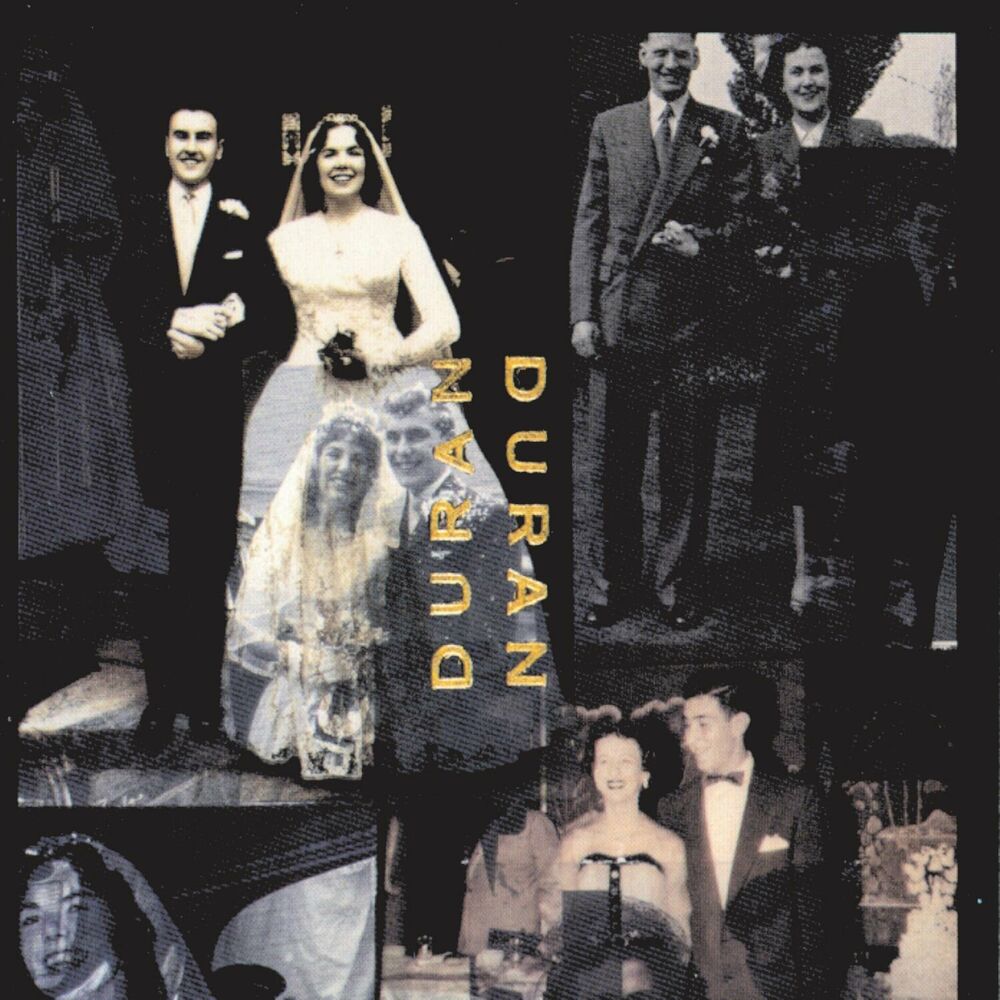
Duran Duran
- Released15 February 1993
- UK peak No. 3
- Weeks on UK chart 119
- Entered UK chart 21 June 1981
- LabelParlophone UK
- Tracks13 · 62 min
3 tracks from it charted as singles. Press a flag to play it in the chart where it peaked.
Tracks
| 1 | 4:55 | ||
| 2 | 5:40 | ||
| 3 | Love Voodoo | 4:58 | |
| 4 | Drowning Man | 5:14 | |
| 5 | Shotgun | 0:54 | |
| 6 | 4:16 | ||
| 7 | Breath After Breath | 4:57 | |
| 8 | U.M.F. | 5:32 | |
| 9 | Femme Fatale | 4:21 | |
| 10 | None of the Above | 5:18 | |
| 11 | Shelter | 4:23 | |
| 12 | To Whom It May Concern | 4:23 | |
| 13 | Sin of the City | 7:14 |
About the album
Rio is the second studio album by the English pop rock band Duran Duran, released on 10 May 1982 through EMI. Produced by Colin Thurston, the band wrote and demoed most of the material before recording the album at AIR Studios in London from January to March 1982. The band utilised more experimentation compared to their debut album, from vibraphone and marimba to the sound of a cigarette being lit and cracking ice cubes. Andy Hamilton played a saxophone solo on the title track "Rio".
A new wave, synth-pop, pop rock and dance-rock album with musical elements such as disco and funk, Rio is mostly composed of fast, upbeat numbers, with some slower synthesiser-based ballads. Lead vocalist Simon Le Bon's lyrics cover topics from chasing one's dreams to pursuing a love interest. Bassist John Taylor conceived the title, which the band felt represented the optimistic and exotic tone of the album. The cover artwork, painted by Patrick Nagel and designed by Malcolm Garrett to resemble 1950s cigar packaging, is considered one of the greatest of all time.
Duran Duran shot music videos for many of the album's tracks, all of which helped spearhead the 1980s MTV revolution. Accompanied by three worldwide hit singles, Rio peaked at number two in the United Kingdom and remained in the chart for 110 weeks.
Background and development
Duran Duran released their self-titled debut album in June 1981. Aided by the album's highly successful third single "Girls on Film", the album peaked at number three in the UK and remained in the charts for over two years. With the album, Duran Duran had established themselves as one of the biggest new pop groups of 1981. Around July, they began writing songs for their second studio album, spending time at their resident nightclub the Rum Runner in Birmingham like their debut. The band's label, EMI Records, doubled their budget for the new record. Feeling pressure in England, the band briefly withdrew to a secluded château in France to continue writing. Keyboardist Nick Rhodes later stated:
When we went into the rest of the writing to prepare the Rio album, we hadn't really had time to think about the success that we'd achieved with the first album.
Recording
The recording sessions for Rio commenced in January 1982 at London's AIR Studios and lasted six to eight weeks. The members rented apartments in close vicinity to the studio during the duration of the sessions. Colin Thurston returned from the debut as producer and engineer. The band were excited to record at AIR, having previously demoed "Girls on Film" there in July 1980. Founded by former Beatles producer George Martin, the studio boasted high-tech equipment that Rhodes, in particular, was eager to experiment with. The keyboardist devoted time learning production techniques with Thurston and was purportedly the first to arrive and last to leave every day.
According to John Taylor, all of the songs, except for "The Chauffeur", were fully arranged before recording began; "Rio" had been played during multiple sound checks. Recording followed the same template as the debut: the bass, drums and synthesiser parts were recorded first, followed by guitar, keyboard overdubs and vocals. The band recalled recording going by relatively easily.
Music and lyrics
Musically, Rio is a new wave, synth-pop, pop rock and disco-rock album, that contains elements of dance, post-punk, rock, disco, funk and gothic rock. According to author Stephen Davis, EMI wanted the band to change direction from their debut, desiring more of a rock-edged dance groove, telling Thurston: "Think Led Zeppelin and Talking Heads having a baby and calling it Duran Duran." The band's influences at the time included Roxy Music, David Bowie, Japan, pre-Dare Human League and 1970s UK guitar rock. AllMusic's Donald Guarisco retrospectively compared the title track's instrumental to the Roxy Music releases Flesh and Blood (1980) and Avalon (1982), even associating Hamilton's saxophone solo to Andy Mackay's contributions to Roxy Music. Rhodes later described the album's sound as "elegant punk".
Of the album's nine tracks, the first seven ("Rio" to "Last Chance on the Stairway") are faster and more upbeat numbers, while the last two ("Save a Prayer" and "The Chauffeur") are slower and atmospheric synthesiser-based ballads.
Title and packaging
John Taylor came up with the album's title in 1981 during the band's worldwide tour supporting their debut. Taylor, who had never left England before, was taken by the glamour and excitement of the road which included stops in Los Angeles, New York City, Paris and Berlin. While visiting Brazil, he was fascinated with the idea of exotica, stating in his memoir: "Rio [de Janeiro], to me, was shorthand for the truly foreign, the exotic, a cornucopia of earthly delights, a party that would never stop." The other band members liked the title, feeling it encapsulated the "more optimistic" tone of the entire album. Le Bon later said: "The word looks great, sounds great and makes people think of parties, rivers – it's Spanish for river! – foreign places and sunshine."
Duran Duran themselves do not appear on the front cover of Rio, which was a stylistic departure from their debut and most albums at the time; the band felt that photographs and the music videos would suffice. Instead, the cover artwork is a portrait of a woman with striking make-up, a large smile and black hair.
Music videos
Music videos were shot for six of Rio's nine tracks. Russell Mulcahy, who had directed the video for "Planet Earth", worked with Duran Duran on videos for "Hungry Like the Wolf", "Save a Prayer" and "Lonely in Your Nightmare" in Sri Lanka, one for "Rio" in Antigua and one for "The Chauffeur" in London without the band's involvement; another video was commissioned for the single version of "My Own Way". Former film student Marcello Anciano acted as storyboard artist and art director for all the videos. The Sri Lanka videos emphasised the exotic location; "Hungry Like the Wolf" saw Le Bon cast as an Indiana Jones-type character, while "Save a Prayer" utilised elephants and found the band atop a mountain inspecting stone temples. While there, Rhodes and John Taylor were homesick, while Andy Taylor contracted a fever from the water, requiring his hospitalisation on his return to England. The guitarist was "very run-down" for the subsequent Australian and Japanese tours throughout the second half of April 1982 and had an oxygen mask at the side of the stage for the shows.