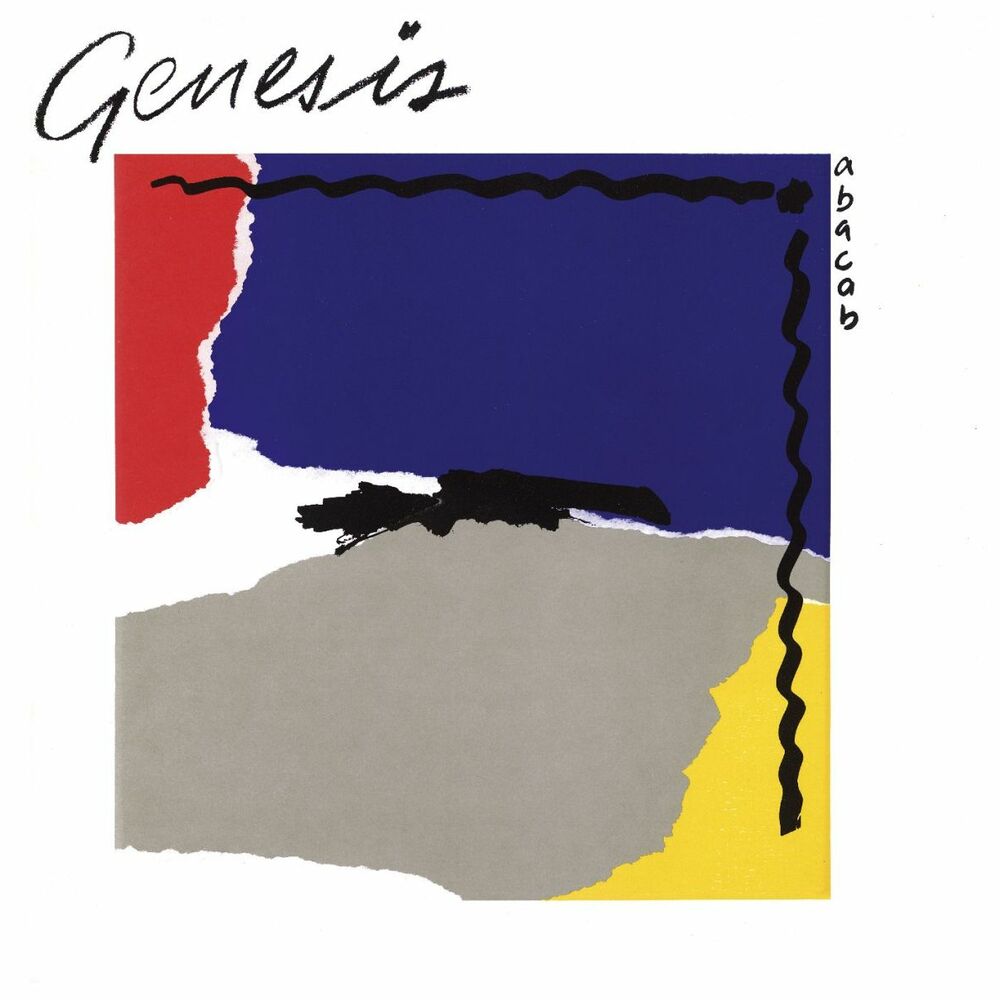
Abacab (2007 Remaster)
- Released2 April 2007
- UK peak No. 1
- Weeks on UK chart 27
- Entered UK chart 20 September 1981
- LabelRhino Atlantic
- Tracks9 · 47 min
4 tracks from it charted as singles. Press a flag to play it in the chart where it peaked.
Tracks
| 1 | 6:58 | ||
| 2 | No Reply at All (2007 Remaster) No. 29 · 1981 | 4:33 | |
| 3 | Me and Sarah Jane (2007 Remaster) | 6:02 | |
| 4 | Keep It Dark (2007 Remaster) No. 33 · 1981 | 4:32 | |
| 5 | Dodo / Lurker (2007 Remaster) | 7:31 | |
| 6 | Who Dunnit? (2007 Remaster) | 3:24 | |
| 7 | 4:27 | ||
| 8 | Like It or Not (2007 Remaster) | 4:58 | |
| 9 | Another Record (2007 Remaster) | 4:38 |
About the album
Abacab is the eleventh studio album by the English rock band Genesis, released on 18 September 1981 by Charisma Records. After their 1980 tour in support of their previous album, Duke (1980), the band took a break before they reconvened in 1981 to write and record a new album. Abacab is the first Genesis album recorded at The Farm, a recording studio bought by the group in Chiddingfold, Surrey. It marked the band's development from their progressive roots into more accessible and pop-oriented songs, and their conscious decision to write songs unlike their previous albums.
Abacab enjoyed a mostly positive reception from critics and was a commercial success for the band, becoming their second No. 1 LP on the UK Albums Chart and their first to reach the top ten of the US Billboard 200, peaking at No. 7. Genesis released four singles from the album, the most successful being "Abacab" and "No Reply at All". The album was certified gold in the UK and double platinum by the Recording Industry Association of America for selling two million copies in the US. The Abacab Tour visited North America and Europe in 1981, recordings from which formed most of their 1982 live album and concert video Three Sides Live. Three tracks left off the album were released on the EP 3×3. The album was reissued with a new stereo and 5.1 surround sound mix in 2007.
Background
In June 1980, the Genesis line-up of drummer/singer Phil Collins, keyboardist Tony Banks and guitarist/bassist Mike Rutherford – working with touring drummer Chester Thompson and guitarist/bassist Daryl Stuermer – wrapped their 1980 tour of the United Kingdom and North America in support of their tenth album, Duke (1980). Following a period of rest, in November 1980 the trio bought Fisher Lane Farm, a farmhouse with an adjoining cowshed near Chiddingfold in Surrey, as their new private rehearsal and recording facility. In the process of remodelling the building into a studio, the trio reconvened in the farmhouse to write and rehearse new material (this initially took place in the living room), and they began recording the album in March 1981 once the studio was operational. The success of Collins's debut solo album Face Value (1981) had gained momentum by the time Abacab reached the stage of being recorded; Banks claimed it did little to alter either the Genesis album's sound or style, or Collins's relationship with him or with Rutherford, for they had been friends for a long time.
Recording
Genesis recorded Abacab in 14 weeks, and they typically worked between 12 and 14 hours a day while making it. The new studio environment had a productive effect on the writing process and the band had enough material for a double album, but they shelved one hour of music because they considered the songs were too similar to their past albums. Though the band did not alter the way in which they approached the songwriting for Abacab, Banks said that a conscious effort was made by the group to avoid "Genesis cliches" such as using tambourines during a chorus, reprises, extended solos, lengthy instrumental passages, and keeping melodies simple, which signalled further changes in their direction. Because of this, Banks considered Abacab to be the least technical Genesis album at the time of its release. Rutherford said the omission of songs that were too familiar to what they had done previously was required to avoid Genesis becoming a caricature of itself, and so the change in direction was therefore necessary.
Artwork
The cover was designed by English artist Bill Smith, who recalled that the group were difficult to work with as "they only ever knew what they didn't like". He first presented the band with portfolios from various illustrators, but the group did not find anything that they liked from them. Rutherford took Smith's sketchbook and spotted an abstract design initially made for a book, which featured an arrangement of torn inch-long pieces of paper from a Pantone swatch of colours with squiggly black lines. The band chose it as the cover, and Smith reproduced it in four different colour schemes with an embossed finish. The band liked all four, and thought it would have an effective presentation on shop displays. Three of the designs had a limited print, after which their label Charisma Records selected the original montage to remain in stock.
Release
Abacab was released on 18 September 1981 in the United Kingdom by Charisma Records and 24 September 1981 in the United States by Atlantic Records. It was simultaneously released in four different colour schemes.
In 2007, Abacab was remastered with a new stereo and 5.1 surround sound mix and bonus features as part of the Genesis 1976–1982 box set.
Critical reception
In a review for Melody Maker, reporter Paul Colbert thought the album was the band's least consistent and therefore, least predictable in three years. He recognised a "heavy PC [Phil Collins] twist to the sound" on "Man on the Corner" and "No Reply at All", but "he does not have it all his own way". Colbert, however, thought Genesis had produced "a couple of Frankensteins" such as the latter half of "Abacab", which he deemed "unstructured" and "uninspired" compared to their past instrumentals. He named "Keep It Dark" and "Who Dunnit?" as "the most exciting and innovative music" the band had produced for several years, and concluded with the album is "by far more promising" than Duke or ...And Then There Were Three....