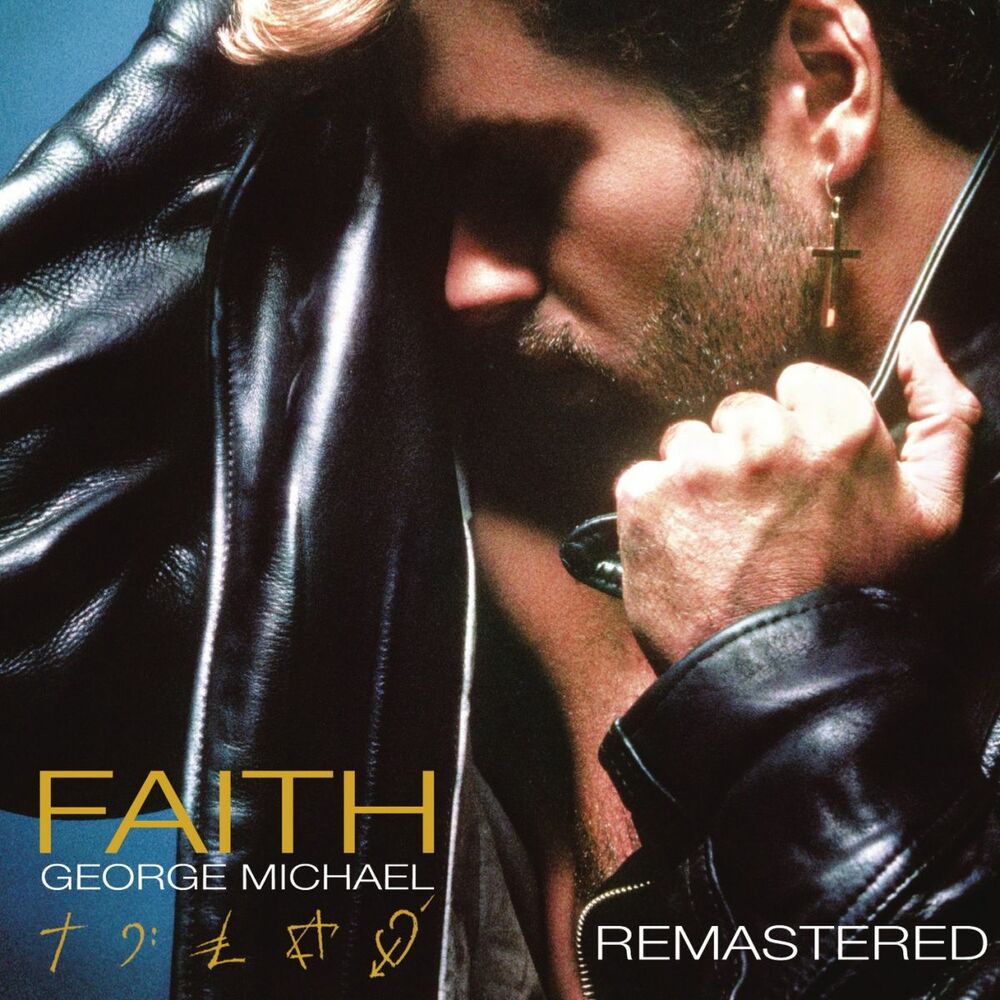
Faith
- Released27 September 2010
- UK peak No. 1
- Weeks on UK chart 92
- Entered UK chart 8 November 1987
- LabelEpic
- Tracks10 · 52 min
6 tracks from it charted as singles. Press a flag to play it in the chart where it peaked.
Tracks
| 1 | 3:13 | ||
| 2 | 5:41 | ||
| 3 | 9:13 | ||
| 4 | 5:53 | ||
| 5 | Hard Day (Remastered) | 4:48 | |
| 6 | Hand to Mouth (Remastered) | 4:35 | |
| 7 | Look at Your Hands (Remastered) | 4:35 | |
| 8 | 5:05 | ||
| 9 | 4:40 | ||
| 10 | A Last Request (I Want Your Sex) (Remastered) | 3:47 |
About the album
Faith is the debut solo studio album by the English singer-songwriter George Michael, released on 30 October 1987 by Columbia Records in the US and on 2 November by Epic Records in the UK. In addition to playing various instruments on the album, Michael wrote and produced every track on the recording except for one, "Look at Your Hands", which he co-wrote with David Austin. A pop album with influences of R&B, funk and soul music, Faith's songs include introspective lyrics, which generated controversies about Michael's personal relationships at that time.
Faith peaked at number one on the UK Albums Chart and US Billboard 200. It stayed for 51 non-consecutive weeks inside the Billboard 200 top 10, including 12 weeks at number one. It was also the first album by a white solo artist to hit number one on the Billboard Top Black Albums chart. Faith spawned four number one singles on the Billboard Hot 100: "Faith", "Father Figure", "One More Try", and "Monkey", making Michael the only British male solo artist to have four number one hits from one album on the Billboard Hot 100.
Background
By 1986, George Michael had spent five years as the lead singer of the popular duo Wham! and had grown tired of accusations that the group, which featured his best friend Andrew Ridgeley, was nothing more than a teenybopper group despite the serious subject matter that was included on albums such as Fantastic and Make It Big. After the success of Make It Big, Michael had grown weary of continuing the group, and expressed to Ridgeley the desire that they should split up. A decision was made that the group would dissolve following the end of a tenure at Wembley Stadium for what was titled the Final. Following the split, Michael began to work on songs that would eventually make his first solo album, which would be titled Faith. Michael was inspired by his contemporaries Michael Jackson and Prince: "I absolutely wanted to be in the same stratosphere as [Jackson and Prince], definitely.
Recording
The album took over a year to make. The first songs to be put together for the album were "I Want Your Sex (Part 1)" and "Look at Your Hands" (working title "Betcha Don't Like It"), recorded in August and September 1986 respectively, at Sarm West Studios in London. Both songs were originally intended for singer David Austin before Michael kept them for his own album. However, it wasn't until February 1987—after six months of little activity—that recording had properly started, this time at the Puk Studios facility, located near Randers, Denmark. The lack of press activity there proved it to be a comfortable environment for Michael to work in without harassment. Songs were usually written by Michael bit by bit in the studio, often with the aid of technology such as drum machines to help create basic rhythms; he would then develop ideas further from there. Rather than using a live rhythm section (as was the case on Wham!'s Make It Big), each instrument was overdubbed in the main studio.
Release
10 weeks after its release, Faith reached number one on the US Billboard 200. Its early, and successive, success on the chart was said to be partly sustained—with help from plenty of press appearances and promotions—by its strong single releases. After "I Want Your Sex" helped propel Faith to its debut atop the chart, the second single "Faith" aided the album's continuing sales dominance. It also reached number one on the UK Albums Chart, although it stayed at the top spot for only one week. Faith stayed for 51 non-consecutive weeks inside the Billboard 200 top 10, including 12 weeks at number one. It was also the first album by a white solo artist to hit number one on the Billboard Top Black Albums chart.
In a 1988 interview with Jet magazine, Michael was quoted as saying: "I was much happier with [Faith] being the No. 1 Black [chart] album than I was when it became the No. 1 Pop album. There was much more of a sense of achievement. I knew this album would be a shock or a surprise to people in this country.
Critical reception
Faith was met with widespread acclaim from music critics. Mark Coleman of Rolling Stone praised Michael for emerging as "one of pop music’s leading artisans, a painstaking craftsman who combines a graceful knack for vocal hooks with an uncanny ability to ransack the past for musical ideas and still sound fresh" and dubbed Michael the "Elton John of the 1980s". Coleman also claimed that Faith is "a concept album of sorts" incorporating "disco groove [varying] from urban thump to slow tropical heat wave", praising it for being "grounded in a passion and personal commitment".
Faith earned Michael numerous accolades, including Album of the Year at the 31st Grammy Awards. Michael was awarded three awards at the 1989 American Music Awards: Favorite Pop/Rock Male Artist, Favorite Soul/R&B Male Artist and Favorite Soul/R&B Album for Faith. He was also honoured with the MTV Video Vanguard Award. Faith was the best-selling album of 1988 in the United States, and eventually reached Diamond certification by the Recording Industry Association of America.