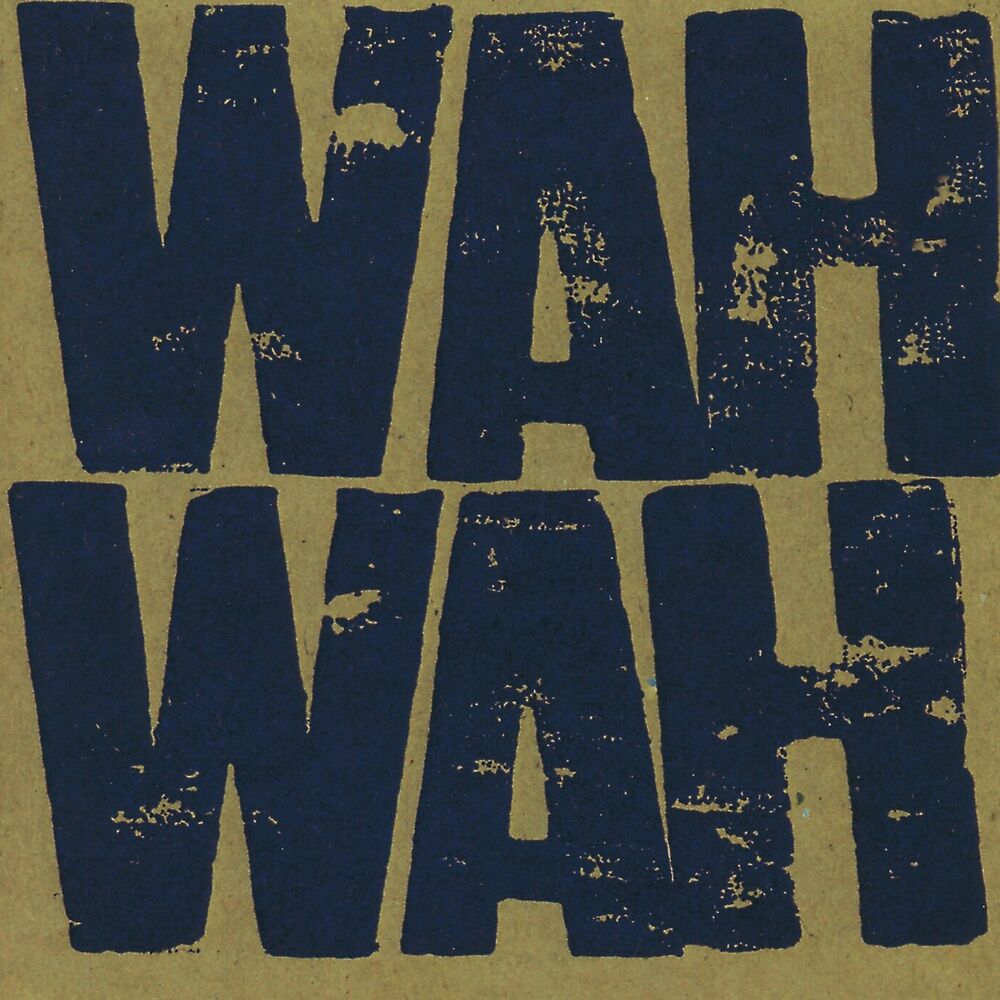
Wah Wah
- Released1 January 1994
- UK peak No. 11
- Weeks on UK chart 2
- Entered UK chart 18 September 1994
- LabelEMI
- Tracks23 · 68 min
2 tracks from it charted as singles. Press a flag to play it in the chart where it peaked.
Tracks
| 1 | Hammer Strings | 2:12 | |
| 2 | Pressure's On | 4:27 | |
| 3 | Jam J No. 24 · 1994 | 3:33 | |
| 4 | Frequency Dip | 3:35 | |
| 5 | Lay The Law Down | 0:58 | |
| 6 | Burn The Cat | 6:50 | |
| 7 | Maria | 4:03 | |
| 8 | Low Clouds | 0:33 | |
| 9 | Building A Fire | 2:43 | |
| 10 | Gospel Oak | 2:48 | |
| 11 | DVV | 1:05 | |
| 12 | Say Say Something | 5:42 | |
| 13 | Rythmic Dreams | 2:35 | |
| 14 | Dead Man | 0:58 | |
| 15 | Rain Whistling | 2:45 | |
| 16 | Basic Brian | 5:29 | |
| 17 | Low Clouds (2) | 0:16 | |
| 18 | Bottom Of The Well | 3:16 | |
| 19 | Honest Joe | 4:39 | |
| 20 | Arabic Agony | 3:57 | |
| 21 | Tomorrow No. 12 · 1997 | 2:29 | |
| 22 | Laughter | 0:31 | |
| 23 | Sayonara | 2:41 |
About the album
Wah Wah is the sixth studio album by the Manchester-based English indie rock band James. After the success of their fourth album, Seven (1992), the band entered Real World Studios, Box, Wiltshire, to record their fifth album Laid in early 1993 with producer Brian Eno, with whom the group had longed to work. Prior to recording Laid, Eno observed the band's jam sessions at their Manchester rehearsal room, and considered these improvised pieces to be as important to the band's music as their eventually crafted songs. He requested to the group that whilst they were recording Laid, they would also concurrently record an album of their improvisations which Eno and, by Eno's request, second producer Markus Dravs would produce in a secondary studio in the Real World complex. Each composition started off with the band's improvisation being recorded, which Dravs would then edit, generally alone whilst James and Eno were recording Laid. Eno and Dravs would take a "promising" part of a recording and then mixed them only once. Tim Booth's desire to re-record some of his vocals caused friction in the studio.
Wah Wah consists of twenty-three tracks in total, and is often seen as the band's "experimental" and "jamming" companion to the "song"-centred Laid. Consequently it's their longest studio album to date with the band recording more than 300 songs for it.
Background and conception
James released their fourth studio album Seven in 1992 to critical and commercial acclaim. Lead single "Born of Frustration" became their biggest hit in the United States at the time, becoming a Top 5 hit on modern rock radio, and the band opened for Neil Young on the tour supporting his most recent album, Harvest Moon. The band spent the rest of the year touring before reconvening to begin work on their next album, Laid (1993). The band's tour with Young had proven influential on the album, especially because Young requested they play acoustically, something James had never done outside of radio sessions. The band's new stripped down approach for the album was helped by its producer Brian Eno. Working with Eno was a career long dream for the band, who had been trying to work with Eno since their first album, Stutter (1986); the band had sent demos of the song that would feature on Stutter to Eno's management but the band did not hear a reply, and they had consistently tried to work with him since.
Recording
For the recording of Wah Wah, Eno enlisted the help of engineer Markus Dravs to work as a co-producer, "providing distraction" to the band inside a secondary studio inside the Real World Studios complex from the recording of Laid, which was being recorded in one of the complex's larger studios. Eno recalled in June 1993 that he wanted Dravs "to look at the improvisations and see what he could make of them" while he [Eno] and James carried on recording Laid. Each improvisation started with the band recording a jam session improvisation, and then Eno or Dravs would then select a "promising" part of the improvised music and mix it, but with only one take on each mix to keep in the improvisation spirit. According to Annie Zaleski of The A.V. Club, each piece would be "whisked away" to Dravs "straightaway" for studio "tinkering" after the initial jamming process. Bassist Jim Glennie recalled that "it was a bit of a production line: We’d jam, those would go over to Markus to start properly messing about with.
Release and promotion
The band initially planned to release Wah Wah simultaneously with Laid, or perhaps to release them together as a double album or to release Wah Wah as a free giveaway with Laid, but these plans were shelved when the band's record label, Fontana Records, were initially reluctant to release Wah Wah. Glennie recalled "we bumped into problems with the record company’s ability to deal with [releasing both albums at once]. I think they thought it would confuse people, which is a shame, really. I wish now in reflection we had just kind of pushed them regardless and done it." Laid itself was released alone by the label on 5 October 1993. It was the band's biggest success to date, receiving some of the band's best reviews, and it was also their first album to chart in the United States and ultimately their most successful there, peaking at number 72 on the Billboard 200 chart and later being certified Gold by the RIAA for selling 600,000 copies there.
Critical reception
The album was released to mixed to positive reviews from music critics, although the low profile of the release saw it ignored in certain quarters. One biographer later noted "some reviewers missed the concept of the album and were puzzled as to why James were releasing it at all." Reviewing the album before release in mid-July 1994, Joseph Gallivan of The Independent was favourable, saying "a little bit of confusion is good for us all." Emma Forrest of the NME rated the album seven out of ten, saying "it's an ambient album, with something to hook onto - moving wallpaper in the nicest possible sense. It's one of the few genuinely engaging dance albums around." Less favourable in the British press were Q, with Mat Snow giving the album two stars out of five and saying "though no more than four tracks (especially Tomorrow and Jam J) out of a whopping 23 are anything like individually satisfactory, each is pregnant with a certain possibility, suggesting fully-fledged James tunes to come.
Aftermath and legacy
Guitarist Larry Gott left the band after the release of the album, and the band took an extended break throughout 1995. For their subsequent album Whiplash (1997), James worked with Stephen Hague with Eno only providing "additional assistance", although his influence was noted on the album. On Whiplash, the band worked towards a more song-centric sound again, although its half-experimental and half familiar approach was compared to Wah Wah. The album features a more anthemetic re-recording of "Tomorrow" (which had appeared on Wah Wah), which was released as the album's second single, reaching number 12 in the UK Singles Chart. For that album's follow-up, Millionaires (1999), the band regrouped with Eno as official producer for the first time since the Laid and Wah Wah sessions. Tim Booth later stated that Laid and Wah Wah are "the culmination of playing four or five hours a day four or five days a week in Manchester and the new band adapting to that. It is about the transition of becoming more of a band but with Brian at the helm."
The A.V.