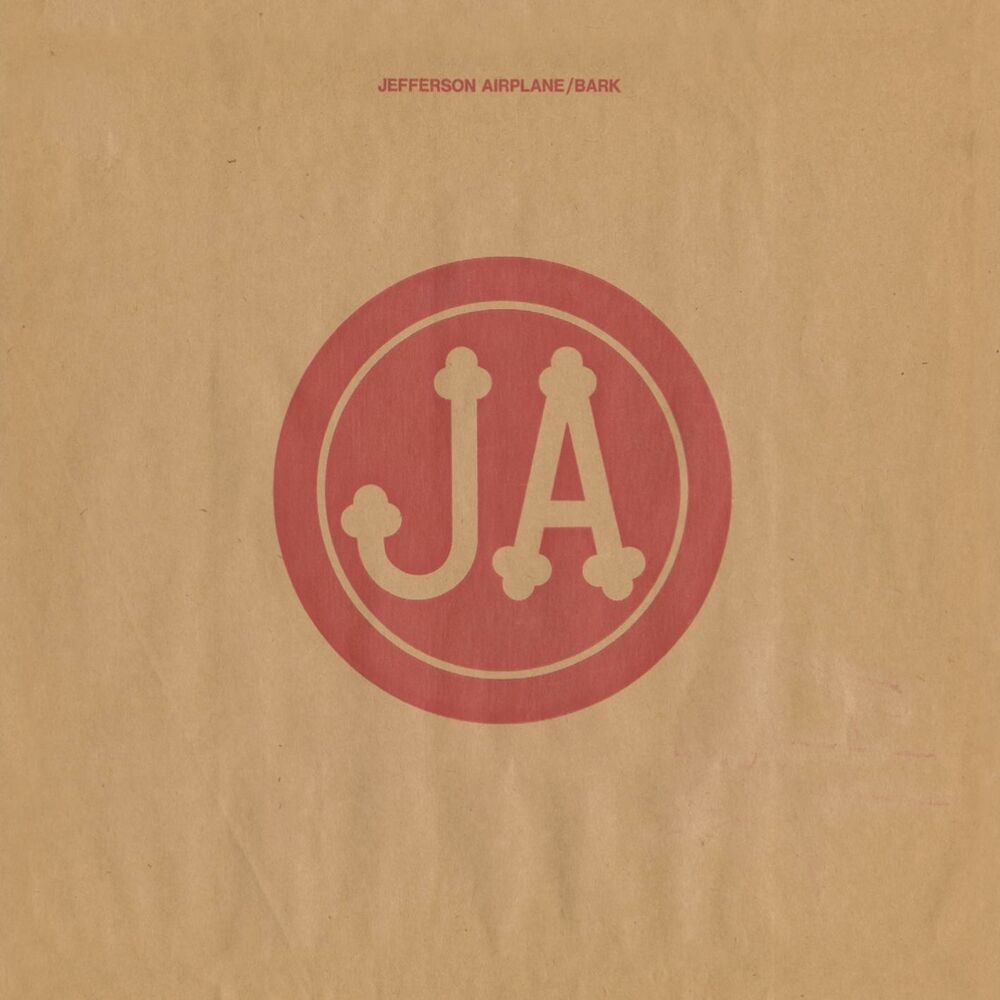
Bark (Bonus Tracks)
- Released1 September 1971
- UK peak No. 42
- Weeks on UK chart 1
- Entered UK chart 26 September 1971
- LabelRCA/Legacy
- Tracks13 · 57 min
One track from it charted as a single. Press a flag to play it in the chart where it peaked.
Tracks
| 1 | When the Earth Moves Again | 3:54 | |
| 2 | Feel so Good | 4:36 | |
| 3 | Crazy Miranda | 3:23 | |
| 4 | Pretty As You Feel No. 60 · 1972 | 4:29 | |
| 5 | Wild Turkey | 4:45 | |
| 6 | Law Man | 2:42 | |
| 7 | Rock and Roll Island | 3:44 | |
| 8 | Third Week in the Chelsea | 4:34 | |
| 9 | Never Argue with a German If You're Tired or European Song | 4:31 | |
| 10 | Thunk | 2:58 | |
| 11 | War Movie | 4:41 | |
| 12 | Pretty as You Feel (Single Edit) No. 60 · 1972 | 3:09 | |
| 13 | Feel so Good (Extended Version) | 9:23 |
About the album
Bark is the sixth studio album by American rock band Jefferson Airplane. The album was the first without band founder Marty Balin (who departed the band during the recording process but without featuring in the album sessions proper) and the first with violinist Papa John Creach. Drummer Spencer Dryden had been replaced by Joey Covington in early 1970 after a lengthy transitional period in which both musicians had performed with the band.
Bark was the Airplane's first new album in two years, the previous being 1969's Volunteers. It was the first release on Grunt Records, launched in August 1971 by the band and RCA as an autonomous imprint for Jefferson Airplane-related releases.
Lead guitarist Jorma Kaukonen received four songwriting credits on the album, indicative of his growing importance as a composer and vocalist. At the time, he and bassist Jack Casady had already recorded two albums for their spin-off blues rock group Hot Tuna.
The album reached number 11 on the Billboard albums chart (outperforming both Volunteers and Kantner's Hugo Award-nominated 1970 solo album Blows Against the Empire) and was certified gold by RIAA. An accompanying single, the Covington-led "Pretty as You Feel", was the band's final top 100 American hit, peaking at number 60 in Billboard and number 35 in Cashbox.
Recording history
Recording sessions for the album began in 1970 following the commercial failure of Grace Slick's "Mexico", a single that railed against the Nixon administration's anti-marijuana Operation Intercept initiative. Planned tracks included live versions of "Mexico" and its B-side, the Kantner-penned "Have You Seen the Saucers?"); Balin's "Emergency"; Balin-sung covers of Peter Kaukonen's "Up or Down" and Syl Johnson's "Dresses Too Short"; and Covington's "Whatever The Old Man Does (Is Always Right)" and "The Man (The Bludgeon of the Bluecoat)", a 1950s rhythm and blues pastiche inspired by the contemporaneous murder of journalist Rubén Salazar by a Los Angeles County Sheriff's Department deputy.
A tour of the United States in support of the band's first greatest hits album (The Worst of Jefferson Airplane) continued through the autumn of 1970, with Creach (a veteran jazz musician who appeared with Nat King Cole in Fritz Lang's The Blue Gardenia before meeting Covington at a hiring hall in the late 1960s) joining the band and Hot Tuna on the day of Janis Joplin's death.
Release and promotion
The band played several dates in August in support of the new album (including two concerts in the New York metropolitan area and a show apiece in Detroit and Philadelphia) but no tour was planned. Only one date (a private party for Grunt Records at San Francisco's Friends and Relations Hall) was played after the album's release in September.
As the album climbed the Billboard charts, the band had already moved on to separate albums for Grunt Records: Kantner and Slick recorded Sunfighter, their first joint album; Creach worked on his eponymous debut album; and Kaukonen, Casady and Creach finished the first Hot Tuna studio album, Burgers. With the exception of a couple of dates in early 1972, the band did not play together again until the recording sessions for Long John Silver in March 1972.
Production
Jefferson Airplane – producer, arrangements, additional ideas
A Train – additional ideas
Allen Zentz – engineer
Masterful Maurice (Pat Ieraci) – 16-track
Acy Lehman – package concept and design
Grace Slick – portraits
Bill Thompson – portrait of Grace
Gary Blackman – art direction, bag poem